Acidic Soil Preparation: Testing pH and Liming Before Planting
Acidic soil preparation begins with a test, because lime applied by guess can fail or even do harm. A soil that is too acidic locks up nutrients and exposes roots to aluminum, so plants stay small no matter how much fertilizer you add. This guide shows how to test the pH, how to pick agricultural lime or dolomite and when to spread it before planting.
Rates in this guide come from research papers and extension guides. They are examples, not recipes. The right amount of lime for your field depends on a soil test and on your crop, so ask your municipal agriculturist before you buy. For the whole picture, start with land preparation in the Philippines. If a field is salty instead, read the saline soil guide.
Why acidic soil hurts crops
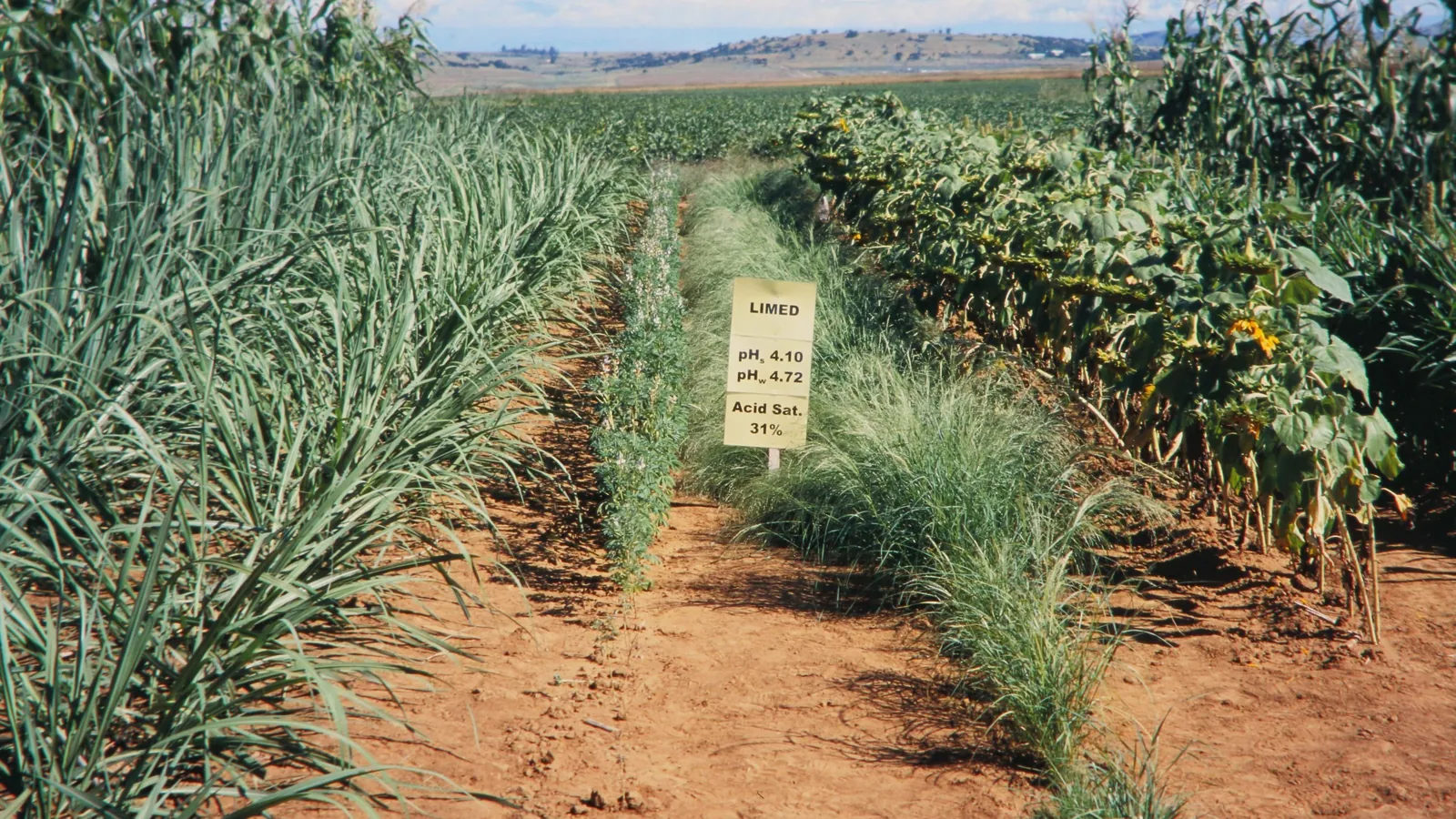
When soil gets too acidic, hydrogen and aluminum crowd the clay and push out the nutrients plants need. Roots meet more aluminum, which can harm them. Liming lets plants grow healthier roots because they meet less of that aluminum.
Heavy use of nitrogen fertilizer speeds up acidification. Do not overdo the lime either. Too much lime raises the pH too high and cuts the supply of micronutrients such as zinc.
Test the pH first with a soil test kit
The Soil Test Kit is made for farmers and field technicians. It shows the nitrogen, phosphorus and potassium level of the soil. It also shows the pH, which tells you how acidic or alkaline the soil is. You read the result from the color that appears in the test tube.
The kit sells at the BSWM Laboratory Services Division in Diliman, Quezon City, and at soils laboratories. Consult field or soils laboratory technicians as well, because your field may have another problem too.
Portable test kits read pH quickly, but you cannot make an accurate lime recommendation from the pH alone. A laboratory lime requirement test also looks at how much acidity the soil holds in reserve. Use the kit to find the problem, then ask a laboratory or technician for the rate.
Acidic soil preparation step by step
Sample and test
Take soil from several spots in the field, mix it and test it. Repeat for each lot, because lots can differ.
Choose the liming material
Agricultural lime is crushed limestone. Calcitic lime holds calcium only, while dolomite holds a lot of magnesium as well. Use dolomite if the soil is low in magnesium. Otherwise calcitic lime will do. Check the material and its fineness on the label.
Spread weeks before planting
Lime at least 4 to 6 weeks before the planting season, since the lime needs time and moisture to react. That timing was set for wheat in Kansas. Philippine studies below show how crops respond, but they do not give one waiting time, so ask your technician.
Mix it in
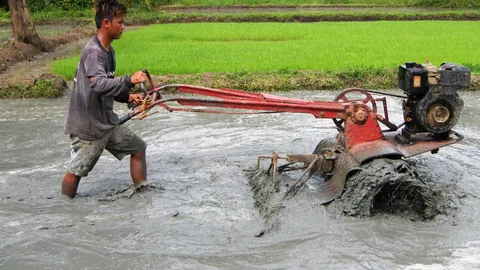
Spread the lime evenly and work it into the soil. Tillage gives a more uniform reaction in the soil, and lime left on the surface reacts only in the top 3 inches. A heavy rotary tiller that mixes the whole root zone beats disking alone.
Add compost or manure
In one 2006 Australian study, cattle, pig and poultry manures raised the pH of an acid soil from 4.0 to 4.6, 5.2 and 6.3 in a lab test. Organic matter also binds aluminum. Manure can work next to lime, but do not expect it to replace a soil test.
Retest after the season
Test again after a crop, then adjust. Over liming causes manganese deficiency in many soils.
What Philippine trials found
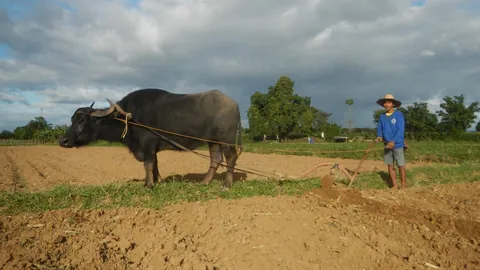
At Claveria in Misamis Oriental, Magbanua and colleagues tested lime at 0, 3 and 6 tons per hectare. The trial ran in an upland rice and corn sequence. The rice yield rose in a straight line as the lime rate went up. Where 3 tons of lime went in with a tractor plow, the pH rose more than where animal plowing mixed it. The authors add that small amounts of lime should go into the surface layer.
In Bukidnon, researchers tested corn on acidic soils. Three tons of lime per hectare, with 60 kg of nitrogen and 30 kg of phosphate, gave the best return. These are results from those soils, not rates for every farm. For the field work after liming, see our corn land preparation guide.
Add the lot to anee.io, and the cropping calendar places the soil test, the liming and the plowing back from your planting date. The inventory tracks the lime and dolomite you buy.
Start freeA note on acid sulfate soils
Some coastal soils are acid sulfate soils. A Japanese study by Murakami describes how sulfides, mostly pyrite, oxidize into acid when the soil is drained and exposed to air. In that study, flooding the paddy through the year helped avoid strong acidification. A study in Senegal found that lime and shell amendments raised the pH and rice yields on acid sulfate soil. Ask the BSWM or your DA office for local advice before you drain such a field.
Common mistakes
- Liming with no soil test.
- Using the pH reading alone to set the lime rate.
- Leaving the lime on the surface instead of working it in.
- Spreading it on the day you plant.
- Piling on nitrogen fertilizer without checking the pH, because it makes soil more acidic.
- Putting lime on alkaline soil. Read the sodic and alkaline soil guide for that case.
Questions about acidic soil
What does the soil test kit measure?
What is the difference between lime and dolomite?
How long before planting should I lime?
Can I use only compost on acidic soil?
Get every step of acidic soil preparation right
Register for free to read every step, then date each one on your own calendar with the Land Prep Planner, counted back from your planting day.
Free to register. No credit card. Works on any phone.