Saline Soil Preparation: Leaching, Drainage and Salt Tolerant Rice
Saline soil preparation is a race against the sea and the dry season, because salt that sits in the root zone stops seeds from sprouting and burns the leaves. The Philippines has 500,000 to 600,000 hectares of coastal saline prone land. Also, salt water enters low lying fields at high tide. This guide covers how to spot salt damage, flush it out with fresh water, drain the field and shape the beds.
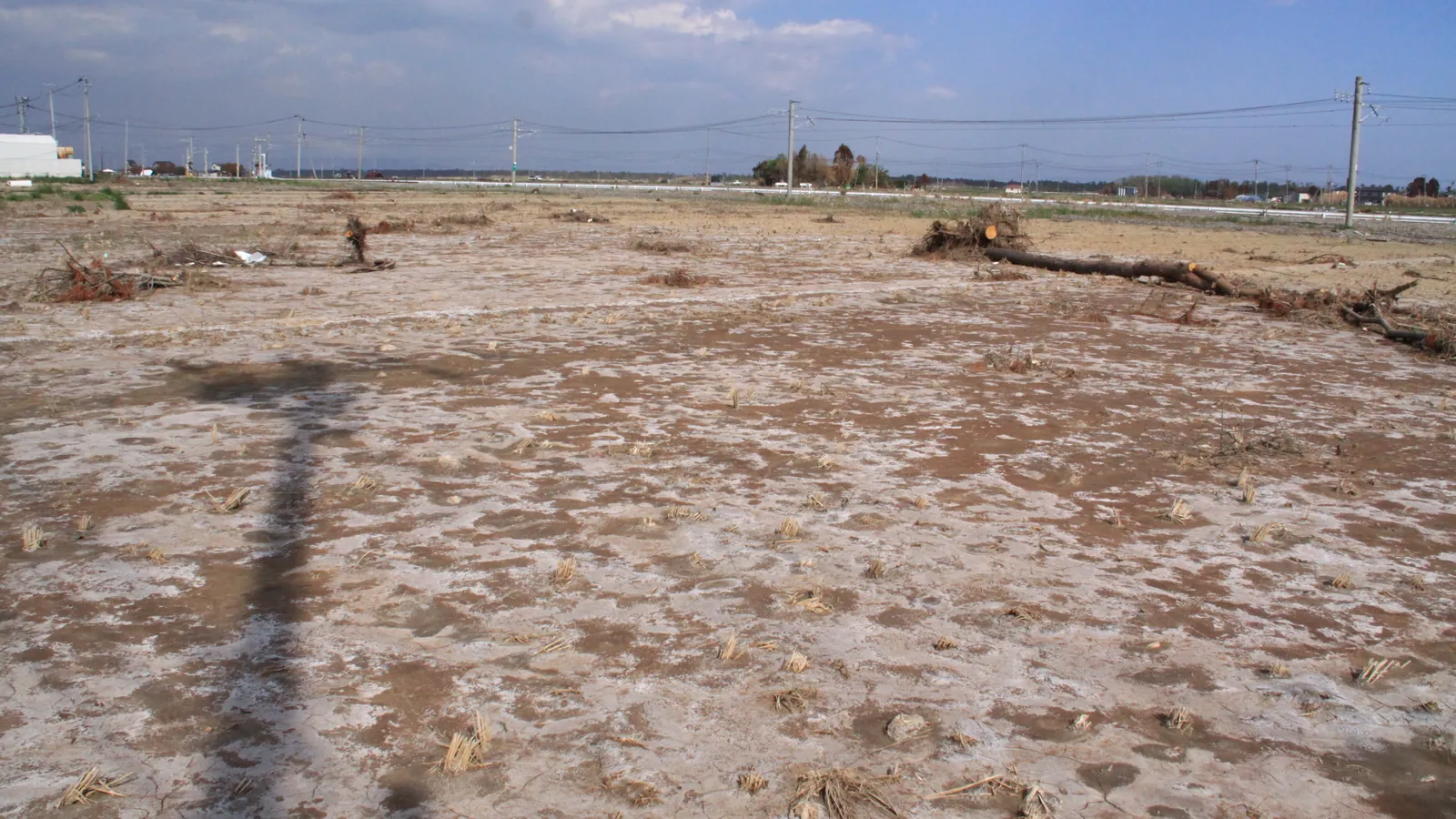
A salty field needs a salt test, so ask the BSWM or your DA regional office where to have the soil tested.
How to recognize salt damage
A saline soil has an electrical conductivity above 4 dS/m in the saturated extract. The Soil Science Society of America lowered the line to 2 dS/m. Chloride and sulfate salts of sodium, calcium and magnesium are the usual ones. The pH stays below 8.2, often close to neutral.
In the field, look for spotty growth and white salt crusts on the surface. A little salt can turn plants a bluish green. You may also see bare patches and short, stunted plants. The size of the bare spots hints at how much salt is in the soil. Salt stress can look like drought stress. Rice leaves turn yellowish or look burned.
Saline soil has a pH under 8.2 and a white crust. Sodic soil has a high pH, a hard crust and poor drainage. They need different cures. For the second kind, read the sodic and alkaline soil guide.
Saline soil preparation step by step
Stop the salt water at the source
Salt water enters fields in Canaman, Camarines Sur at high tide and in the dry season, when the river and sea push inland. The timing of planting should follow the tides and the rainfall pattern, so check the tide table before you plant.
Leach with fresh water
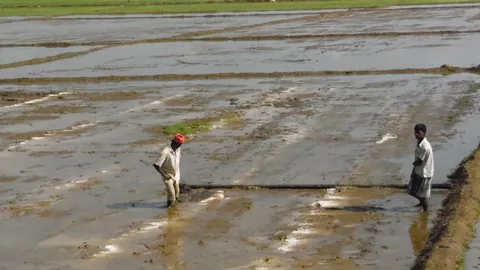
Leaching is by far the most effective way to remove salts from the root zone. You pond fresh water on the soil and let it soak in. Fresh water flushing remains the best answer, and even tolerant varieties cannot survive on salt water irrigation alone.
Estimate how much water to use
Here is a rule of thumb. A depth of water removes about 80 percent of the salts from the same depth of soil. So 30 cm of water passing through takes out about 80 percent of the salt in the top 30 cm. To cut the top 60 cm to about 20 percent of the salt, pass about 60 cm of water through. A small leaching test on your own soil is more reliable.
Drain the leachate away
Leaching works when the salty water drains out of the field and does not lift the water table. Dig ditches for surface drainage, because a high groundwater table makes salinity return. The critical depth ranges from 1.5 to 3.0 meters, depending on the soil and climate.
Shape the beds
Seeds sprout only when they sit away from the zone of salt build up. In furrow irrigation, salt gathers on top of the ridge. On double beds, the salt collects in the center and leaves the edges freer. On sloping beds, you plant on the slope below the salt zone.
Reduce evaporation
Between irrigations and during fallow, leached salts tend to rise back to the surface. Reduce evaporation from the soil surface, with mulch for one, because evaporation pulls salt up.
When to leach, and what does not work
Leaching is best done when the soil is dry and the water table is deep. Summer leaching loses a lot of water to evaporation. Scraping and surface flushing have only limited success, so do not rely on them.
After a flood or storm surge
A surge leaves salt on the field. The first step is the same: flush with fresh water and drain. Test the soil before you replant. In Bicol, farmers struggling with consecutive typhoons and salty soils avoid planting when the water is salty. Do not seed or transplant into a field that still holds salt water.
Add the lot to anee.io and the cropping calendar dates leaching, drainage and planting from your own day zero. The weather forecast shows the week's rain for your lot, and Anee can help you plan the dates.
Start freeSalt tolerant rice varieties
NSIC Rc 480 is a saline resilient variety, shown in a 2022 demonstration in Bicol. Salt tolerant varieties handle 4 to 8 dS/m. Varieties that are not tolerant stop at about 2 dS/m. One farm near Anilao in Iloilo had soil salinity of 3.4 to 5.4 dS/m. There, farmers trialed NSIC Rc 392 and NSIC Rc 480. They reported 90 to 120 sacks of 42 kg per cropping season, up from 35 to 45 sacks before.
A tolerant variety is a help, not a cure. Combine it with leaching, drainage and good timing. For the full field routine, read our rice land preparation guide and the rice varieties guide.
Common mistakes
- Irrigating with salt water and expecting a tolerant variety to cope.
- Leaching with no drain, so the salt stays in the field.
- Leaving the field bare and fallow, so salt creeps back up.
- Planting seeds on the salty top of a ridge.
- Using lime or dolomite on salty soil. That is a fix for acidic soil, not for salt.
Questions about saline soil
How do I know my soil is saline?
How much water does it take to leach salt?
Which rice varieties tolerate salt?
Can I plant after saltwater intrusion?
Get every step of saline soil preparation right
Register for free to read every step, then date each one on your own calendar with the Land Prep Planner, counted back from your planting day.
Free to register. No credit card. Works on any phone.