Corn Land Preparation: Plowing, Harrowing and Furrows
Corn land preparation is simpler than rice, but it still decides your stand. Corn (mais) needs loose, well drained soil, so the work is plowing, harrowing and then furrows. This guide covers yellow and white corn, the schedule before planting, lime, minimum tillage after rice and raised beds for wet fields.
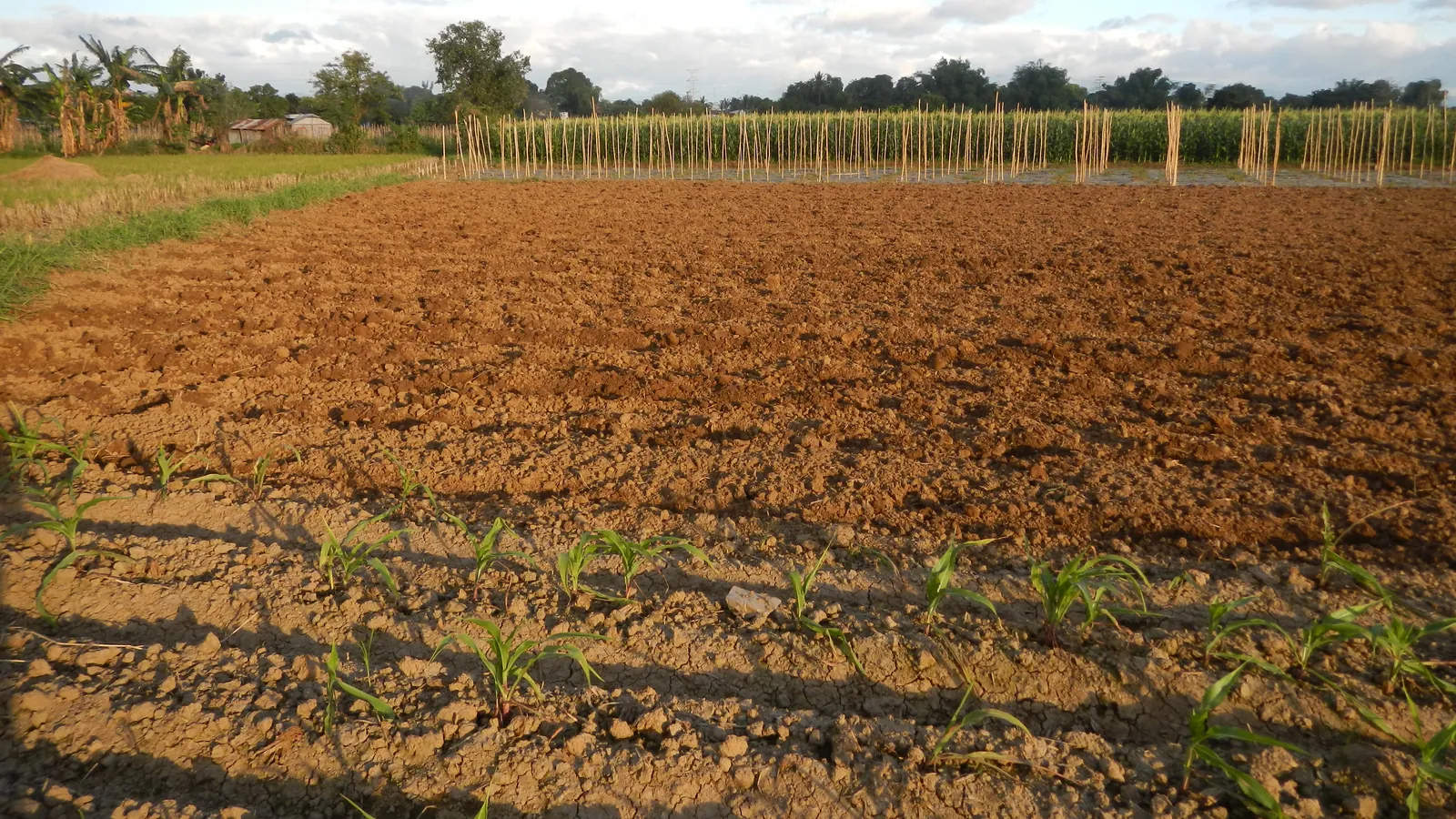
What corn land preparation has to achieve
The goal is simple: a field worked well enough that every seed comes up at the same time and the roots spread freely. The same rules apply to yellow corn for feeds and white corn for food.
So you want soil that is loose to the depth of the roots, free of clods and weeds, and able to drain after rain. Corn does not tolerate standing water, so drainage is part of the plan, not an extra.
For the general picture, see land preparation in the Philippines. To plan the crop itself, read about growing corn.
Plowing and harrowing for corn
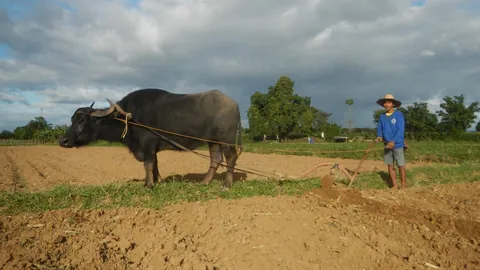
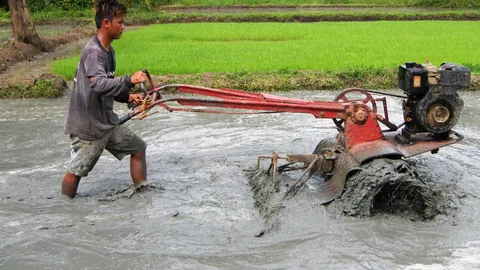
Plow at 15 to 20 cm when the soil moisture is right. Deeper plowing is better for root development. Then harrow right after plowing, preferably two to three times, with an interval of one week between passes for effective weed control.
With a four wheel drive tractor pulling a harrow, one or two passes a week apart are enough before you set the furrows and plant. In areas with continuous farm mechanization, plow deep with a chisel plow or a subsoiler every 2 to 3 years to break the hard pan.
| Timing | Work | Depth or spacing |
|---|---|---|
| About 2 to 3 weeks before planting | Plow when the soil moisture is right | 15 to 20 cm, deeper is better for roots |
| Right after plowing | First harrowing to break clods | Two to three passes in total |
| One week later | Next harrowing to start weeds and level | One week between passes |
| Last harrowing | Broadcast organic fertilizer if you use it | Ten bags per hectare |
| A day before or on planting day | Make furrows | 70 to 75 cm apart |
The "about 2 to 3 weeks" in the first row is our reading of two to three harrowing passes at one week gaps. It is an estimate, so adjust it to your soil and machine.
Furrows and spacing
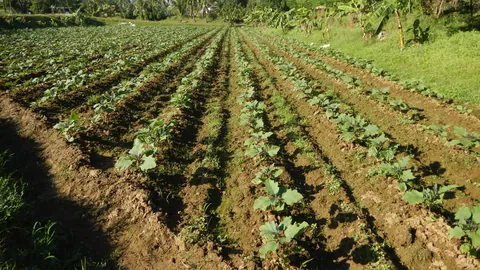
Furrows are the planting rows. Use a furrow spacing of 70 cm for hybrid corn, with 18 to 20 cm between hills, and 75 cm for open pollinated varieties (OPV), with 25 cm between hills. For a bigger green corn ear, use a wider 30 cm by 75 cm spacing.
Once the furrows are set, drop one seed in each hill and cover it with 3.5 cm of soil. A hybrid planted this way needs 22 to 24 kg of seed per hectare to reach a population of at least 75,000 plants.
Broadcast ten bags of organic fertilizer per hectare during the last harrowing before furrowing. At planting, put all the P and K and half the N of the inorganic fertilizer in a strip 5 cm beside the seed row and 5 cm deeper than the seed.
Lime for acid soil
Corn grows best in slightly acidic to neutral soil, pH 6.0 to 7.0. The critical pH is 5.4, so acidic soil below that needs lime. How much to apply is set by your soil type and its pH. A soil test tells you where you stand.
| Soil pH | Sandy | Sandy loam | Loam | Silt and clay loam | Clay |
|---|---|---|---|---|---|
| 4.0 to 4.4 | 3.0 | 3.5 | 4.5 | 6.0 | 7.5 |
| 4.5 to 4.9 | 1.5 | 2.5 | 3.2 | 4.2 | 5.2 |
| 5.0 to 5.3 | 1.0 | 1.5 | 2.0 | 2.5 | 3.0 |
For more on acid fields and the use of agricultural lime, see our guide on acidic soil preparation.
Minimum tillage and zero tillage for corn
You can plant corn with less tillage. Zero to minimum tillage is one of the soil conservation practices for hilly corn areas, with the Sloping Agricultural Land Technology (SALT) and contour farming.
A Bukidnon trial from 1995 compared zero tillage, minimum tillage and the usual farmer practice. It used glyphosate plus ammonium sulphate to kill the weeds. Corn yield matched or beat the conventional method, and the system saved cost and time. That trial was on upland corn, not on a rice field, so test it on a small plot first.
In a zero tillage system, you spray the standing weeds and stubble with a non selective herbicide such as glyphosate, then plant through the residue. Follow the FPA label for the rate and the safety steps.
Corn after rice
After rice, you start with rice stubble and weeds. The two options are the usual plowing and harrowing, or the zero tillage method above. Zero tillage saves the most time and fuel. Plowing and harrowing gives a finer seedbed.
In fields with a compacted layer, the answer is deep tillage with a chisel plow or a subsoiler every 2 to 3 years. There is no set rice to corn tillage schedule, so ask your municipal agriculturist what works on your soil.
Raised beds for wet fields
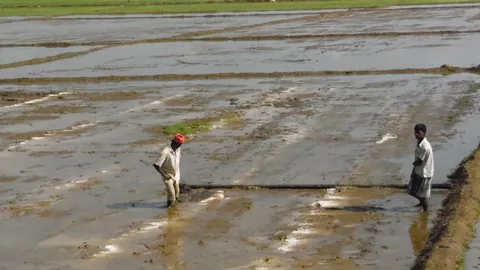
Wet season corn and low fields drown easily. A raised bed lifts the planting row above the water and puts a furrow beside it to carry the excess away. In a 2024 trial in Bangladesh, a raised bed 65 cm wide gave 13.1 tons per hectare, against 9.89 tons per hectare for the conventional method, and used 37.72 percent less irrigation water. It was one site with furrow irrigation, so treat it as a clue and not as a Philippine standard.
Whatever bed you choose, keep a drainage furrow along the low side of the field, so water leaves in hours and not in days.
Land preparation days go on the cropping calendar, dated back from planting. Add your corn lot, set day zero and see plowing, harrowing, furrowing and the first fertilizer in one place.
See the cropping calendarAdjust corn land preparation by soil and season
Clay soil needs more passes and the right moisture, because wet clay makes clods and dry clay breaks into lumps. Sandy soil needs fewer passes and more organic matter. In the dry season, plan the moisture first. In the wet season, start early, work in the dry spells and keep drainage furrows open.
For problem soils, see sodic and alkaline soil preparation and saline soil preparation. Anee, the smart farm technician, can answer in Tagalog or English if you describe your soil or send a photo.
Common mistakes
- Plowing when the soil is too wet, which makes hard clods.
- A single pass and planting, which leaves weeds ahead of the crop.
- Skipping the soil test and the lime on acid soil.
- Making furrows too early, so rain fills them before planting.
- No drainage in the wet season.
Questions about corn land preparation
How deep should I plow for corn?
How many times should I harrow?
How far apart should the furrows be?
Can I plant corn without plowing?
When does corn need lime?
Get every step of corn land preparation right
Register for free to read every step, then date each one on your own calendar with the Land Prep Planner, counted back from your planting day.
Free to register. No credit card. Works on any phone.