Vegetable Land Preparation: Plowing, Beds and Drainage
Good vegetable land preparation decides how well your tomato, eggplant, pepper, okra or lettuce roots grow. The basics are simple: plow early, plow and harrow two to three times, and shape the field so water drains away. Here is the full order of work, with the numbers for each crop.
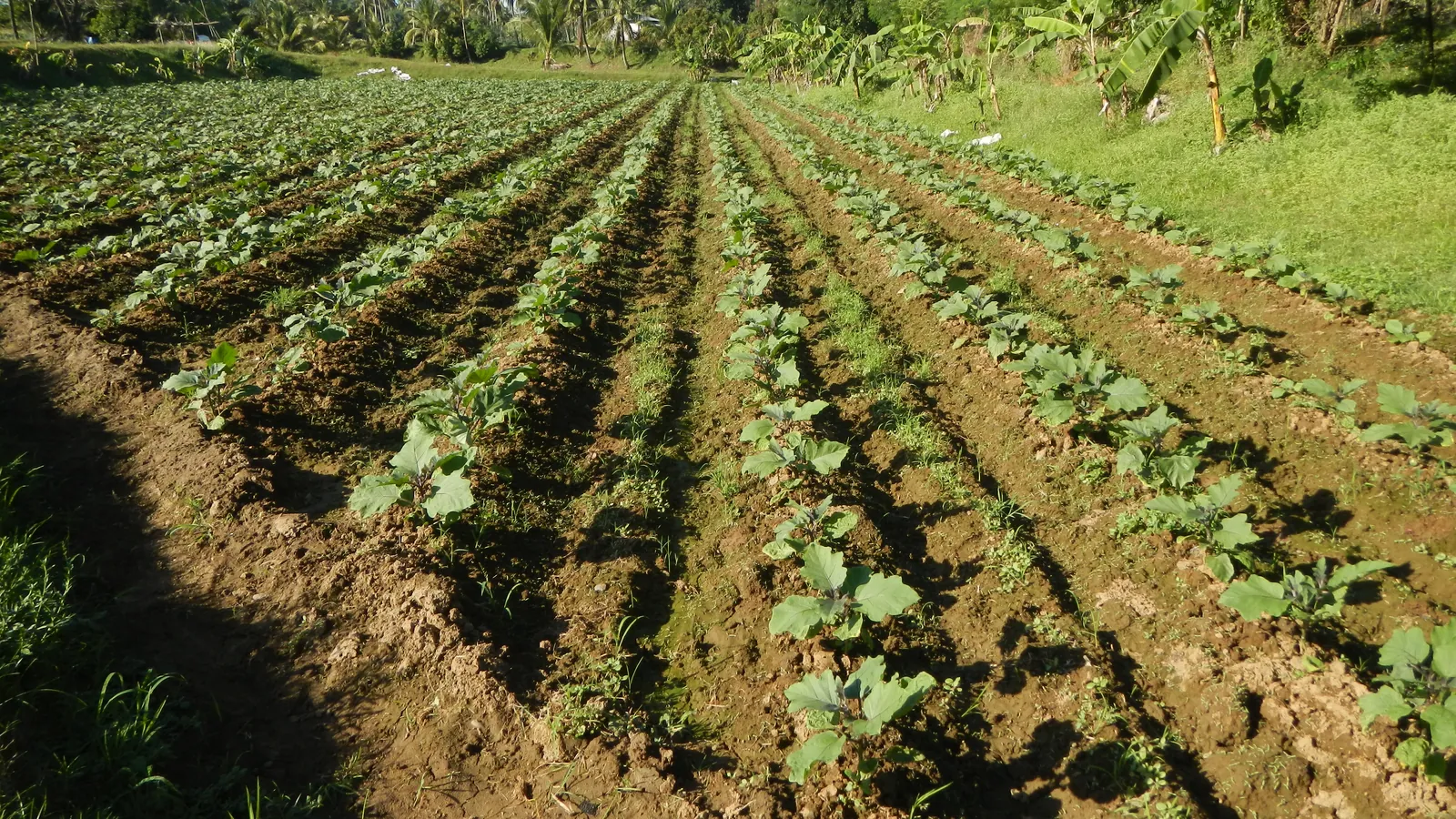
Your town may differ in soil and rain, so treat the numbers below as a starting point and ask your municipal agriculturist when your field is unusual.
Vegetables are shallow rooted and fussy about water. That is why the work before planting matters more here than for many other crops. A soft, level, well drained soil with plenty of organic matter gives the seedlings a fast start.
Vegetable land preparation: the order of work
Start early. Get the field ready well ahead of planting, so the weeds and stubble of the last crop have time to rot. Then follow these steps.
Clear the field
Remove old stalks, stones and large weeds. Leave the residue in the field only if it can rot before planting.
Plow 15 to 20 cm deep
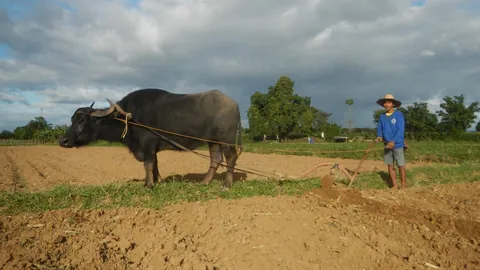
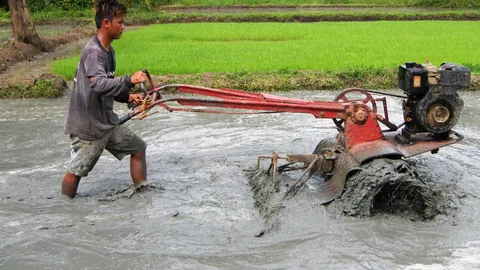
Tomato, eggplant, okra, upo and squash all take a plowing depth of 15 to 20 cm. Use a carabao, a hand tractor or a tractor, whichever you have.
Plow two to three times, one week apart
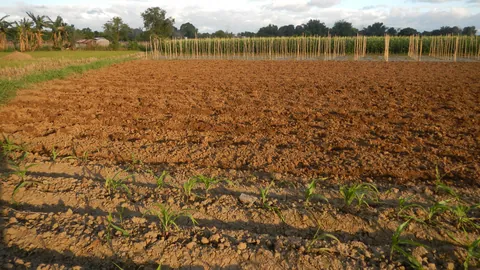
The weeks between passes let weed seeds sprout so the next pass buries them. Harrow after every plowing to break clods and level the soil.
Pulverize and level
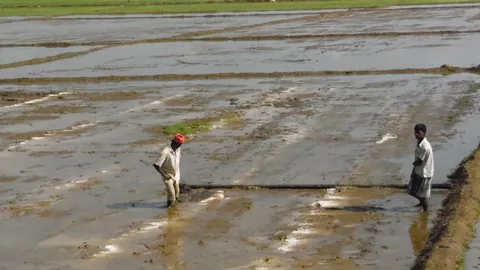
Well pulverized soil gives good aeration and helps roots form. A level field also stops water from pooling in low spots.
Add organic matter
Spread decomposed manure or compost before the last harrowing so it mixes into the soil. For tomato, use 20 bags per hectare when no soil test is available.
Form furrows or beds
Make them just after the last harrowing. Sizes depend on the crop, as the table below shows.
Raised beds and furrow sizes by crop
Fruiting vegetables usually go on furrows or ridges, while leafy vegetables go on raised beds. Cabbage can go either way. For example, use furrows 30 to 50 cm apart for commercial cabbage, but raised beds about 100 cm wide in backyards or where drainage is poor.
| Crop | Furrows or beds | Other planting detail |
|---|---|---|
| Tomato | Plow and harrow, then furrow | Hills 50 cm apart, seedlings 25 to 30 days old |
| Eggplant | Furrows 50 cm apart | Plastic mulch holes 50 cm apart |
| Pepper | Furrows 80 cm apart | Double rows: 35 cm between the two rows, 75 cm between double rows |
| Okra | Furrows 100 cm between rows | Plow 15 to 20 cm deep |
| Cabbage | Furrows 30 to 50 cm apart to form ridges, or raised beds about 100 cm wide | Use raised beds where drainage is poor |
| Lettuce | Raised beds 1 m wide, 0.75 m apart | Hills 30 to 40 cm apart, 2 rows per bed for crisphead, 3 for loose leaf |
Pepper deserves a note. Double rows shade the developing fruits, so they have better protection against sunburn.
Plastic mulch on the bed
Plastic mulch keeps weeds down, holds soil moisture and reduces fertilizer loss. The silver colour also reflects sunlight and repels insects hiding under the leaves.
Put the plastic on before transplanting. First, stretch it over the bed with the silver side up. Next, fasten the edges with bamboo slats 6 to 8 cm long, spaced 30 cm apart, or cover the edges with soil. Then punch the planting holes 50 cm apart, in two lines set about 10 cm in from each side of the bed. Finally, water the beds two days before transplanting to cool the soil under the plastic.
If you do not use plastic, spread rice straw, rice hull or coconut coir dust 3 to 5 cm thick after hilling up. For lettuce, rice straw or a mulching film also works.
Drainage and the season
Tomato does best in soil full of organic matter that drains freely. In the rainy months, plant on slightly higher ground so water does not pool around the roots. During the dry season, dig a catchment canal at the field edge to drain excess water after irrigation.
The same idea holds for the other crops. Eggplant is moderately sensitive to flooding, especially at flowering and fruit development. So in the rainy months, make beds higher, cut canals between them and keep the outlet open before the first typhoon rains arrive.
Fertilizer rates are best set by soil analysis. The rates here are fallbacks for farmers without a test. Ask your DA regional laboratory or municipal agriculturist about a soil test before you buy fertilizer.
Nursery and seedling beds
Most vegetables start in a nursery, so prepare that bed with the same care as the field. For tomato, there are two ways.
- Seedbed method. Choose a level, sunny, well drained spot near water with a windbreak. Plow and harrow until the soil is fine. Build five seedbeds, each 1 m by 10 m and 15 cm high. For tomato, that is enough for 150 to 200 grams of seed for one hectare.
- Sterilizing the seedbed. Moisten the bed, spread 3 to 5 cm of rice straw or rice hull on top and burn it slowly. Remove the unburned bits and excess ash. Do not sow right after burning, because fresh ash can harm the seeds.
- Trays or potlets. Use trays with 100 to 104 holes. Fill them with one part compost, one part carbonized rice hull and one part garden soil. Trays need less seed and cause less transplanting shock.
- Lettuce seedbeds. Mix 1 kg of fully decomposed chicken manure and 300 g of carbonized rice hull per square meter into the soil, then mulch the sown rows lightly.
Land preparation days go on the calendar, dated back from planting. Set your day zero once and anee.io places each plowing, harrowing and bed making task for you.
See the cropping calendarChange the work by soil
Sandy loam and clay loam are the best soils for tomato and eggplant. Soil pH matters too: tomato accepts 5.5 to 8.0 and eggplant 5.5 to 6.8.
Heavy clay holds water, so lean on raised beds and canals, as with cabbage in poorly drained fields. Sandy soil dries fast, so add more compost and keep mulch on the bed. If your soil is acidic, read our guide to acidic soil preparation. For salty or alkaline fields, see saline soil preparation and sodic and alkaline soil preparation.
Common mistakes
- Planting right after one rushed plowing, with big clods and no weeds killed.
- Skipping the canals, so the beds flood in the first heavy rain.
- Sowing seeds straight after burning rice straw on the seedbed.
- Applying fertilizer without a soil test and over feeding the crop.
- Leaving the plastic mulch loose, so wind lifts it.
Land preparation is also where you plan your inputs. Log your manure, compost and basal fertilizer in the farm inventory so you know the cost of each bed before the season starts. If you are unsure which crop to plant next, ask Anee, the smart farm technician, in Tagalog or English.
Questions about vegetable land preparation
How deep should I plow for vegetables?
How wide should a raised bed be?
Is plastic mulch worth it for eggplant?
How big is a vegetable seedbed?
What do I do for drainage in the wet season?
Get every step of vegetable land preparation right
Register for free to read every step, then date each one on your own calendar with the Land Prep Planner, counted back from your planting day.
Free to register. No credit card. Works on any phone.