Cucurbit Land Preparation: Hills, Beds and Trellis
Cucurbit land preparation sets up the long runs of vine that ampalaya, squash, upo, patola and cucumber need. These crops sprawl for meters, hate wet feet and carry heavy fruit. So you plan the furrows, the hills, the drainage and the trellis before a seed goes in. Here are the usual numbers, step by step.
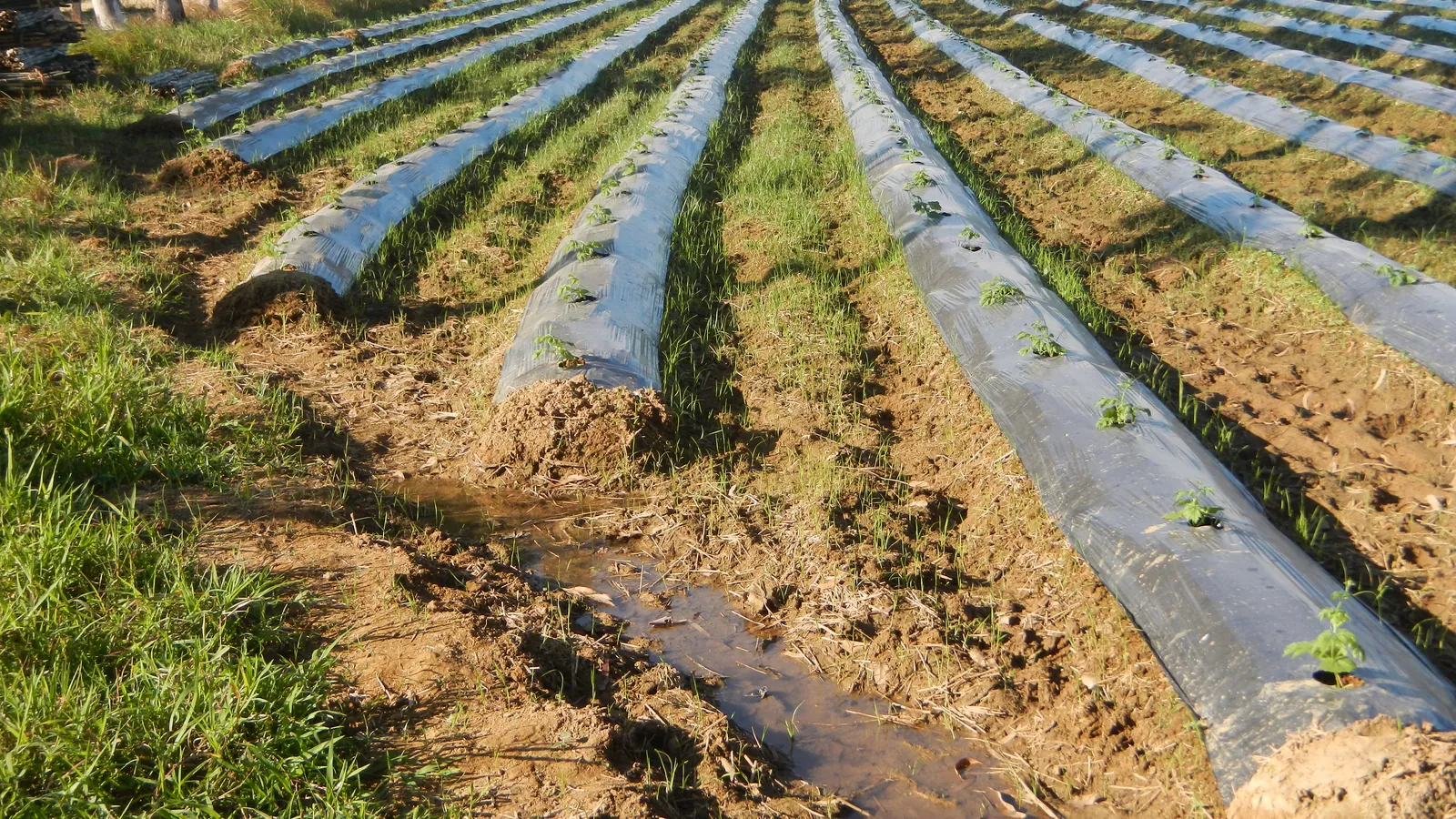
This guide covers ampalaya, squash, upo, patola and cucumber. Watermelon is not covered here, so ask your municipal agriculturist about it.
One rule holds for all of them. Prepare the field early and thoroughly, drain it well and leave room for the vines.
Cucurbit land preparation: step by step
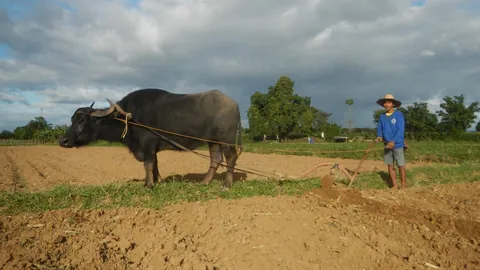
Plow 15 to 20 cm deep
Ampalaya, squash, upo and patola all take this depth for better root development.
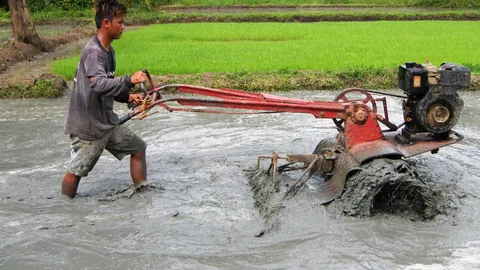
Plow and harrow two to three times, a week apart
The gap lets weed seeds sprout before the next plowing. Harrow after each pass. Well pulverized soil promotes good aeration and root formation.
Add organic matter
Without a soil test, ampalaya takes 10 to 20 tons per hectare of organic fertilizer, decomposed manure or compost before field preparation. Squash takes 1 to 2 kg per hill.
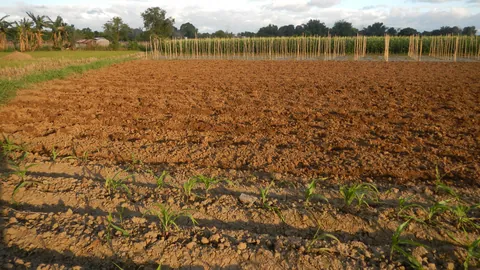
Set furrows after the last harrowing
Spacing depends on the crop and season, as the table shows.
Dig drainage canals
Build canals to prevent waterlogging in the rainy season.
Plan the trellis
Mark the post lines before planting so furrows and trellis match.
Furrows, hills and trellis by crop
| Crop | Furrows or beds | Hills | Trellis |
|---|---|---|---|
| Ampalaya | 2 m apart in the dry season, 3 m in the wet season | 1.5 to 2.5 m along the furrow | 2.5 to 3.0 m wide, 1.5 to 2 m high, posts every 3 m. Start when plants are 15 cm tall |
| Squash | 2.0 to 3.0 m apart | 1 m apart | No trellis. Lay 5 to 6 cm of straw or rice hull under the fruits |
| Upo | 2 to 3 m apart | 1 m apart | Overhead trellis 2 to 3 m wide and 2 m high |
| Patola | 2.5 to 3.0 m apart | 1.0 m apart | Overhead trellis 2 to 3 m wide and 2 m high |
| Cucumber | Beds 1 m wide with 0.5 m between | 0.5 m apart | Posts 2 m high every 2 to 3 m, with wire and twine |
For cucumber, mix 500 g of compost or chicken manure per furrow after the last harrowing.
Raised beds and drainage
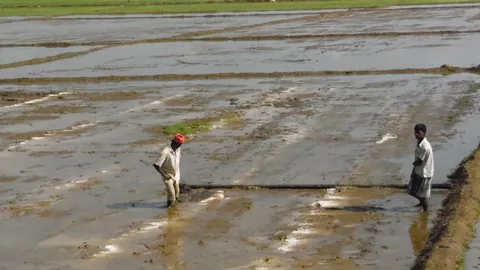
Cucurbits rot where water stands. Ampalaya cannot tolerate waterlogging, so provide a drainage canal. Upo suffers in soil that stays too wet, since wet soil brings disease, so give it good drainage in the rainy months.
In the rainy months, sow squash, upo and patola on raised beds or ridges, so floodwater does not rot the seeds and young plants. In the dry season, use furrow irrigation about weekly for upo. Then spread rice straw around the plant base as mulch to hold moisture.
Soil should be well drained. The best is sandy loam or clay loam with good drainage and high organic matter, at pH 6.0 to 6.7 for ampalaya and pH 5.5 to 6.5 for squash.
Trellis setup before planting
A trellis lifts fruit off the wet soil. Trellising is essential in the wet season for upo to reduce fruit rot and malformation, and usually essential for patola too.
Build an overhead trellis with ipil ipil or bamboo poles. Make it 2 to 3 m wide and 2 m high. Then tie wire or nylon twine across it, lengthwise and crosswise. Add a ladder like trellis or a vertical pole beside each plant, and tie the young stem lightly to it until it reaches the top.
For ampalaya, put up the trellis when plants are about 15 cm high. Use posts every 3 m and fix plastic string or straw twine along the hills so the vines climb.
Squash can be grown with zero tillage. Clear the weeds by hand, dig holes 10 cm deep spaced 3 m apart and pulverize the soil in each hole to help germination.
Plastic mulch and natural mulch
Cucumber can take three kinds of mulch: organic mulch such as rice straw or dry cogon, plastic mulch, and living mulch such as pechay or kangkong. Mulch helps control weeds and keeps soil moisture after about 20 days from emergence.
If you use plastic, lay it over the bed before planting and make planting holes. For the steps, follow the method in our vegetable land preparation guide. For squash, also lay 5 to 6 cm of straw or rice hull under the fruits, so they do not touch the soil and rot.
Land preparation days go on the calendar, dated back from planting. Add your cucurbit lot to anee.io and it dates the plowing, trellis building and planting for you.
See the cropping calendarChange the work by soil and season
- Dry season. Ampalaya furrows go 2 m apart. Use furrow irrigation and straw mulch.
- Wet season. Ampalaya furrows go 3 m apart. Use raised beds, canals and a trellis. Patola goes in from June to September for the wet season crop, and from February to May for the dry season crop.
- Clay and sandy soils. Sandy loam and clay loam are best. Heavy clay needs higher beds and canals, and sandy soil needs more compost.
- Acidic soil. If your test shows a pH below the ranges above, read acidic soil preparation.
- Salty or alkaline soil. See saline soil preparation and sodic and alkaline soil preparation.
Common mistakes
- Setting furrows too close, so vines tangle and cannot be sprayed.
- Skipping canals, so the field floods in the first typhoon rains.
- Planting squash, upo or patola on flat ground in the wet season.
- Building the trellis late, after the vines have already run on the ground.
- Using fresh manure that burns the roots.
Fruit flies and beetles hit cucurbits hard. Read about the melon fly and the squash beetle before the fruiting stage. Ask Anee, the smart farm technician, when your layout does not match these numbers.
Questions about cucurbit land preparation
How far apart should ampalaya furrows be?
How high should a trellis for upo or patola be?
Can squash be planted without plowing?
Do cucurbits need raised beds?
How much organic fertilizer do I add?
Get every step of cucurbit land preparation right
Register for free to read every step, then date each one on your own calendar with the Land Prep Planner, counted back from your planting day.
Free to register. No credit card. Works on any phone.