Lettuce Nutrient Deficiency: Signs, Causes and the Fertilizer That Fixes It
Lettuce nutrient deficiency is one of the first things to check when the leaves of your litsugas (lettuce) turn yellow, purple or burnt at the edges. On Philippine farms the usual ones are nitrogen, calcium, potassium, phosphorus, magnesium, boron and molybdenum. This guide shows where each one starts, how to be sure, and the fertilizer that fixes it.
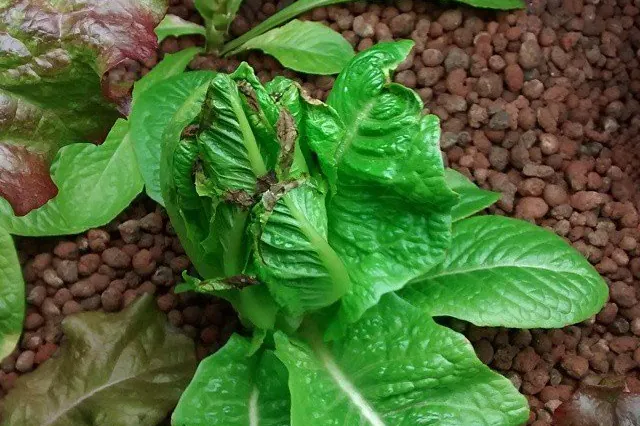
Start with one question: did the change begin on the old leaves or on the young ones? Nitrogen, potassium, phosphorus, magnesium and molybdenum move inside the plant, so a shortage shows on the old, lower leaves first. But calcium and boron stay where the plant first put them, so the young leaves and the growing tip show it first. After that, the color and the pattern narrow down which lettuce nutrient deficiency you have, and a soil test confirms it. Each one below has its signs, its causes and its fix.
Lettuce nutrient deficiency signs, old leaves and young leaves
Shows first on the old leaves
| Nutrient | Where it starts | What you see | Fix with |
|---|---|---|---|
| Nitrogen | old, lower leaves, the whole plant | Outer leaves turn light green to yellow and the head stays loose and small. | Urea 46 0 0, Ammonium sulfate 21 0 0 |
| Potassium | old, lower leaves, leaf edges and tips | Older leaves get yellow spots on the edges that die and scorch, and heads stay loose. | Muriate of potash 0 0 60, Sulfate of potash 0 0 50 |
| Phosphorus | old, lower leaves, the whole plant | Stunted, dull dark green plants that are late to head. | Ammonium phosphate 16 20 0, Complete 14 14 14 |
| Magnesium | old, lower leaves, between the veins | Older leaves get yellow to orange edges and yellow between green veins. | Magnesium sulfate (Epsom salt), Dolomite |
| Molybdenum | the whole plant, leaf edges and tips | On acid soil, pale stunted plants whose leaf edges wilt and die back, with clear spots between veins. | Sodium molybdate, Agricultural lime |
Shows first on the young leaves
| Nutrient | Where it starts | What you see | Fix with |
|---|---|---|---|
| Calcium | young leaves and the tip, leaf edges and tips | Brown or grey dead edges on the young inner leaves, worse in hot weather. | Agricultural lime, Dolomite |
| Boron | young leaves and the tip, the roots | Damage sits at the growing point of the youngest leaves, with poor, stubby roots. | Borax, Solubor (sodium borate) |
Before you buy fertilizer for a lettuce nutrient deficiency
So use the table to pick the likeliest lettuce nutrient deficiency, then read its section below. Also keep in mind that dry soil, standing water, cold nights, a pest or a disease can look the same. That is why it pays to check the roots and the whole field first.
Nitrogen deficiency in lettuce
Older outer leaves turn light green first, then the whole head becomes yellow green. Growth is strongly held back and the crop is late. Older leaves may rot, red varieties can show a purple flush, and in severe cases no head forms. Roots grow long with few side roots. You see it most at this stage: from transplanting to heading.
Why nitrogen deficiency happens in litsugas
Sandy soils, heavy rain or watering that leaches nitrogen, low organic matter, and raw straw or manure.
How to tell it apart
Magnesium shortage keeps the veins green. Sulfur shortage starts on younger leaves. To be sure, old leaves yellow first. Soil test and leaf tissue test.
What to apply for nitrogen deficiency
Side dress or fertigate with urea based on the soil test. Use 1 tablespoon of urea in 1 gallon of water, given every two weeks, when urea is applied through the water. Side dress 1 to 2 bags of Urea 46 0 0 per hectare, about 5 grams a plant, two and four weeks after transplanting, and water it in.
- Urea 46 0 0
- Ammonium sulfate 21 0 0
- Complete 14 14 14
- Calcium nitrate
Sold here with nitrogen: Atlas Granular Urea (46 0 0) by Atlas Fertilizer, Crown Champion Ammonium Sulfate by Aqua Hydroponic Prime Ventures (21 0 0 with 24 percent sulfur), Agripower 46 0 0 (Locally Blended) Coated by Green Acres Agri Tech and Amigo Planters Sabic Zinc Coated Urea by La Filipina (46 0 0 with 0.1 percent zinc). Check the FPA registration on the bag and follow the label rate. For the how and when, see our guide to urea fertilizer, and the page on nitrogen deficiency in every crop. In anee.io, Anee, the smart farm technician, reads a photo of the leaf and tells you which nutrient is short.
To keep it away, use 3 to 10 tonnes of organic fertilizer per hectare mixed into the plots before planting, plus basal and side dress fertilizer based on soil analysis. Split the nitrogen into two or three doses.
Calcium deficiency in lettuce
Brown or grey dead lesions appear first on the edges and tips of young leaves (tip burn). The leaves can look wavy and darker green. The damage spreads inward and later to older leaves, and brown veins may show near the burnt areas. Early, severe shortage stunts plants so they do not head. Roots are short, bushy and brown, with blackened tips. You see it most at this stage: rapid growth and heading, especially in hot weather. Tip burn occurs at high temperatures.
Why calcium deficiency happens in litsugas
Too little calcium reaching fast growing inner leaves because of heat, dry soil or uneven watering, plus acid sandy soils and high nitrogen or potassium.
How to tell it apart
Boron shortage hits the newest leaves too. But it stays in the heart of the plant and never spreads as burnt leaf edges. To be sure, check the inner leaves for brown edges after hot spells. Soil test for calcium and pH.
What to apply for calcium deficiency
Give enough water and keep enough calcium in the soil. Water evenly, shade or plant in cooler months in the lowlands, lime acid soil based on the test, and use tolerant varieties. On acid soil, lime by the soil test: usually 1 to 3 tons of Agricultural lime or Dolomite per hectare, mixed in 2 to 4 weeks before planting. On soil that is not acid, use 200 to 500 kg of Gypsum per hectare.
- Agricultural lime
- Dolomite
- Gypsum
- Calcium nitrate
Sold here with calcium: Micronized Activated Calcite by CMCS Agricultural Products (37.6 percent calcium), Dolomite by A6 Agrisource (24 percent calcium and 11 percent magnesium), Titon Pro by Vast Agro (27.2 percent calcium, 6.1 percent silicon and 3.6 percent magnesium) and Crown Champion Nitrogen Calcium Compound (Cal Nit) by Aqua Hydroponic Prime Ventures (15 0 0 with 18 percent calcium). Check the FPA registration on the bag and follow the label rate. For the how and when, see our guide to fertilizer for tomatoes, and the page on calcium deficiency in every crop.
To keep it away, grow head lettuce in cool months or highlands, lime acid soil to pH 6 to 6.8, and avoid heavy nitrogen. Keep potash in balance with magnesium and calcium.
Potassium deficiency in lettuce
Older leaves show yellow spots on the tips and edges that grow and then die, and the scorched edges distort the leaves. Severe cases have mottled dark green leaves that wilt. Leaves may be smoother and rounder than normal, and plants are stunted with loose heads or none. Roots are long with few side roots and may be yellowish and slimy. You see it most at this stage: mid growth to heading.
Why potassium deficiency happens in litsugas
Acid or sandy soils, heavy rain or irrigation, drought, low potassium reserves and soils rich in magnesium.
How to tell it apart
High salt in the soil gives similar edge burn but usually with brown veins. To be sure, soil test for potassium and salinity, and a leaf tissue test.
What to apply for potassium deficiency
Apply muriate of potash or sulfate of potash based on the soil test, in split doses. Follow the soil test for the rate. A usual dose is 1 to 2 bags of Muriate of potash 0 0 60 per hectare, split between transplanting and the first side dress.
- Muriate of potash 0 0 60
- Sulfate of potash 0 0 50
- Complete 14 14 14
Sold here with potassium: Atlas Muriate of Potash (MOP) by Atlas Fertilizer (0 0 60), Simplot Sulfate 0 0 50 by Nutranta, Potassium Nitrate by Parafield (13 0 46) and Qrop Mix Production 14 0 23 plus 13 Cao by Farmtech Agriland (14 0 23 with 9.3 percent calcium). Check the FPA registration on the bag and follow the label rate. For the how and when, see our guide to potash fertilizer, and the page on potassium deficiency in every crop.
To keep it away, include potash in the basal fertilizer. Keep organic matter up with compost, manure or crop residues.
Phosphorus deficiency in lettuce
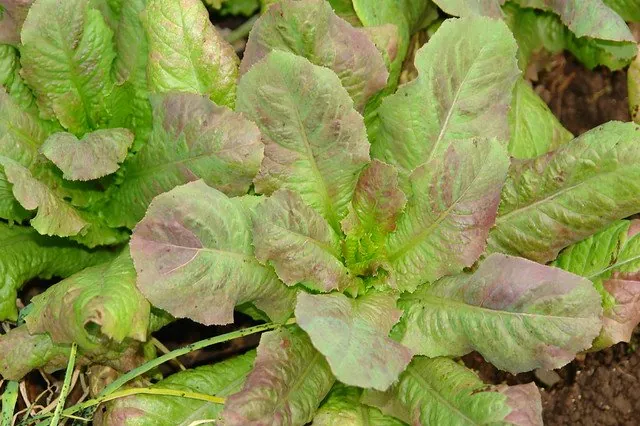
Growth is stunted and heading is late or fails, leaving a rosette. Leaves are dull dark green and may crinkle or show reddish color. Red varieties flush purple. Older leaves get papery dead patches and die, and side roots are few and may be reddish. You see it most at this stage: seedling and early growth, especially in cool weather.
Why phosphorus deficiency happens in litsugas
Low temperatures, acid or calcareous soils, iron rich soils, low organic matter and weak roots.
How to tell it apart
Too much nitrogen also makes plants dark green, but those leaves are rounder and the undersides are not purple. To be sure, soil test for available phosphorus and pH.
What to apply for phosphorus deficiency
Apply phosphorus near the roots based on the soil test, and lime very acid soil. Follow the soil test for the rate. A usual basal dose is 4 to 6 bags of Complete 14 14 14 per hectare, about 10 grams a hill, mixed into the soil at transplanting.
- Ammonium phosphate 16 20 0
- Complete 14 14 14
- Diammonium phosphate 18 46 0
Sold here with phosphorus: Philphos 18 46 0 (Di Ammonium Phosphate), Atlas Super Gro (16 20 0) by Atlas Fertilizer, Amigo Planters Granular Single Super Phosphate by La Filipina (0 18 0 with 11 percent sulfur) and Triple Super Phosphate by Newman Chemicals (0 46 0). Check the FPA registration on the bag and follow the label rate. For the how and when, see our guide to 16 20 0 fertilizer, and the page on phosphorus deficiency in every crop.
To keep it away, use a phosphorus starter at transplanting and add compost.
Magnesium deficiency in lettuce
Older leaves show it first: the edges turn yellow to orange and the areas between the veins yellow, while the veins stay green. With time the yellow areas die, and the areas between veins curl upward. Growth is only a little slower when the shortage is moderate but badly held back when severe. You see it most at this stage: mid growth to heading.
Why magnesium deficiency happens in litsugas
Sandy or acid soils, soils rich in potassium, heavy potash fertilizer, and cold wet periods.
How to tell it apart
Manganese shortage looks similar but its yellow is greenish yellow, not orange yellow. Nitrogen shortage yellows the whole leaf. To be sure, soil test for magnesium and potassium, and a leaf tissue test.
What to apply for magnesium deficiency
Spray magnesium sulfate on the leaves for quick relief and correct the soil with dolomite or magnesium sulfate based on the soil test. A usual dose is 100 to 150 kg of Kieserite or 150 to 200 kg of Magnesium sulfate per hectare at planting. On acid soil, 1 to 2 tons of Dolomite mixed in before planting both limes and feeds. For quick help, spray Magnesium sulfate at 1 to 2 percent (160 to 320 grams in a 16 liter sprayer) two or three times, 10 to 14 days apart.
- Magnesium sulfate (Epsom salt)
- Dolomite
Sold here with magnesium: Dolomite by A6 Agrisource (24 percent calcium and 11 percent magnesium), Agsmart Kieserite Granule (20 percent sulfur and 16.3 percent magnesium), DDDD Planter's Choice Magnesium Sulphate Monohydrate by Modern Time (15.1 percent magnesium) and Zetryl MAG 9 by Zetryl Chem (9 percent magnesium). Check the FPA registration on the bag and follow the label rate. For the how and when, see our guide to complete fertilizer, and the page on magnesium deficiency in every crop.
To keep it away, use dolomite on acid soil and do not overuse potash.
Boron deficiency in lettuce
Like calcium shortage it starts on the youngest leaves. But the damage stays at the growing point instead of spreading as edge lesions. Roots are poorly developed, with many very short, branched side roots that brown and die back in severe cases. You see it most at this stage: mid growth.
Why boron deficiency happens in litsugas
Sandy soils where boron leaches, alkaline or overlimed soils, low organic matter and drought.
How to tell it apart
Calcium tip burn spreads along the leaf edges. Boron damage stays at the growing point. To be sure, soil test for boron and a leaf tissue test before treating, since boron has a narrow safe range. In a soil test, less than 0.5 ppm of boron is low.
What to apply for boron deficiency
Apply boron only after a test confirms the need, at a light rate. Follow the soil test. Do not repeat doses, as too much boron burns leaves. A usual soil dose is 5 to 10 kg of Borax per hectare (0.5 to 1 kg of boron), mixed evenly with the basal fertilizer.
- Borax
- Solubor (sodium borate)
Sold here with boron: Etifert 11 (Borax Decahydrate) by Zetryl Chem (11 percent boron), Fertibagra 15G by Unilox Far East Resources (14.6 percent boron), B17 (Boric Acid) by Newman Chemicals (17 percent boron) and Better Yield by Bacphil Planters Fertilizer (0 0 0.9 with 10 percent boron). Check the FPA registration on the bag and follow the label rate. For the how and when, see our guide to foliar fertilizer, and the page on boron deficiency in every crop.
To keep it away, keep organic matter up and avoid overliming.
Molybdenum deficiency in lettuce
Plants are pale green with clearly stunted growth. Leaves wilt from the tips and edges and the tissue dies back to brown or yellow, most often on young plants. Clear, see through spots appear between the veins, then die and join into bigger dead patches. You see it most at this stage: young plants, on acid soils.
Why molybdenum deficiency happens in litsugas
Acid soils and low pH, and low organic matter.
How to tell it apart
Calcium shortage makes the youngest leaves crinkled and darker green. The see through spots are not insect damage. To be sure, soil pH test and leaf tissue test. A trial spray of sodium molybdate on a few plants.
What to apply for molybdenum deficiency
Mix about 50 grams of sodium molybdate in 100 liters of water and spray the leaves. For the next crop, mix about 1 kg per hectare into the fertilizer. Lime acid soils. Spray Sodium molybdate at 0.05 to 0.1 percent (8 to 16 grams in a 16 liter sprayer) once or twice on young plants.
- Sodium molybdate
- Agricultural lime
- Dolomite
Sold here with molybdenum: Tierramino Molybdenum by Unilox Far East Resources (16 percent molybdenum) and YaraVita Teprosyn Mo (0 15 0 with 15.3 percent molybdenum). Check the FPA registration on the bag and follow the label rate. For the how and when, see our guide to foliar fertilizer, and the page on molybdenum deficiency in every crop.
To keep it away, lime acid soil to about pH 6 well ahead of planting. Test the soil every two or three years.
A soil test is the surest check for any lettuce nutrient deficiency. Before you buy, ask your Municipal Agriculture Office where to send a soil sample. The DA regional soil laboratories test soil, and the result says how much of each fertilizer your litsugas needs. That saves money, because extra fertilizer is money lost.
Open the Nutrient Deficiency Finder, pick litsugas, say where the leaves changed first and what you see, and get the fertilizers sold here that fix it.
- Anee, the smart farm technician, reads a photo of the leaf
- The cropping calendar dates every fertilizer application of your season
Lettuce nutrient deficiency questions
Why are my litsugas leaves turning yellow?
What fertilizer fixes nitrogen deficiency in lettuce?
What fertilizer fixes calcium deficiency in lettuce?
What fertilizer fixes potassium deficiency in lettuce?
How do I know which nutrient my litsugas lacks?
- Yara UK: Nitrogen deficiency in lettuce
- Yara UK: Calcium and boron deficiency in lettuce
- Yara UK: Potassium deficiency in lettuce
- Yara UK: Phosphorus deficiency in lettuce
- Yara UK: Magnesium deficiency in lettuce
- Yara UK: Molybdenum deficiency in lettuce
- NSW DPI Agfact AC.4: Molybdenum deficiency in plants
Find the missing nutrient and fix it
With Libre + Anee, read the whole guide: how to tell the deficiency from look alikes, how to be sure, what to apply, and the fertilizers sold here that supply it.
The account is free, no credit card.