

Root Crops
Not sure it is this disease? Use the Disease Finder in anee.io ›
Storage rot of root crops
Stored tubers and roots soften, turn brown or black inside and grow white, green or black mold, starting at cuts and bruises.
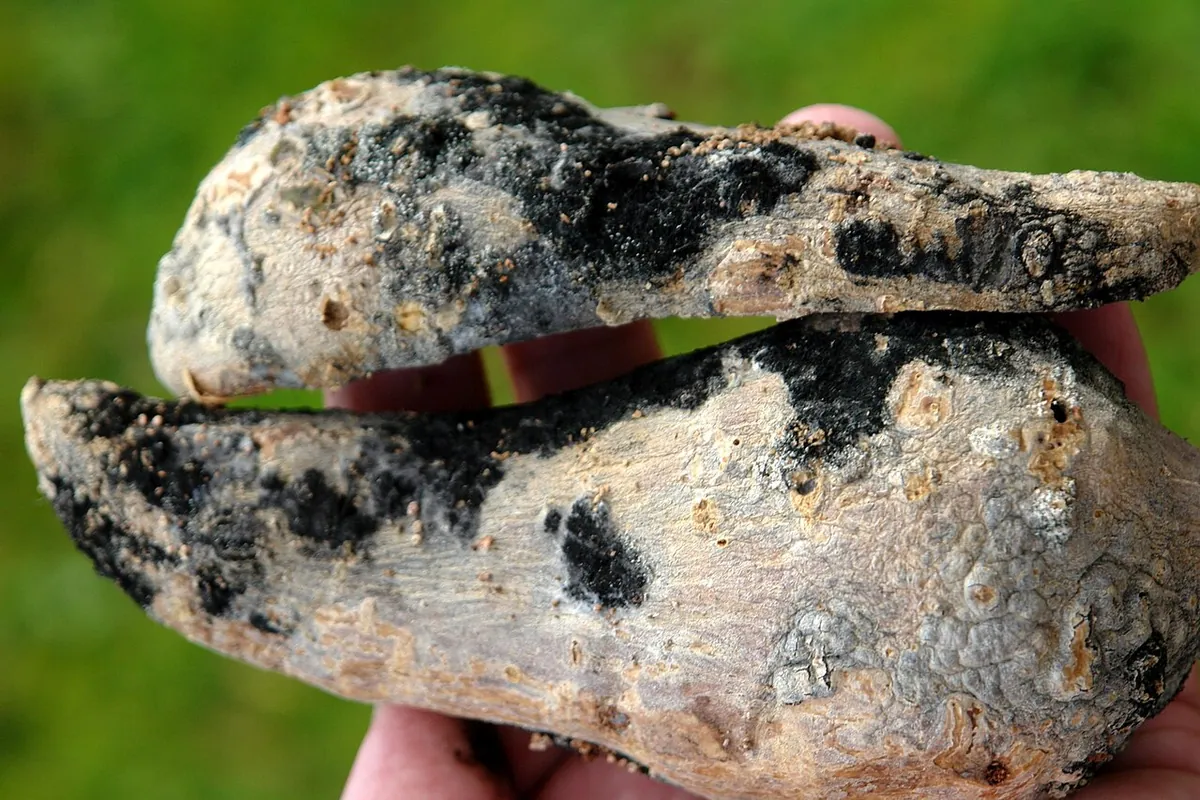
Crops it strikes
What you see
RottingPowdery or fuzzy growth
When to act
Sort stored roots and tubers every week, and take out any soft, moldy, sunken or sour smelling one at once before it spreads.
Before you spray
Sprays do not save stored roots. Dig with care, cure them in the shade, keep only sound ones and store them dry and airy.
How to prevent it
- Dig with care so the skin is not cut or bruised, and harvest in dry weather.
- Cure sweet potato, ubi and taro in the shade for a few days before storing, so small wounds heal over.
- Sell or process cassava within two or three days of digging. It spoils fast once out of the ground.
- Store only sound roots in a clean, dry, airy and shaded place, off the floor.
- Keep sweet potato weevil out of the field and the store, since its holes let the rot fungi in.
Where this comes from
Not sure it is this one?
Many diseases look alike. Send a photo to Anee, the smart farm technician in anee.io. She reads it with your crop, its age and the weather, and tells you what it most likely is and what to do first. In Tagalog or English.