Corn Rust: How to Spot It and Protect Your Mais
Corn rust is a fungal disease that covers mais leaves with small, powdery, rusty pustules. Two fungi cause it, Puccinia sorghi and Puccinia polysora, and the second one is more common in the tropics.
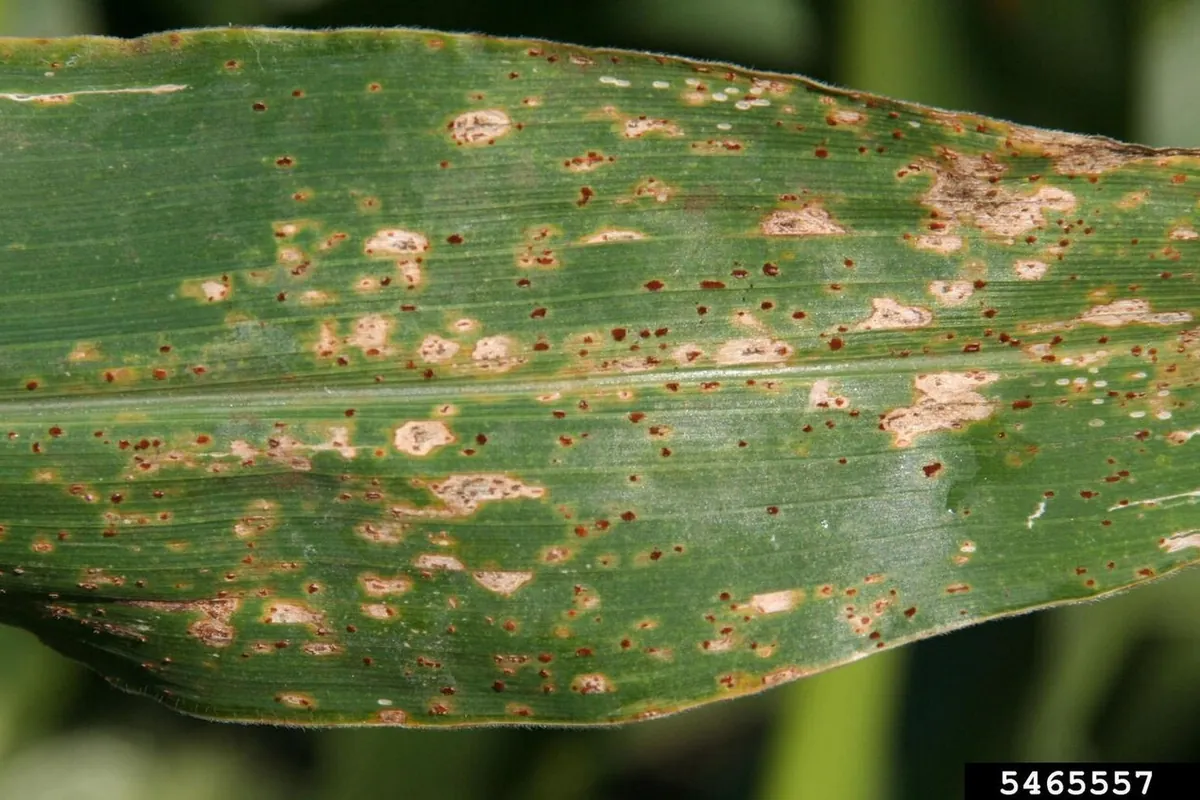
What Is Corn Rust?
Corn rust comes in two kinds. Common rust is caused by Puccinia sorghi, and southern rust, also called American corn rust, is caused by Puccinia polysora. The Pacific Pests and Pathogens database says both are widespread across tropical and subtropical regions, and that southern rust is more common in the tropics, especially at low altitude.
For most Philippine corn growers, rust is a late season problem. It usually shows after the tassel opens, when the grain has already started to form. That is why the Pacific Pests fact sheet calls it usually of minor importance. Even so, a heavy attack in a susceptible hybrid can cut yield, so scout your field and read our pagtatanim ng mais guide to time planting well.
| Fact | Details |
|---|---|
| Name | Corn rust |
| Scientific name | Puccinia polysora, Puccinia sorghi |
| Kind | Fungus (a fungal disease) |
| Crops it attacks | Corn |
| Local names | None recorded |
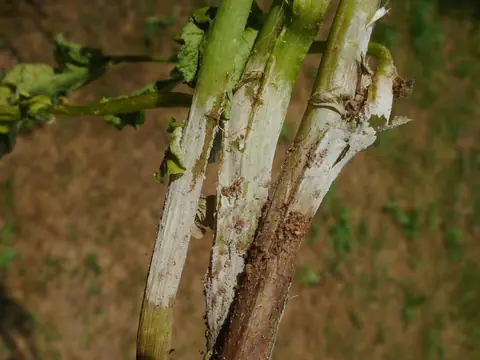
| Where it strikes | Leaves and stems and tillers |
| When it strikes | Corn rust shows up late in the crop, around and after tasseling, and it spreads fastest in warm, wet weather. |
| How it spreads | The spores are powdery and the wind carries them from field to field. A pustule makes thousands of spores, and the fungus survives on crop debris and volunteer corn. |
How to Identify Corn Rust
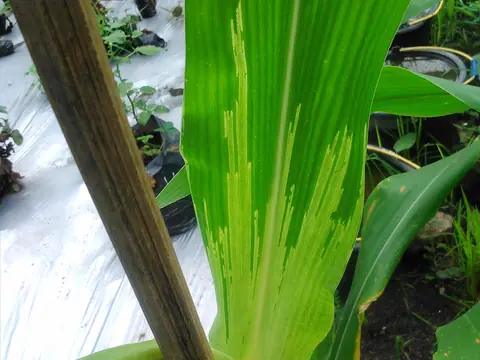
Look at both sides of the leaf. Common rust makes powdery pustules, round to long and brown to brick red. They are spread over both faces of the leaf. Southern rust pustules are round or oval and pale cinnamon brown to orange. They sit crowded close together, mostly on the top of the leaf. Rub a pustule with your finger. If it leaves rusty brown powder, it is rust.
- Small, round to oval pustules on the leaves, brown, orange or brick red.
- Powdery spores that rub off as rusty dust on your fingers or clothes.
- Common rust pustules scattered on both sides of the leaf.
- Southern rust pustules in dense clusters on the upper side of the leaf.
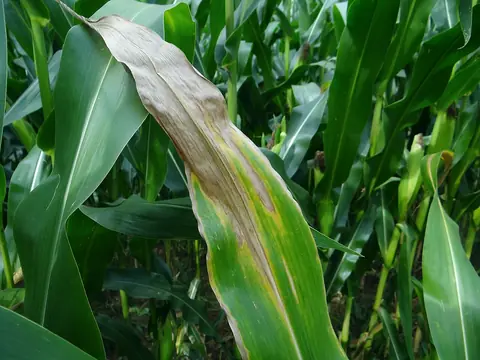
- Pustules turning brown black as the plant ages, with leaves that dry early on bad attacks.
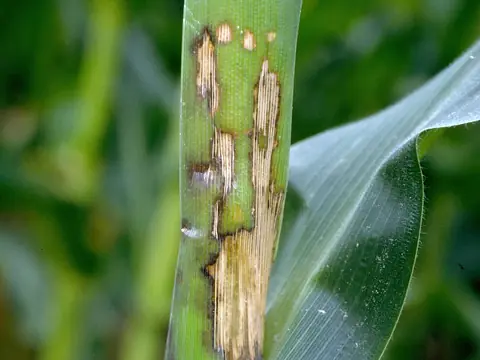
Rust pustules are often mistaken for corn downy mildew or northern corn leaf blight. Rust leaves powder on your finger, blight makes long tan cigar shaped lesions, and downy mildew shows pale stripes and white fuzz on young plants.
How Corn Rust Hurts Your Corn
Common rust is minor on most modern corn hybrids, and the Pacific Pests fact sheet says it is a bigger worry for sweet corn. Southern rust is the more aggressive one. University of Nebraska extension reports losses of up to 45 percent in severe cases in the United States, and about 6 percent loss for each 10 percent of leaf area infected by common rust. Those are US figures, so Philippine losses will differ by variety and season.
A spray threshold from the Pacific Pests fact sheet is an average of six pustules per leaf on susceptible crops. Because the damage grows with warm, wet days, scouting every week from tasseling is the key. For a wider look at what attacks mais, see our guide to crop pests in the Philippines.
How to Control Corn Rust
- Plant a resistant variety. The Pacific Pests fact sheet calls resistant varieties the best way to manage rust, and many hybrids carry it.
- Plant in the drier season where you can, and avoid planting next to an infected field.
- Destroy volunteer corn and bury or burn crop debris after harvest.
- Remove Oxalis weeds near the field, because they can host common rust.
- Plant early or use shorter season varieties so the crop matures before the disease peaks, as University of Nebraska extension advises.
- Scout weekly from tasseling and decide on a spray only if the pustules are heavy and the weather stays wet.
When a Spray Makes Sense
A spray rarely pays on a field corn crop, because rust arrives late and the effect on yield is often minor. It can make sense on susceptible sweet corn or in a bad year. Rotate the fungicide group, because repeated use of one group can lead to resistant rust. Follow the FPA registered label.
| Active ingredient | FRAC group | On Philippine labels |
|---|---|---|
| Difenoconazole plus propiconazole | FRAC 3 plus 3 | A first choice. 24 registered products name it on corn. |
| Tebuconazole plus trifloxystrobin | FRAC 3 plus 11 | A first choice. 10 registered products name it on corn. |
| Azoxystrobin | FRAC 11 | A sound second choice. 19 registered products name it on corn. |
| Tebuconazole | FRAC 3 | A sound second choice. 12 registered products name it on corn. |
| Chlorothalonil | FRAC M05 | A sound second choice. 11 registered products name it on corn. |
| Fluoxastrobin | FRAC 11 | A sound second choice. 2 registered products name it on corn. |
Use only products registered with the Fertilizer and Pesticide Authority, and follow the label for the rate, the timing and the protective clothing. Switch to a different fungicide group next time, so the disease does not learn to survive it. Our guide to plant diseases explains how.
Keep It Out Next Season
- Plant a resistant hybrid: it is the best and cheapest rust control.
- Plant early or in the drier season, and do not plant beside an older infected field.
- Destroy volunteer corn, and plow under or remove the crop residue after harvest.
- Remove Oxalis weeds near the field, since they can host common rust.
- Feed balanced nitrogen with enough potassium.
Not Sure What You Are Seeing?
Take a clear photo of the spots or the damage up close, then the whole plant, then ask Anee, the smart farm technician in anee.io, in Tagalog or English. Anee tells you what it most likely is and what to do at the age of your crop. You can also put your scouting days on the cropping calendar, so the team knows when to walk the field.
anee.io keeps your scouting, spraying and harvest on one calendar, and Anee answers when something looks wrong.
- Scouting days dated from each lot's own planting day
- Photos and notes for every lot
- Anee, the smart farm technician, in Tagalog or English
Questions Farmers Ask About Corn Rust
What is the difference between common rust and southern rust?
Do I need to spray for corn rust?
Can corn rust spread from one field to another?
Stop the spread of Corn Rust
With Libre + Anee, read the whole guide: how to tell it from look alikes, what makes it spread, and what to spray and when.
The account is free, no credit card.