Corn Ear Rot: How to Spot It and Protect Your Harvested Mais
Corn ear rot is a group of fungal diseases. They grow as pink white, greenish or powdery mold on the cob and rot the kernels. The harm goes beyond lost yield. Some of the fungi leave toxins in the grain that hurt animals and people.
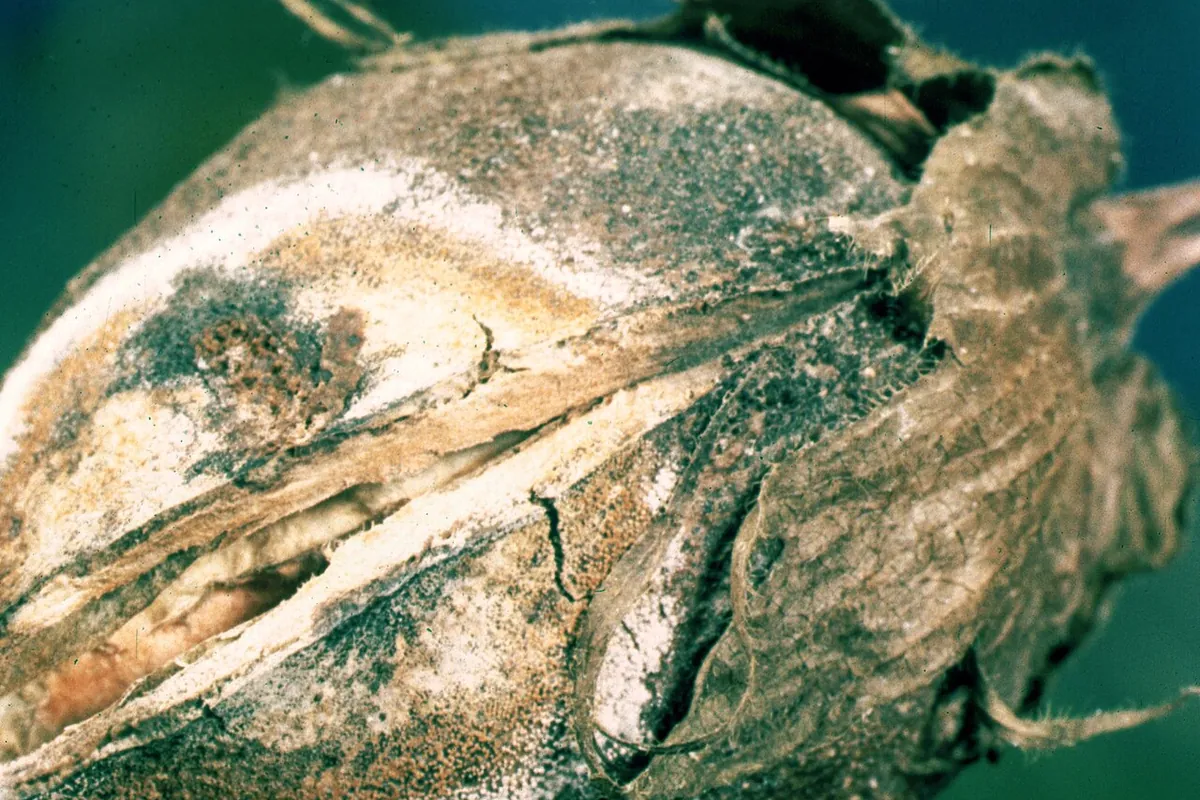
What Is Corn Ear Rot?
Two fungi stand behind most ear rots. Fusarium verticillioides causes Fusarium ear and kernel rot and makes fumonisin. Aspergillus flavus causes Aspergillus ear rot and makes aflatoxin. A study of 300 fungal isolates found F. verticillioides was the main fumonisin producing Fusarium in Philippine corn areas.
For a farmer, the cob is the money. A moldy cob is lower in grade, and a toxic one can be unfit for feed or food. The Pacific Pests and Pathogens database notes that contaminated maize made horses sick in New Caledonia. In 1981 five of 45 sick animals died. So drying and storing the grain well matter as much as field care. See our guide to corn seeds when choosing what to plant.
| Fact | Details |
|---|---|
| Name | Corn ear rot |
| Scientific name | Fusarium verticillioides, Aspergillus flavus |
| Kind | Fungus (a fungal disease) |
| Crops it attacks | Corn |
| Local names | None recorded |
| Where it strikes | Panicles and ears |
| When it strikes | Corn ear rot starts at silking, when spores enter through the silks, and it grows during grain filling, in wet weather for Fusarium, and in hot, dry stress and after harvest storage for Aspergillus. |
| How it spreads | The fungi live in soil, corn residue and air. Spores land on the silks and enter the ear, and insects that chew the ear open more doors for them. |
How to Identify Corn Ear Rot
Peel back the husk. Fusarium shows as a pinkish white, cottony, sometimes powdery growth on the cob, with reddish brown kernels. It often scatters through the ear or starts at the tip. Aspergillus is a greenish yellow powdery mold, usually at the tip or on kernels damaged by insects. On the plant, Fusarium can also leave irregular white spots with dark borders on leaf sheaths. Colors alone do not prove a toxin, so treat any moldy grain as unsafe.
- Pinkish white, cottony or powdery growth on the cob and between kernels, the sign of Fusarium.
- Reddish brown kernels or streaked kernels, often at or near the ear tip.
- Greenish yellow powdery mold on kernels, usually where an insect or bird damaged the husk, the sign of Aspergillus.
- Ears with open or loose husks, or with chewed tips, that let the spores in.
- Moldy, musty smelling grain after drying and storage.
Sooty or black growth on the husk can be corn rust spores or other leaf fungi. Ear rot molds grow between the kernels on the cob itself, and they are pink white or greenish yellow.
How Corn Ear Rot Hurts Your Corn
The yield loss from ear rot is usually less serious than the toxin risk. Fumonisin from Fusarium and aflatoxin from Aspergillus can contaminate the grain. The Pacific Pests database notes that aflatoxin is a serious risk to livestock and people. The Aspergillus mold grows most in hot, dry years, in plants stressed by drought and insect damage. It also grows in stored grain that is not dry enough.
There is no field threshold. Because you cannot see a toxin, set a rule: any moldy ear goes aside, and animals never eat it. Insect damage opens the ear. So control the pests that chew on it, such as the corn earworm and the Asian corn borer.
How to Control Corn Ear Rot
- Plant a tolerant variety. No fully resistant hybrids exist, but some are tolerant.
- Control ear chewing insects that open the husk. Scout for the corn earworm and the Asian corn borer.
- Give enough nitrogen. Aspergillus infection is worse in nitrogen deficient, drought stressed corn.
- Pick the ears once they are ripe and dry, without delay. The Pacific Pests fact sheet advises cobs below 18 percent moisture, and seed corn at 13 to 15 percent.
- Dry the grain fast, to 13 to 15 percent moisture within about 48 hours as the Pacific Pests fact sheet advises, and clean the storage and equipment first. Throw out moldy ears before storing, so they do not contaminate the rest.
- Rotate away from corn when you can, and bury or remove residue, which hosts the fungi.
When a Spray Makes Sense
There is no cure for ear rot once it is on the cob. Field trials in other countries showed that sprays reduce contamination only partly. A mixture of fungicide groups works better than a single group. Follow the FPA registered label and ask your technician first.
| Active ingredient | FRAC group | On Philippine labels |
|---|---|---|
| Difenoconazole plus propiconazole | FRAC 3 plus 3 | A sound second choice. 24 registered products name it on corn. |
| Azoxystrobin | FRAC 11 | Older or broad chemistry: a last resort. 20 registered products name it on corn. |
| Captan | FRAC M04 | Older or broad chemistry: a last resort. 3 registered products name it on corn. |
These are on Philippine labels for it, but we leave them off the list above, for the reasons below.
- Copper sulfate: Copper does not stop the Fusarium and Aspergillus fungi that rot ears.
Use only products registered with the Fertilizer and Pesticide Authority, and follow the label for the rate, the timing and the protective clothing. Switch to a different fungicide group next time, so the disease does not learn to survive it. Our guide to plant diseases explains how.
Keep It Out Next Season
- Control earworm and corn borer, whose holes let the ear rot fungi in.
- Plant tolerant hybrids with tight husks that cover the ear tip.
- Avoid drought stress and nitrogen shortage at flowering. Aspergillus hits stressed corn hardest.
- Harvest on time, and dry the grain to 13 to 15 percent moisture within about two days.
- Sort out moldy ears before storage, and clean the store and the sheller first.
- Rotate away from corn, and bury or remove the residue that carries the fungi.
Not Sure What You Are Seeing?
Take a clear photo of the spots or the damage up close, then the whole plant, then ask Anee, the smart farm technician in anee.io, in Tagalog or English. Anee tells you what it most likely is and what to do at the age of your crop. You can also put your scouting days on the cropping calendar, so the team knows when to walk the field.
anee.io keeps your scouting, spraying and harvest on one calendar, and Anee answers when something looks wrong.
- Scouting days dated from each lot's own planting day
- Photos and notes for every lot
- Anee, the smart farm technician, in Tagalog or English
Questions Farmers Ask About Corn Ear Rot
Is moldy corn safe to feed to animals?
What is the difference between Fusarium and Aspergillus ear rot?
How do I stop ear rot after harvest?
Stop the spread of Corn Ear Rot
With Libre + Anee, read the whole guide: how to tell it from look alikes, what makes it spread, and what to spray and when.
The account is free, no credit card.