Northern Corn Leaf Blight: How to Spot It and Stop It in Mais
Northern corn leaf blight is a fungal disease that leaves long, tan, cigar shaped lesions on mais leaves. It is found wherever corn is grown, and it cuts yield when it reaches the upper leaves early.
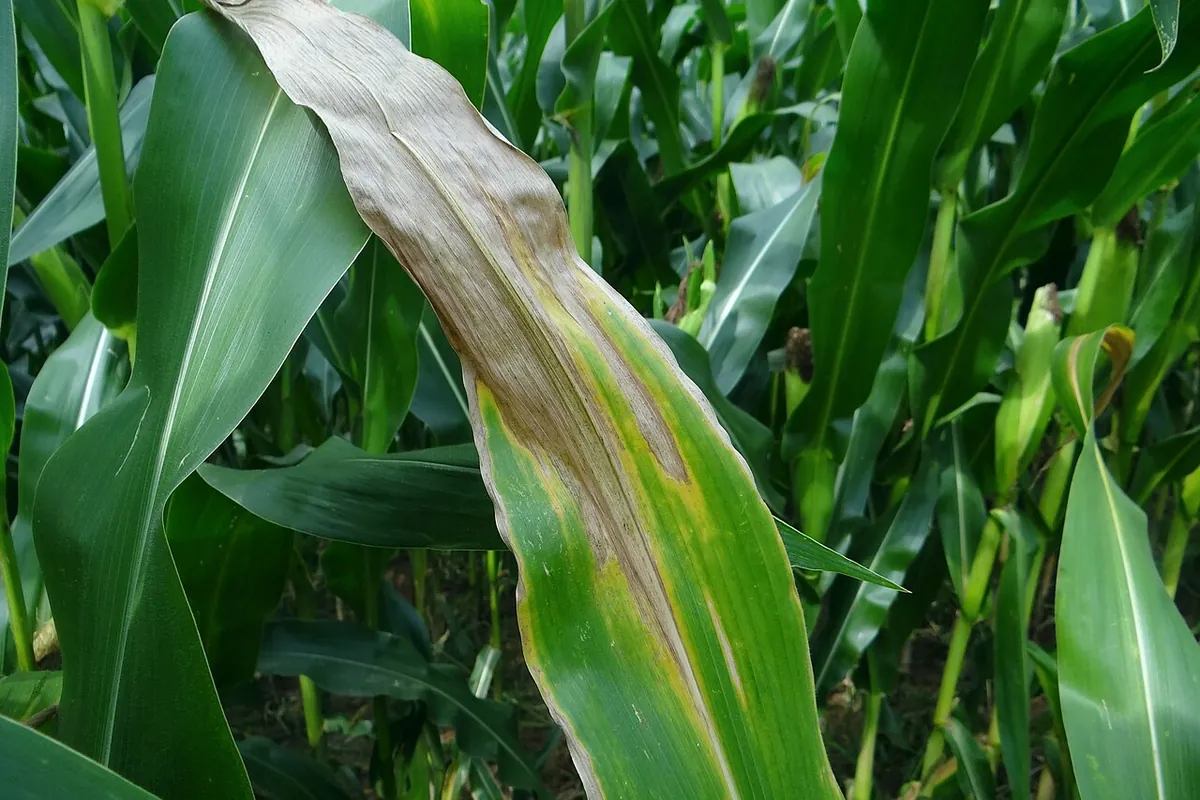
What Is Northern Corn Leaf Blight?
The fungus Exserohilum turcicum, also called Setosphaeria turcica, causes this disease. The Pacific Pests and Pathogens database says it is found wherever maize is grown. It grows best when leaves stay wet for 6 to 18 hours. It also likes temperatures between 18 and 27 degrees Celsius.
The disease matters because it shrinks the green leaf area that fills the ear. Lesions can also open the plant to stalk rot and lodging. Resistance is the first defense, so see our guide to corn seeds for choosing a variety. For planting well, see our page on pagtatanim ng mais.
| Fact | Details |
|---|---|
| Name | Northern corn leaf blight |
| Scientific name | Exserohilum turcicum (Setosphaeria turcica) |
| Kind | Fungus (a fungal disease) |
| Crops it attacks | Corn |
| Local names | None recorded |
| Where it strikes | Leaves |
| When it strikes | It develops in moderate, wet and humid weather, and it hurts most when the lesions reach the ear leaf before or around tasseling. |
| How it spreads | The fungus survives on corn residue, and on volunteer plants, for up to two years. Spores splash or blow from the residue to the new crop, and each lesion makes many more spores. |
How to Identify Northern Corn Leaf Blight
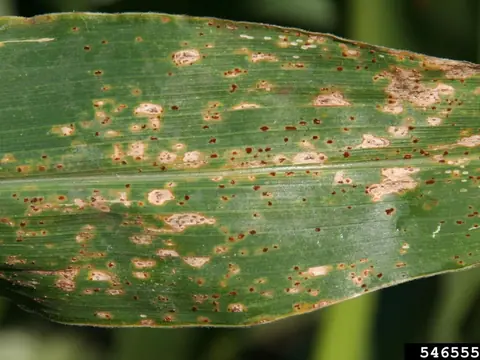
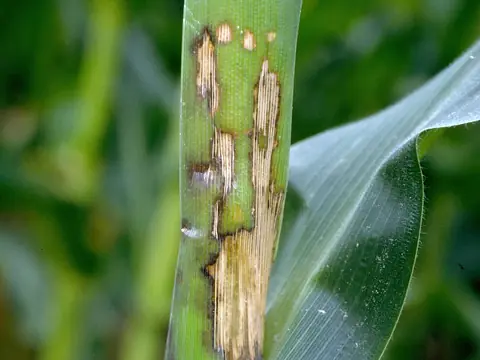
Start on the lower leaves. Early lesions are long, narrow and tan, running parallel to the leaf edge. Older lesions are long, oval or cigar shaped, grayish green to tan, with dark margins. They measure from about 2.5 to 15 centimeters. In humid weather they turn dark and dirty looking with olive green to black spores. Several lesions can join and kill big parts of the leaf.
- Long, narrow tan lesions along the leaf edge on the lower leaves, the first sign.
- Cigar shaped, grayish tan lesions with dark margins as the disease grows.
- A dark or dirty look on the lesions in humid weather, from olive green to black spores.
- Many lesions joining so that large parts of the leaf dry out.
- Lesions climbing to the ear leaf and above, and sometimes on the husks and leaf sheaths.
Purdue says farmers can confuse the lesions with Diplodia leaf streak, southern corn leaf blight and bacterial wilts. Northern blight lesions are long and cigar shaped, and the lesions on resistant hybrids stay small and yellow. For corn diseases that start on young plants, see corn downy mildew.
How Northern Corn Leaf Blight Hurts Your Corn
If the lesions are already there by tasseling or earlier, a hybrid corn crop can lose up to 30 percent of its yield. The loss is smaller if the lesions come late. Losses can be larger in sweet corn or specialty corn. There is no clear link between leaf cover and yield loss. So no simple rule ties the two together.
No spray threshold has been set for this disease either. Instead, aim to keep the ear leaf and every leaf above it healthy as the crop reaches tasseling. Scout weekly, mostly after long, wet weather, and compare what you see with our guide to corn rust.
How to Control Northern Corn Leaf Blight
- Plant a resistant hybrid. Resistance has been bred into most hybrids, and it is the best control according to the Pacific Pests fact sheet.
- Bury or burn corn residue after harvest, because the fungus survives on it for up to two years.
- Rotate with a crop that is not a grass, and clear volunteer corn and grassy weeds.
- Feed in balance. Give enough phosphorus and potassium, and do not oversupply nitrogen.
- Scout from the V14 stage until tasseling, and note how far up the plant the lesions have climbed.
- Consider a fungicide only on a susceptible hybrid when lesions are on or above the ear leaf at tasseling and the weather stays wet.
When a Spray Makes Sense
The Pacific Pests fact sheet says fungicides rarely give an economic return on this disease. Purdue says a spray at tasseling to early silking has the best chance of paying off. That holds for a susceptible hybrid in a wet year. Follow the FPA registered label.
| Active ingredient | FRAC group | On Philippine labels |
|---|---|---|
| Azoxystrobin plus difenoconazole | FRAC 11 plus 3 | A first choice. 31 registered products name it on corn. |
| Tebuconazole plus trifloxystrobin | FRAC 3 plus 11 | A first choice. 10 registered products name it on corn. |
| Mancozeb | FRAC M03 | A sound second choice. 84 registered products name it on corn. |
| Chlorothalonil | FRAC M05 | A sound second choice. 34 registered products name it on corn. |
| Difenoconazole plus propiconazole | FRAC 3 plus 3 | A sound second choice. 24 registered products name it on corn. |
| Azoxystrobin | FRAC 11 | A sound second choice. 2 registered products name it on corn. |
Use only products registered with the Fertilizer and Pesticide Authority, and follow the label for the rate, the timing and the protective clothing. Switch to a different fungicide group next time, so the disease does not learn to survive it. Our guide to plant diseases explains how.
Keep It Out Next Season
- Plant a resistant hybrid. Most good hybrids carry resistance, and it beats any spray.
- Plow under or remove corn residue after harvest, since the fungus lives on it for up to two years.
- Rotate with a crop that is not a grass, and clear volunteer corn, sorghum and grassy weeds.
- Feed enough phosphorus and potassium, and do not oversupply nitrogen.
- Keep to the right spacing, so the canopy dries quickly after rain.
Not Sure What You Are Seeing?
Take a clear photo of the spots or the damage up close, then the whole plant, then ask Anee, the smart farm technician in anee.io, in Tagalog or English. Anee tells you what it most likely is and what to do at the age of your crop. You can also put your scouting days on the cropping calendar, so the team knows when to walk the field.
anee.io keeps your scouting, spraying and harvest on one calendar, and Anee answers when something looks wrong.
- Scouting days dated from each lot's own planting day
- Photos and notes for every lot
- Anee, the smart farm technician, in Tagalog or English
Questions Farmers Ask About Northern Corn Leaf Blight
What does northern corn leaf blight look like?
How much yield can it cost?
Does it need a fungicide?
Stop the spread of Northern Corn Leaf Blight
With Libre + Anee, read the whole guide: how to tell it from look alikes, what makes it spread, and what to spray and when.
The account is free, no credit card.