

Anthracnose twister of onion
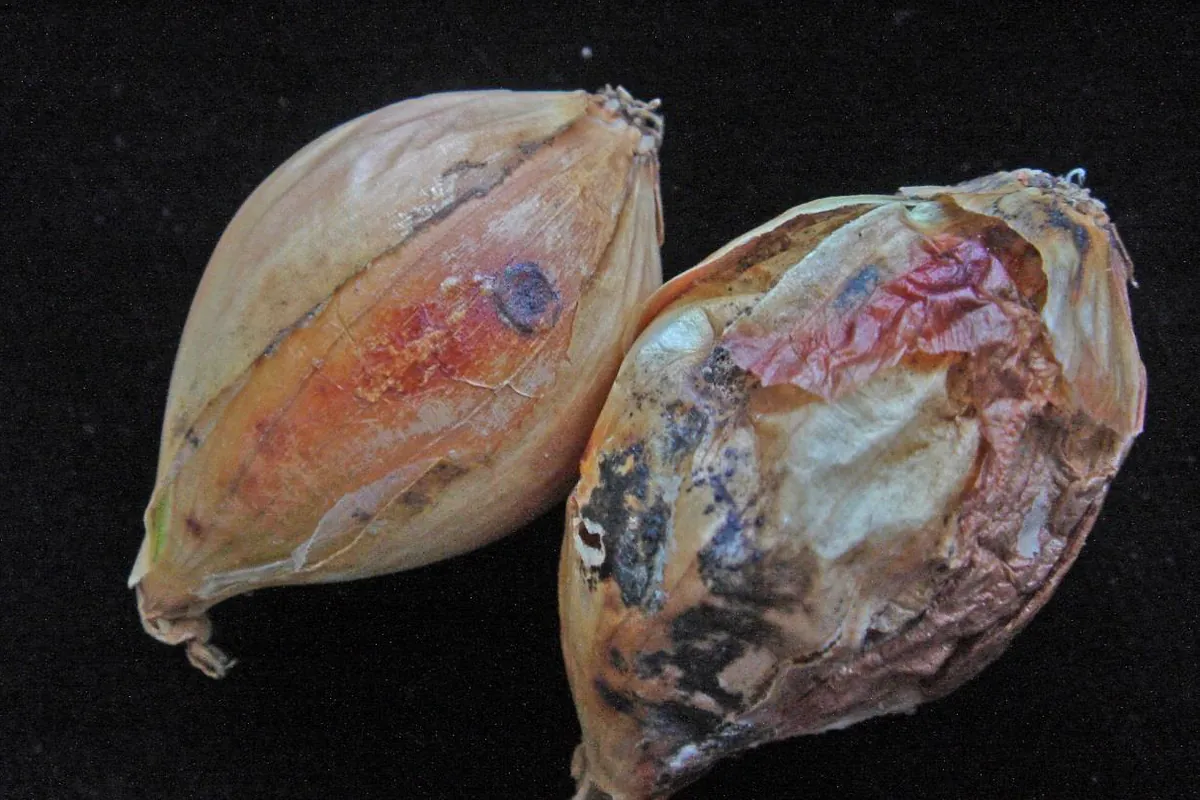
Leaves twist and curl, the neck grows long and thin, pale sunken spots with tiny dark dots appear, and bulbs stay small or rot.
Also called
kulot
Crops it strikes
What you see
When to act
From the seedbed on, check twice a week in wet weather for curled, twisted, yellowing leaves with sunken spots and orange spore masses. Pull twisted seedlings and plants at once, and start sprays at the first signs in the seedbed or the field.
What to spray
- Azoxystrobin plus difenoconazoleFRAC 11 plus 3ShopeeLazada
- PropinebFRAC M03ShopeeLazada
- MetominostrobinFRAC 11ShopeeLazada
- Bacillus amyloliquefaciensFRAC BM02ShopeeLazada
- IminoctadineFRAC M07ShopeeLazada
Active ingredients only, never brands. The FRAC group tells how it works: switch to a different group next time, so the disease does not learn to survive it. Spray only when the damage is worth the cost, and only with products registered with the Fertilizer and Pesticide Authority for your crop. Follow the label. The Shopee and Lazada links only show who sells something with that active ingredient, not a recommendation of any seller or product.
Resistance: Colletotrichum on onion can turn resistant to the strobilurins (FRAC 11) when they are sprayed alone. Use the triazole mix and turn it with propineb (FRAC M03) or iminoctadine (FRAC M07).
How to prevent it
- Use clean seed and raise seedlings in a clean seedbed. Never transplant twisted or spotted seedlings.
- Time sowing and transplanting so the young crop misses the wettest weeks where you can.
- Plant on raised, well drained beds, and water by furrow instead of over the leaves.
- Rotate for two to three years away from onion, shallot and garlic, and remove leaf debris after harvest.
- Feed with balanced nitrogen and potash, and keep weeds and thrips down.
Natural enemies and biological help
- Treat the seedbed with Trichoderma mixed in compost, and use Bacillus based products early in the season.
Not sure it is this one?
Many diseases look alike. Send a photo to Anee, the smart farm technician in anee.io. She reads it with your crop, its age and the weather, and tells you what it most likely is and what to do first. In Tagalog or English.