Purple Blotch of Onion: How to Spot It and Stop It
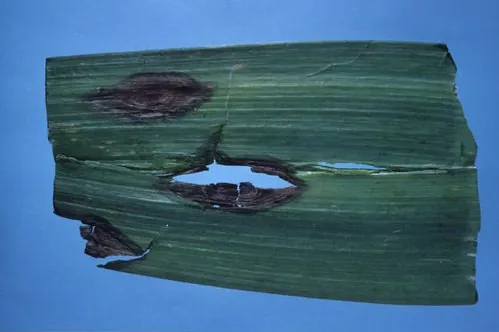
Purple blotch is the fungal disease that makes large brown to purple patches, with rings, on onion leaves. It killed so much red onion in some Philippine areas in 2016 that planting was cut in half.
What Is Purple Blotch?
The fungus Alternaria porri causes purple blotch. It attacks onion, shallot, garlic and leek, and it occurs worldwide. The Pacific pest fact sheet notes that in 2016 the red onion area in parts of the Philippines fell to half. Purple blotch caused that drop.
The disease and the thrips go together. Older leaves that thrips have scarred are the easiest for the fungus to enter. Their feeding also helps the spread. So an onion grower should manage both together.
| Fact | Details |
|---|---|
| Name | Purple blotch of onion |
| Scientific name | Alternaria porri |
| Kind | Fungus (a fungal disease) |
| Crops it attacks | Onion, shallot, garlic and leek |
| Local names | None recorded |
| Where it strikes | Leaves and fruits, pods and nuts |
| When it strikes | It builds in humid, wet weather and on older leaves, and it jumps when thrips have already scarred the leaves. |
| How it spreads | The fungus survives on crop debris, and spores move by wind, rain splash and possibly insects. The spores need about 8 hours of wet leaf to infect. |
How to Identify Purple Blotch
Look at the leaves and the flower stalk. Spots begin small and sunken with a white center. Then they grow quickly into oval, brown to purple blotches that can reach several centimeters. Pale and dark rings appear inside each blotch, like a target. When blotches circle the leaf, the part above them wilts, collapses and dies. At harvest, the bulb can rot from the neck, with a watery yellow to red decay.
- Small, sunken spots with a white center appear on the leaves.
- The spots spread into oval blotches a few centimeters long, brown to purple in color.
- Light and dark rings show inside the blotches.
- A blotch that circles the leaf makes the top wilt and die, and leaf tips turn black.
- At harvest, the bulb neck rots, with a watery yellow to red decay.
Purple blotch is easy to confuse with the scars left by thrips. But only the disease makes large brown to purple blotches with light and dark rings.
How Purple Blotch Hurts Your Crop
Purple blotch can cause serious loss, mostly in the tropics. The Pacific pest fact sheet reports losses above 40 percent in Samoa. In 2016 the red onion area in parts of the Philippines fell to half. The loss comes from dead leaves, smaller bulbs and rot in storage.
We found no official action threshold for the Philippines. Humidity, long hours of leaf wetness and thrips damage all raise the risk. So the best time to act is before the first blotches. Our guide to growing vegetables in the Philippines covers spacing and watering.
How to Control Purple Blotch
- Use certified, disease free seed and sets, and plant healthy seedlings.
- Check the nursery and remove any seedling that shows leaf spots before you transplant.
- Use drip irrigation instead of overhead watering, so the leaves do not stay wet for long.
- Control thrips. The fungus enters older leaves scarred by thrips, so see our page on thrips.
- Rotate for 3 years with crops outside the onion family, and bury or remove crop residue after harvest.
- Check the bulb necks at harvest, since the fungus can infect the neck and cause a watery rot.
When a Spray Makes Sense
Onion growers where the disease is common use protectant sprays, along with systemic triazole fungicides. Mancozeb and chlorothalonil are the most common choices. Start protection before the disease builds, then rotate groups. Follow the FPA registered label for the rate and the waiting time before harvest.
| Active ingredient | FRAC group | On Philippine labels |
|---|---|---|
| Chlorothalonil | FRAC M05 | A first choice. Registered products name it on onion and garlic. |
| Mancozeb | FRAC M03 | A first choice. Registered products name it on onion and garlic. |
| Difenoconazole | FRAC 3 | A first choice. 53 registered products name it on onion. |
| Propineb | FRAC M03 | A sound second choice. 16 registered products name it on onion. |
| Tebuconazole plus trifloxystrobin | FRAC 3 plus 11 | A sound second choice. 9 registered products name it on onion. |
| Fluazinam | FRAC 29 | A sound second choice. 7 registered products name it on onion. |
| Fluopyram plus trifloxystrobin | FRAC 7 plus 11 | A sound second choice. 3 registered products name it on onion. |
| Azoxystrobin | FRAC 11 | A sound second choice. 1 registered product names it on onion. |
| Iminoctadine | FRAC M07 | A sound second choice. 1 registered product names it on onion. |
| Propineb plus trifloxystrobin | FRAC M03 plus 11 | A sound second choice. 1 registered product names it on onion. |
The table stops at the ten best. 4 more on Philippine labels for it are older or broad chemistry. The Disease Finder in anee.io lists every one, crop by crop, with the products sold here.
Use only products registered with the Fertilizer and Pesticide Authority, and follow the label for the rate, the timing and the protective clothing. Switch to a different fungicide group next time, so the disease does not learn to survive it. Our guide to plant diseases explains how.
Keep It Out Next Season
- Use clean seed and healthy sets, and throw out any seedling with leaf spots before transplanting.
- Keep thrips down. The fungus enters older leaves through thrips scars.
- Water at the base or by furrow, not over the leaves, so the leaves do not stay wet for long.
- Rotate for three years with crops outside the onion family, and bury or remove leaf debris after harvest.
- Feed with balanced nitrogen and potash. Plants short of food or overfed with nitrogen spot worse.
- Harvest when the necks fall and cure bulbs in the shade until the necks are dry, so the fungus cannot rot them in storage.
Natural Enemies and Biological Help
- Bacillus based products can help as protectants under light pressure, best in the dry season.
Not Sure What You Are Seeing?
Take a clear photo of the spots or the damage up close, then the whole plant, then ask Anee, the smart farm technician in anee.io, in Tagalog or English. Anee tells you what it most likely is and what to do at the age of your crop. You can also put your scouting days on the cropping calendar, so the team knows when to walk the field.
anee.io keeps your scouting, spraying and harvest on one calendar, and Anee answers when something looks wrong.
- Scouting days dated from each lot's own planting day
- Photos and notes for every lot
- Anee, the smart farm technician, in Tagalog or English
Questions Farmers Ask About Purple Blotch
What causes purple blotch on onion?
Can purple blotch rot the bulb?
How do I keep it from coming back?
Stop the spread of Purple Blotch of Onion
With Libre + Anee, read the whole guide: how to tell it from look alikes, what makes it spread, and what to spray and when.
The account is free, no credit card.