

Sooty mold
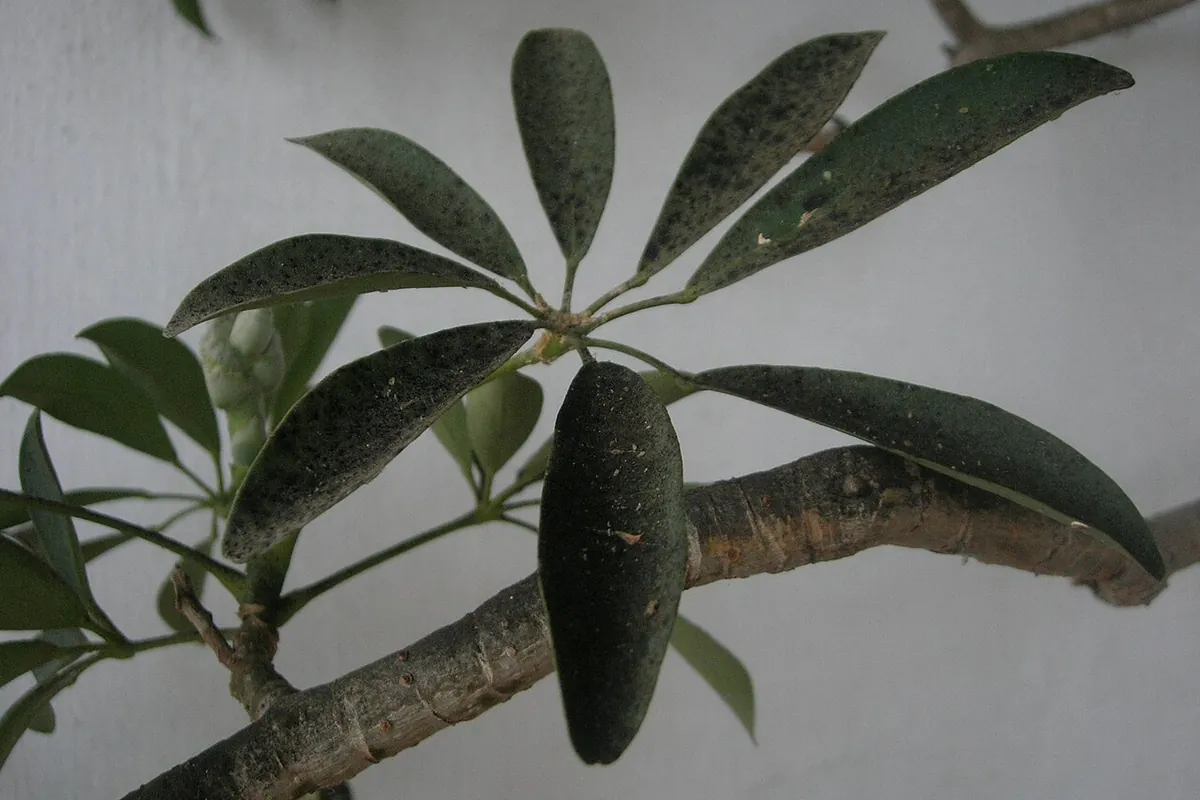
A black velvety coat like soot covers leaves, flowers and fruit wherever leafhoppers, scales or mealybugs drip sticky honeydew.
Also called
agiw
Crops it strikes
What you see
When to act
Look at leaves and fruit for the black coat and, under it, for the insects that feed it: leafhoppers in mango flowers, scales and mealybugs on twigs, and ants running up the trunk. Act on the insects once the coat spreads over many leaves or onto the fruit.
Before you spray
A fungicide on the black coat does little. Control the honeydew insects, keep ants off the trees and prune for light and air. The mold then fades.
How to prevent it
- Find and control the insect that drips the honeydew (leafhoppers, scales, mealybugs, aphids or whiteflies). The mold fades once the honeydew stops.
- Keep ants off the trees with sticky bands on the trunk and by cutting branches that touch the ground. Ants guard the honeydew insects.
- Prune for light and air so the canopy dries fast and natural enemies reach the insects.
- A spray of mild soap in water or a horticultural oil loosens the black coat so rain washes it off.
- Wash or wipe sooty fruit after harvest. The coat sits only on the skin.
Natural enemies and biological help
- Ladybird beetles, lacewings and tiny wasps clean up scales, mealybugs and aphids once the ants are kept away.
Not sure it is this one?
Many diseases look alike. Send a photo to Anee, the smart farm technician in anee.io. She reads it with your crop, its age and the weather, and tells you what it most likely is and what to do first. In Tagalog or English.