

Thrips borne mottle and spotted wilt viruses
Leaves show pale flecks, rings or silvery mottling, shoot tips stand up stiff, and plants infected young stay small and bear little.
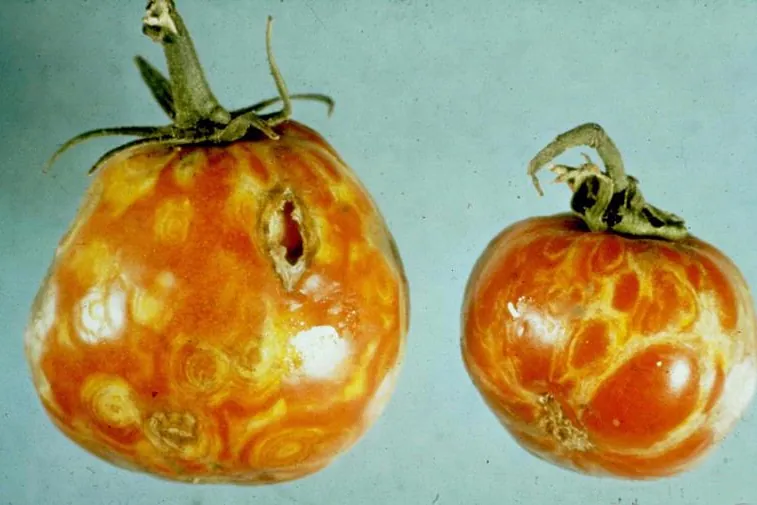
Crops it strikes
What you see
When to act
Twice a week tap flowers and young leaves over a white tray and count the thrips, from the seedbed to the first month after transplanting. Act early on thrips in young plants, since plants infected young lose the most.
Before you spray
No spray cures the virus. Control thrips early, pull sick plants, and clear weeds and old crop debris after harvest.
The insect that spreads it
No spray cures a sick plant. What slows the spread is keeping the thrips down, early, before it carries the disease to healthy plants.
How to prevent it
- Raise seedlings under fine insect net, and plant only seedlings without thrips or spotted, bronzed leaves.
- Pull and destroy plants with ring spots, bronzing or yellow mottling as soon as you see them.
- Clear weeds around the field and plow under old crops right after harvest. Both keep thrips and the virus alive.
- Do not plant a new melon or pepper crop beside an older infected one, and leave a gap between crops when you can.
- Use silver reflective mulch and blue sticky traps to keep thrips numbers down.
- Plant a tolerant variety where one is sold.
Natural enemies and biological help
- Predatory mites and minute pirate bugs eat thrips. Avoid broad sprays that kill them.
- Beauveria or Metarhizium sprays on flowers and young leaves lower thrips numbers, not the virus in sick plants.
Where this comes from
Not sure it is this one?
Many diseases look alike. Send a photo to Anee, the smart farm technician in anee.io. She reads it with your crop, its age and the weather, and tells you what it most likely is and what to do first. In Tagalog or English.