

Potato cyst nematode
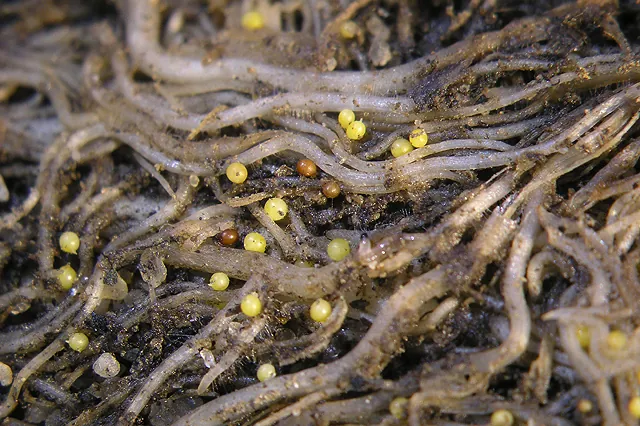
Plants grow in stunted yellow patches that wilt at midday, and pinhead sized white to golden cysts cling to the roots.
Crops it strikes
What you see
When to act
Look for patches of stunted, yellowing plants, then dig one at flowering and look for tiny white to golden pinhead cysts on the roots. Once a field has cysts, do not plant potato there again without a soil test showing low egg numbers.
What to spray
Active ingredients only, never brands. The FRAC group tells how it works: switch to a different group next time, so the disease does not learn to survive it. Spray only when the damage is worth the cost, and only with products registered with the Fertilizer and Pesticide Authority for your crop. Follow the label. The Shopee and Lazada links only show who sells something with that active ingredient, not a recommendation of any seller or product.
How to prevent it
- Plant only certified seed potatoes, and never bring seed or soil from fields known to carry the nematode.
- Wash soil off tillers, tools, boots and sacks before moving between farms. The cysts travel in soil.
- Rotate for at least five years away from potato and tomato, with cabbage, carrot, beans or grains.
- Plant a potato variety resistant to the golden cyst nematode where one is sold.
- Pull volunteer potatoes and nightshade weeds, which keep the nematode multiplying.
Natural enemies and biological help
- Products with the fungus Purpureocillium lilacinus can lower egg numbers a little. They do not replace a long rotation.
Not sure it is this one?
Many diseases look alike. Send a photo to Anee, the smart farm technician in anee.io. She reads it with your crop, its age and the weather, and tells you what it most likely is and what to do first. In Tagalog or English.