

Black shank of tobacco
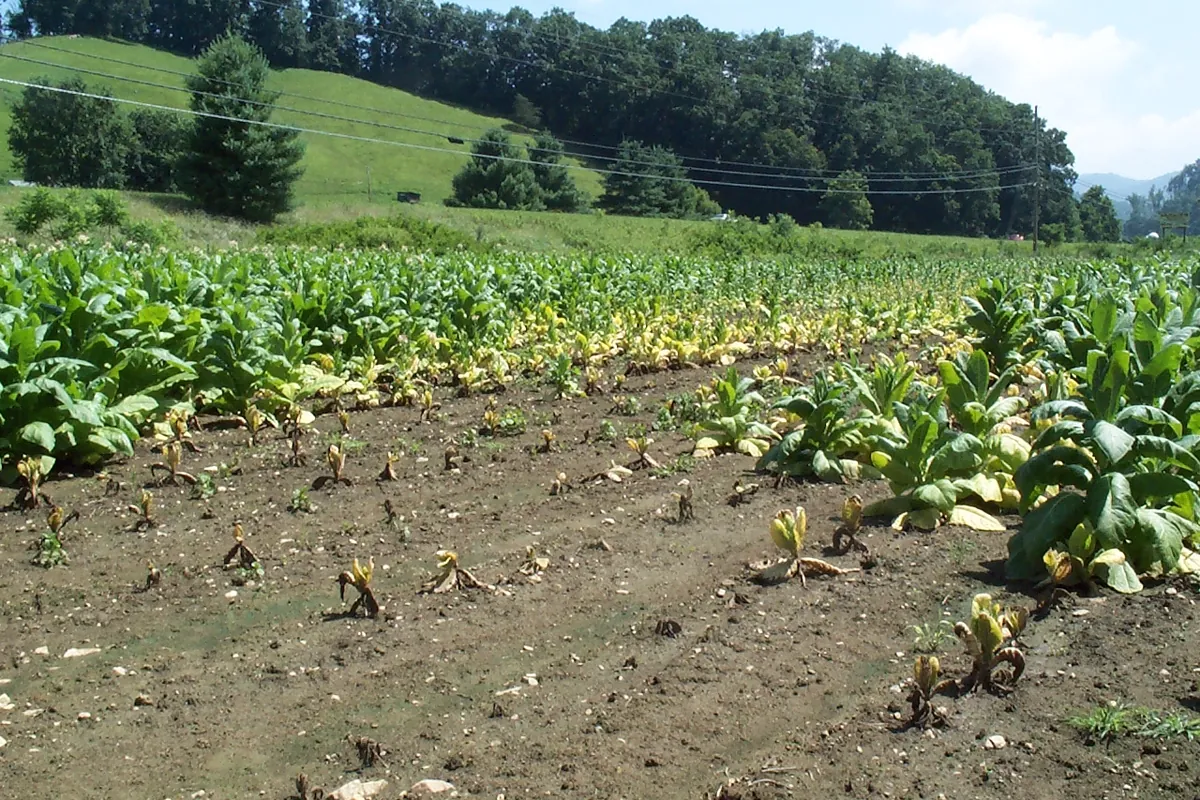
Plants wilt and stunt, the roots blacken and rot, and the stem turns black from the base, with the dried pith inside often split into discs.
Crops it strikes
What you see
When to act
From transplanting, walk the field every week after rains. In a field with a black shank history, act at the first wilting plants with black stem bases. In clean fields, prevention matters more than any spray.
What to spray
Active ingredients only, never brands. The FRAC group tells how it works: switch to a different group next time, so the disease does not learn to survive it. Spray only when the damage is worth the cost, and only with products registered with the Fertilizer and Pesticide Authority for your crop. Follow the label. The Shopee and Lazada links only show who sells something with that active ingredient, not a recommendation of any seller or product.
Resistance: Black shank in tobacco has grown resistant to metalaxyl in fields that used it every year. Pair it with rotation and resistant varieties, and do not use group 4 alone season after season.
How to prevent it
- Rotate tobacco with corn, rice or other non hosts for three to four years where black shank struck.
- Plant resistant varieties where they are sold.
- Transplant healthy seedlings from a clean seedbed onto raised, well drained ridges.
- Do not move soil or water from sick fields. Clean tools, boots and tractor wheels.
- Pull out and burn wilted plants together with their roots.
Natural enemies and biological help
- Trichoderma in the seedbed and the transplant hole helps protect young roots.
Not sure it is this one?
Many diseases look alike. Send a photo to Anee, the smart farm technician in anee.io. She reads it with your crop, its age and the weather, and tells you what it most likely is and what to do first. In Tagalog or English.