Fruit Tree Land Preparation: Layout, Holes and Shade
Fruit tree land preparation is a one time job, because a mango, durian or cacao tree stays in its hole for decades. So clear the land, plow, harrow and stake the layout. Then dig the holes and plan the shade and windbreak before the rains come. This guide gives the usual sizes and distances for each crop.
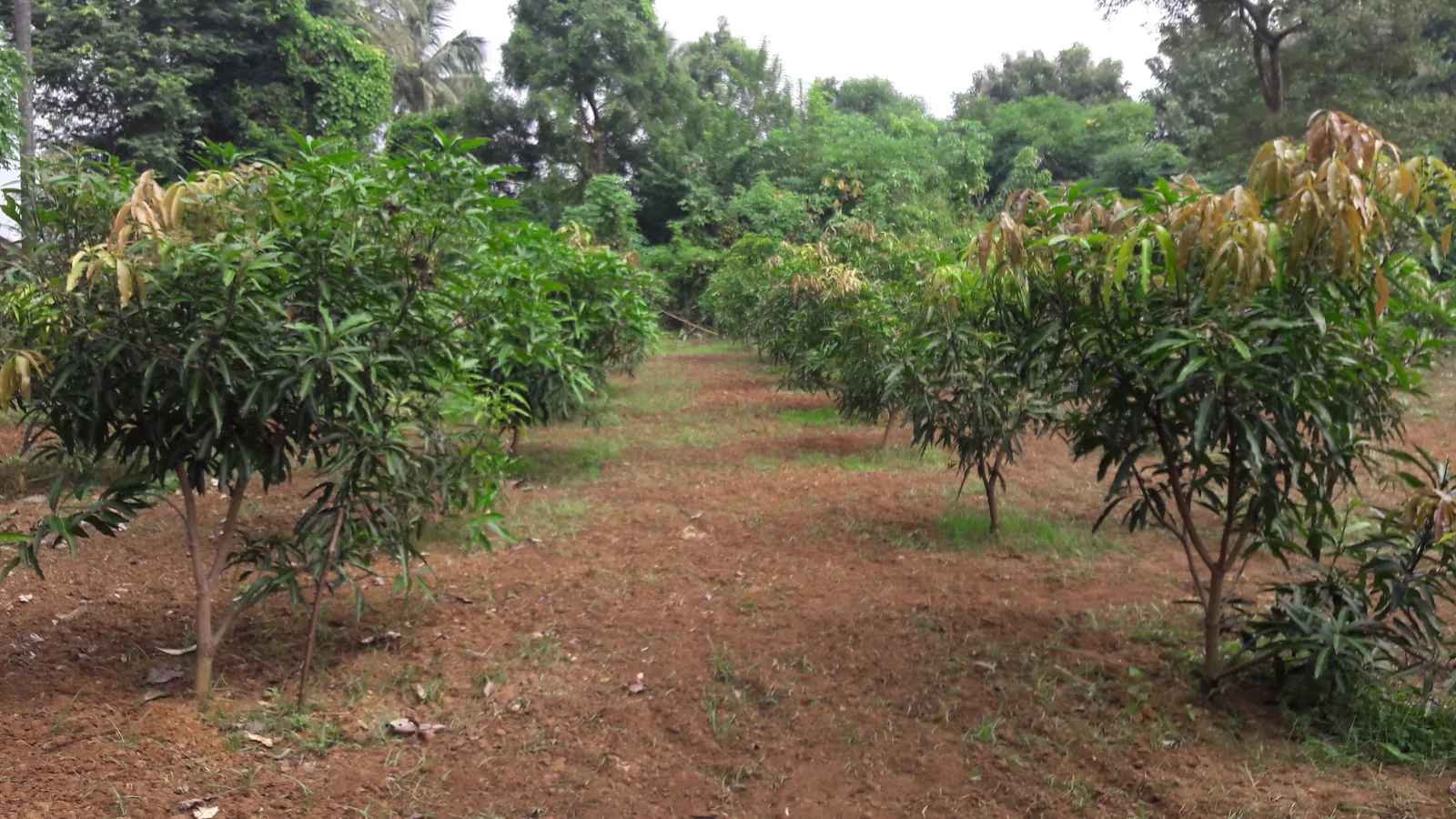
Where we have no good figure for a crop, the page says so. In that case, ask your DA or PCA office instead of guessing.
Steps for fruit tree land preparation
Clear the site
Remove weeds, big stones and stumps. For mango, clear by hand on slopes and with a tractor on flat land. For coffee, clear a newly opened area intensively, but keep trees that can serve as windbreaks or shade.
Plow and harrow where the land is flat
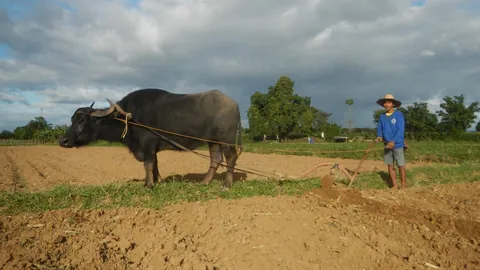
On flat to rolling land, plow mango ground at least once and harrow twice. Durian land also needs thorough plowing and harrowing. On steep land, use minimum tillage instead, which means clearing about 2 square meters around each tree and digging a hole there.
Plan the shade and the windbreak first
Shade trees must be well established before the coffee goes in, so plant them one year earlier. A mango orchard needs windbreaker trees on its edge. Plant these before the fruit trees.
Stake the layout
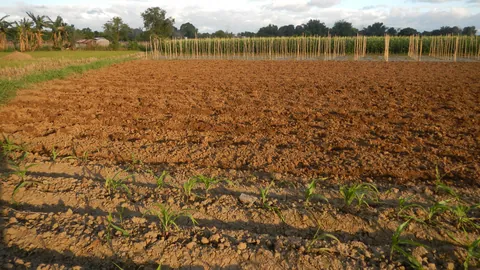
Run a straight base line along a boundary, then stake every row and every hill at the planting distance. Use the table below.
Dig the holes and backfill with topsoil
Dig each hole and keep the topsoil apart from the subsoil. Durian gets its hole covered with topsoil after planting. For coffee, backfill with topsoil and add compost. Calamansi gets the dug soil back mixed with compost.
Plant at the start of the rains
Durian and calamansi go in when the rains begin. For mango, land preparation is best finished before the rains begin. Where water is dependable all year, preparation can happen at any time.
Planting distance and planting holes by crop
| Crop | Planting distance | Planting holes |
|---|---|---|
| Mango (Carabao) | 12 m by 12 m up to 20 m by 20 m, by soil fertility and intercropping | At least one third of a cubic meter on steep land. Depth about twice the height of the seedling bag |
| Calamansi | About 5 m between plants | At least 40 cm wide and 40 cm deep |
| Coffee | Robusta 3 m by 2 m, Arabica 2 m by 2 m. With intercrops, Liberica and Excelsa 4 m by 4 m | About 40 cm by 40 cm by 40 cm |
| Durian | 8 m by 8 m, or 6 m by 6 m for high density | 30 cm wide and 30 cm deep, topsoil kept apart |
| Cacao | 3 m by 3 m triangular, which is 1,241 plants per hectare | No figure here. Ask your DA office |
| Coconut | 10 m by 10 m in the square and triangle layouts | No figure here. Ask the PCA |
We give no layout or hole size for lanzones here. Check with the DA regional field office. Meanwhile, here is a hint for mixed farms. Durian can go under coconut only when the palms are 20 years old or more. Then use 10 m by 10 m or wider.
Contour or square layouts
On flat or gently rolling land, run mango rows east to west for the most sunlight. Another direction is fine if prevailing winds hurt yields. There are two designs. In the square design, one tree sits at each corner of a square. In the quincunx design, one more tree sits at the center, which nearly doubles the number of trees at first. Trees set in squares are simpler to care for and to count.
On highly sloping land, plant along the contour. Contour planting shortens the slope length and slows runoff, so the soil absorbs more rainwater. A hectare holds 100 mango trees at 10 m by 10 m and 69 at 12 m by 12 m. It holds 44 at 15 m by 15 m and 22 at 20 m by 20 m.
Give each mango tree a unique tag for records. Do the same for every fruit tree, then note the date and the variety in your records.
Shade and wind for cacao, coffee and durian
Cacao and coffee grow under shade. For cacao, the shade of nurse crops is desirable in the first years. Examples are coconut, Gliricidia, Leucaena and Erythrina. Prune the shade trees later. These are shade trees for cacao that you plant ahead of the seedlings.
Young durian needs shade too. Plant Lakatan banana ahead of the durian so it shades the young trees. Shade the seedlings for two weeks to a few months after planting as well. Read our banana land preparation guide for the banana rows.
Add each orchard block to anee.io as a lot. Then the cropping calendar dates clearing, plowing, staking, hole digging and shade planting back from your planting date, and the Growth Stages screen shows what each tree needs next.
Start freeChange the work by soil
- Well drained soil: the best start. Mango needs well drained soil with a pH of 5.5 to 7.5, because its roots rot in waterlogged ground. Durian prefers deep sandy loam rich in organic matter.
- Wet or heavy soil: calamansi does not tolerate waterlogged areas, so drain before you plant. Dig drainage canals at the same time as the layout.
- Acidic soil: test the pH first and follow the acidic soil guide.
- Salty, sodic or alkaline soil: a pH above the mango range or a salty field needs reclaiming first. See the saline soil guide and the sodic and alkaline soil guide.
- Steep land: use minimum tillage and plant on the contour.
Common mistakes
- Planting coffee or cacao before the shade trees are established.
- Mixing subsoil into the top of the hole, so the roots start in poor soil.
- Planting too close, then fighting crowding and disease for years.
- Leaving out the windbreak on an open orchard.
- Digging holes in waterlogged ground.
Questions about fruit tree land preparation
What is the mango planting distance in the Philippines?
How big should the coffee planting hole be?
When should shade trees go in?
What is the planting distance for durian?
Can I plant on a slope?
Get every step of fruit tree land preparation right
Register for free to read every step, then date each one on your own calendar with the Land Prep Planner, counted back from your planting day.
Free to register. No credit card. Works on any phone.