Cacao Pod Borer: Signs, Damage and How to Protect Your Pods
The cacao pod borer, Conopomorpha cramerella, is a small moth whose larvae tunnel through the husk into the bean pulp. Pods ripen early and the beans come out small, flat and stuck together. This page shows how to recognize the damage and the farm practices that cut it.
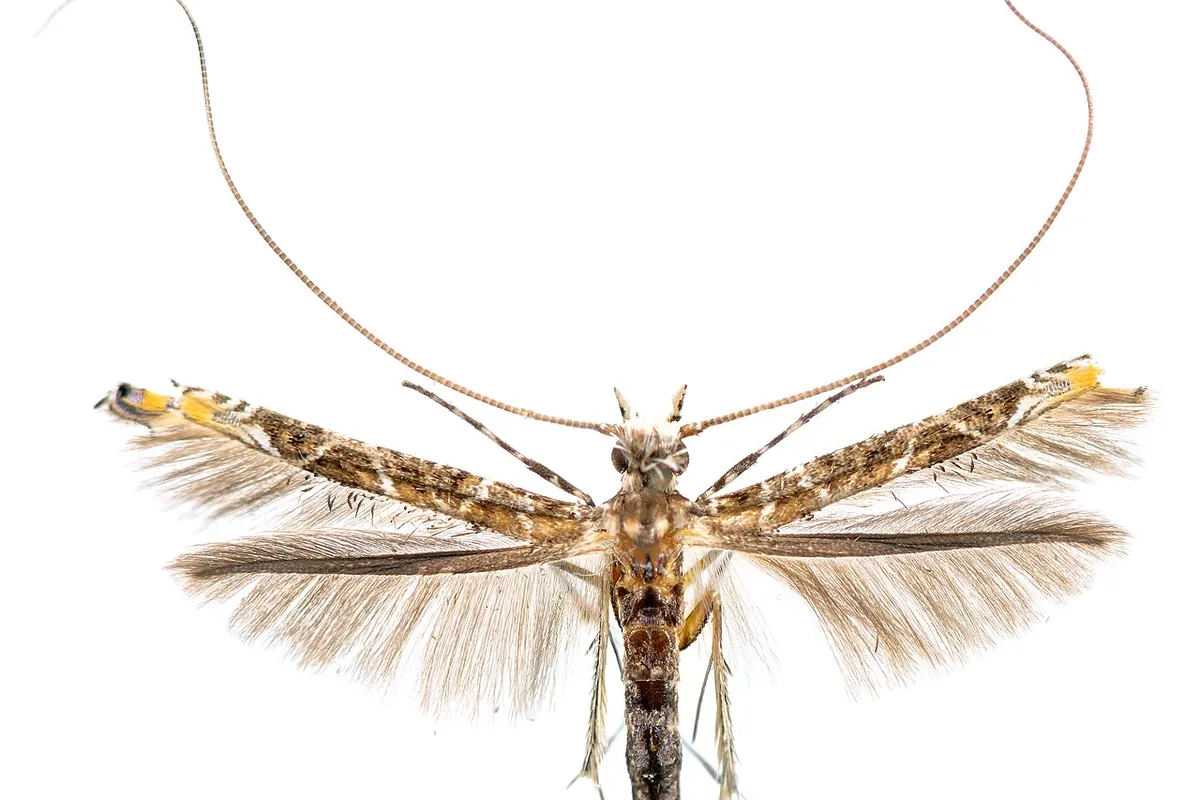
What Is Cacao Pod Borer?
The adult is a small brown moth, 5 to 7 mm long, with long antennae and a bright yellow patch at the end of each forewing. It rests under branches in the day and flies at night. The female lays eggs on the pod surface, and the larvae tunnel through the husk into the pulp.
Few insects cost cacao growers in the Philippines as much. Studies report annual losses of up to 50 percent or even more where it is not managed, and infestation of 60 to 80 percent was recorded in Davao in 1990. It also lives on rambutan and some other trees, which can carry it between farms.
| Fact | Details |
|---|---|
| Name | Cacao pod borer |
| Scientific name | Conopomorpha cramerella |
| Kind | Insect |
| Crops it attacks | Cacao |
| Local names | None recorded |
| Where it strikes | Fruits, pods and nuts |
| When it strikes | It attacks pods that are starting to turn yellow, and it hits hardest in the main harvest seasons. |
| Life cycle | The moth lays eggs on the pod surface. The eggs hatch in about 3 days, and the larvae tunnel into the pod for 14 to 18 days. Then they drop to the leaves to pupate, and a full cycle takes 27 to 33 days. |
How to Identify Cacao Pod Borer
Look at the pods that are turning yellow. Pods with the borer ripen early, and you may see small exit holes and larval waste on the husk. Open a suspect pod. You will find tunnels in the husk, and beans that are small, flat and clumped together in dried pulp, and hard to take out. Black pod rot gives rotting pods with white growth, not tunnels, so check for cacao black pod too.
- Pods ripen early and turn yellow unevenly.
- Small exit holes and larval waste show on the outside of the pod.
- Tunnels run through the husk and the pulp inside.
- Beans are small and flat and stick together in dried pulp.
- Beans are hard to extract from the pod.
Pod rot from black pod disease looks different. The borer leaves tunnels, exit holes and flat clumped beans without a white mold.
How Cacao Pod Borer Hurts Your Crop
The grubs eat the pulp that surrounds the beans, so the beans fail to fill. Smallholder losses are estimated at 20 to 50 percent, and more in severe cases, in the Pacific fact sheet. In East New Britain in Papua New Guinea, production fell by about 80 percent between 2008 and 2012.
In the Philippines, the pest has cut cacao output and left local processors short of raw material, so they had to import. For a farm with only a few trees, the loss is felt directly at the next harvest.
How to Control Cacao Pod Borer
- Harvest completely, frequently and regularly. Every 7 days, take off every pod that has turned yellow, so the moth cannot finish its life cycle.
- Bury infested pods at once or destroy them, so the larvae cannot leave.
- Prune the trees every 6 months to keep an open canopy, with a height of about 3 meters, which makes harvest and checking easier.
- Sleeve young pods with plastic bags where the labor is available. It works but costs time and money.
- Protect natural enemies such as the weaver ant Oecophylla smaragdina and the lynx spider Oxyopes javanus. Fungi and bacteria such as Beauveria bassiana and Bacillus thuringiensis are under study.
- Work with neighbors on the same schedule, because the moth moves between farms.
When a Spray Makes Sense
The Pacific fact sheet does not recommend insecticides for smallholders. They are costly and risky for people and the environment, and the evidence of benefit is thin. Talk to your DA technician before you consider any.
Active Ingredients on Philippine Labels
| Active ingredient | IRAC group | On Philippine labels |
|---|---|---|
| Lambda cyhalothrin | IRAC 3A | Older or broad chemistry: a last resort. 91 registered products name it on cacao. |
| Carbaryl | IRAC 1A | Older or broad chemistry: a last resort. 27 registered products name it on cacao. |
| Deltamethrin | IRAC 3A | Older or broad chemistry: a last resort. 13 registered products name it on cacao. |
Use only products registered with the Fertilizer and Pesticide Authority, and follow the label for the rate, the timing and the protective clothing. Switch to a different insecticide group next time, so the pest does not learn to survive it. Our guide to integrated pest management explains how.
Keep It Out Next Season
- Harvest every 7 days and take every ripening pod, so the larvae have no time to leave and pupate.
- Bury the pod husks right after opening, or cover the heap tightly with plastic for 2 weeks so the larvae inside die.
- Sleeve young pods, about 8 to 10 cm long, in plastic bags open at the bottom. The moth cannot lay eggs on them.
- Prune twice a year to keep trees about 3 meters tall and open, so pods are easy to reach and moths find less shade to rest.
- In the lean season strip off all pods once to break the moth's cycle, and keep the same schedule as your neighbors.
Natural Enemies and Biological Help
- Weaver ants (hantik) and black cocoa ants guard the pods against the moth. Keep their nests and keep sprays off them.
- Spiders and tiny egg wasps kill the eggs laid on the pod surface.
- Beauveria bassiana sprayed on the lower branches where moths rest can kill some adults.
Not Sure What You Are Seeing?
Take a clear photo of the insect, the damage and the whole plant, then ask Anee, the smart farm technician in anee.io, in Tagalog or English. Anee tells you what it most likely is and what to do at the age of your crop. You can also put your scouting days on the cropping calendar, so the team knows when to walk the field.
anee.io keeps your scouting, spraying and harvest on one calendar, and Anee answers when something looks wrong.
- Scouting days dated from each lot's own planting day
- Photos and notes for every lot
- Anee, the smart farm technician, in Tagalog or English
Questions Farmers Ask About Cacao Pod Borer
How often should I harvest to fight the borer?
Does bagging the pods work?
How much can I lose?
Which trees carry the moth besides cacao?
Stop Cacao Pod Borer from costing you the harvest
With Libre + Anee, read the whole guide: how to be sure it is this pest, when it pays to act, and what to spray, by active ingredient.
The account is free, no credit card.