Paano Magtanim ng Saging: How to Plant Banana the Traditional Way
Paano magtanim ng saging? Here is how traditional Filipino farmers usually plant saging (banana), step by step from getting the field ready to the harvest, with the day of each step and what to change for a higher yield.
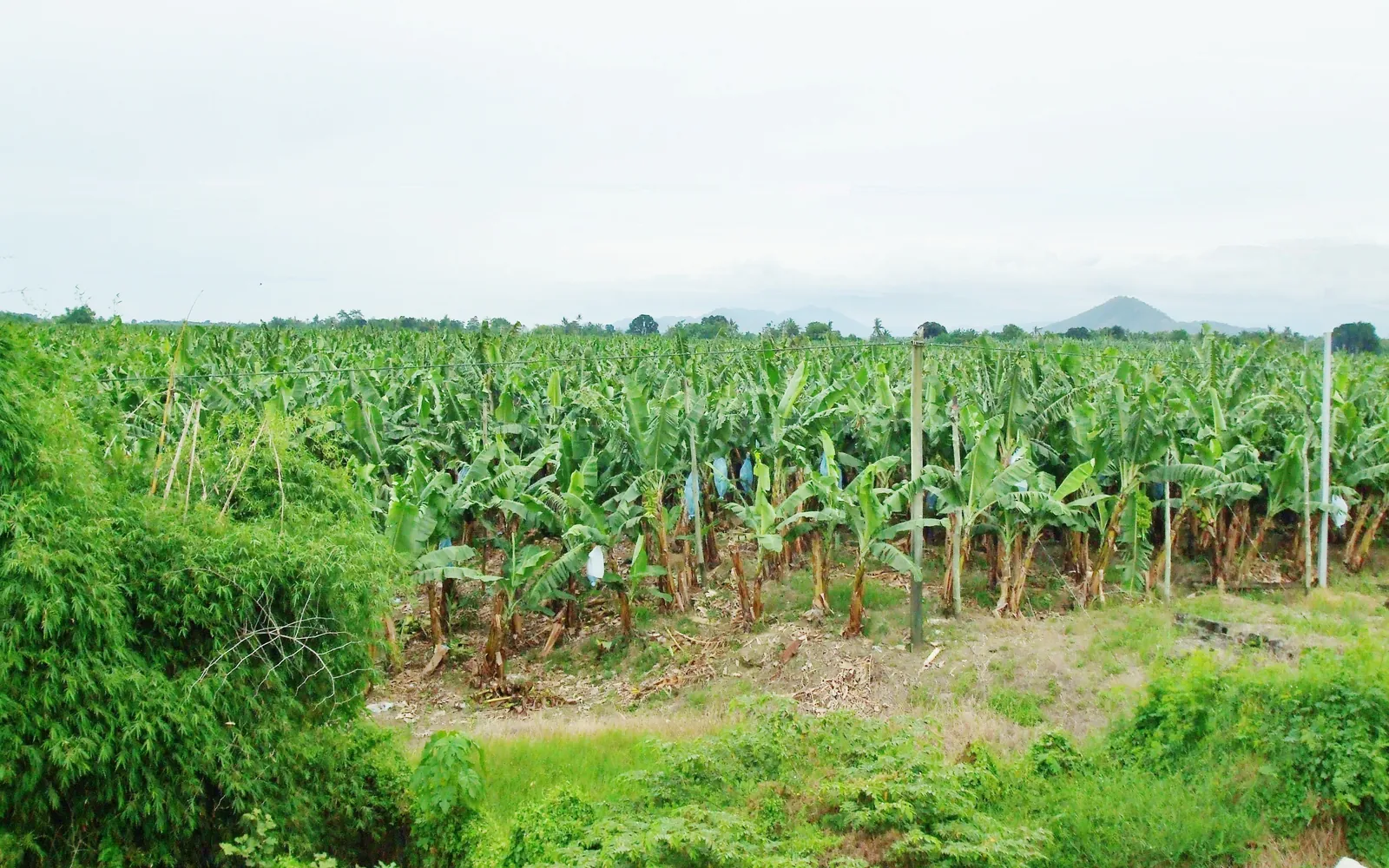
This guide shows how traditional farmers usually plant saging. Use it as a starting point. For a higher yield, update it: plant certified seed or clean planting material, test your soil, and follow the right spacing and fertilizer.
This guide shows how Filipino farmers usually plant banana from suckers, for saba, lakatan and latundan in backyards and small farms. It runs from digging the hole and picking a good sucker through the first year of care to the first bunch.
Before you plant, get the field ready with our land preparation guide for banana and abaca. Then choose your seed or planting material with the saging varieties sold here. If the leaves turn pale later on, the saging nutrient deficiency guide helps you find what is missing. For more on the crop, read banana farming in the Philippines, pagtatanim ng puno.
When to plant saging
Most farmers plant as the rains begin, around May to July in Luzon and the Visayas, so the young plants get steady rain. In much of Mindanao, where rain comes through most of the year, planting goes on in almost any month as long as the soil is moist.
What you plant
Sword suckers (espada) dug from a healthy mat: young shoots with narrow, pointed leaves, about 1 to 1.5 m tall, lifted with their corm. Farmers trim the old roots and any rotten part of the corm, cut the leaves back and plant within a few days. Some plant corm pieces of about half a kilo with at least one good bud, and more farmers now buy tissue culture plantlets from a nursery.
Paano magtanim ng saging, step by step
Lakatan and latundan give the first bunch at about 8 to 12 months. Saba usually needs 15 to 16 months. The crop is ready about 360 days after planting.
Before planting (Bago magtanim)
30 days before planting: Clear the area and mark the holes
Slash the grass, take out stumps and mark where each mat will stand. Lakatan and latundan are set about 2 to 3 m apart, while saba grows much bigger and needs far wider room.
14 days before planting: Dig the holes
Dig each hole about 40 cm wide and 40 cm deep, deeper on hard soil. Pile the dark topsoil on one side so it goes back in first.
3 days before planting: Choose and clean the suckers
Pick sword suckers with narrow leaves, about 1 to 1.5 m tall, from a mat with no bunchy top or wilt. Dig each one out with the whole corm, trim the roots and any dark or rotten spots, and cut the leaves back so it loses less water. Tip: A sucker with wide, round leaves (water sucker) grows weak and gives a small bunch.
- Pick the mother matTake suckers only from a vigorous mat that bears well and has never shown bunchy top, wilt or yellow, hanging leaves. One sick sucker carries the disease into the new field.
- Tell a sword sucker from a water suckerA sword sucker (espada) has narrow, pointed leaves and a thick base, and grows deep from the mother corm. A water sucker has broad leaves while still small and a thin base, and grows into a weak plant. Take sword suckers about 1 to 1.5 m tall.
- Dig it out with its cormCut the joint between the sucker and the mother plant with a sharp spade or a bar, then lift the sucker out with its whole corm. Avoid tearing it off, which wounds the mother plant too.
- Pare the cormWith a sharp bolo, cut off the old roots and shave the outer skin of the corm. Cut away every brown, black or tunneled spot until only clean, white flesh shows, since those spots hide corm weevil grubs and root worms.
- Cut back the leavesCut off the big leaves and leave only the youngest ones, so the sucker loses less water while it grows new roots.
- Keep tools clean and plant soonwithin a few daysWipe or wash the bolo between mats so disease does not pass from plant to plant. Keep the pared suckers in the shade and plant them within a few days.
Planting day (Pagtatanim)
Planting day: Plant the sucker
Put a few handfuls of dried manure or rice hull compost in the hole and mix it with topsoil. Set the sucker upright with the corm about 10 to 15 cm under the surface, fill in and press the soil firmly. Water it if the ground is dry.
Care while it grows (Pag aalaga)
Day 30: Give the first fertilizer
When new leaves show, about a month after planting, scatter a handful of complete fertilizer (14 14 14) in a ring a little away from the base and cover it with soil. Many backyard growers use dried chicken manure instead.
Day 30: Ring weed every month
Pull or slash the weeds in a circle around each plant every month for the first four months, until the leaves shade the ground. Lay the cut grass and old leaves around the base as mulch.
Day 60: Water in dry spells and drain wet spots
Banana needs a lot of water, so water deeply when a dry month comes. On low ground, dig small canals so rainwater does not stand around the roots.
Day 90: Feed every three months
From the third month, give each plant about a quarter kilo of urea (46 0 0) and a quarter kilo of muriate of potash (0 0 60) every three months. Spread it in a ring when the soil is moist and cover it.
Day 120: Keep one follower sucker
Suckers keep coming up around the mother plant. Cut the extra ones at ground level and keep only one strong sword sucker to bear the next bunch.
- Choose the followerPick one strong sword sucker growing close to the mother plant to bear the next bunch. Some growers keep a second, younger one as well, but never more than two to a mat.
- Cut the rest at the groundCut every other sucker off at ground level with a bolo or sever it from the mother plant at the point where it joins.
- Dig out the ones that come backSuckers that are only cut often sprout again. Wait until the first bunch has been harvested, then dig those out completely, corm and all.
Day 150: Take off dry leaves and watch for disease
Cut off dry, hanging leaves with a sharp knife on a pole. Look often for plants with narrow, stiff leaves bunched at the top or with yellow leaves hanging down like a skirt, and dig out and chop up sick plants before the disease spreads.
Day 240: Remove the heart and prop the plant
When the bunch is out and the last hand has opened, snap off the heart (puso) a little below the last hand. It can be cooked. Prop the plant with one or two bamboo poles so the heavy bunch does not pull it down in the wind. Tip: Taking off the heart early helps keep bugtok out of saba.
Day 361: Cut down the old trunk
Cut down the plant that bore fruit, chop the trunk and lay the pieces around the mat as mulch. The follower sucker takes over and gives the next bunch.
Harvest (Anihan)
Day 360: Cut the first bunch
Harvest when the fingers are full and their edges have turned round. Cut partway through the trunk so the bunch tips down slowly, and catch it.
Watering saging, stage by stage
Most banana here is rain fed: farmers plant when the rains begin and seldom water after the first weeks, except with a hose or pails for backyard mats in a long dry spell. Big commercial farms run overhead sprinklers or drip lines, and farms on low ground dig canals to carry the extra rain away. Rain does most of the work. Where farmers water, they use a hose or pails into a shallow basin around each mat, furrows between rows on flat land, and sprinklers or drip lines on big farms. Water in the cool early morning or late afternoon, and soak the soil deeply instead of wetting the top a little every day.
The first month after planting, while the sucker grows its first roots. Four to seven months, when the bunch is forming inside the trunk and the number of hands is set. Shooting, from the day the bunch shows until all the hands have opened. Bunch filling, the last two to three months before harvest.
| Stage | When | How often | How much |
|---|---|---|---|
| Planting to first new leaves | Planting day to day 30 | Water on planting day if the soil is dry, then every 2 days when no rain falls | About one watering can (about 10 liters) a plant each time, or 4 to 6 liters a plant a day on drip |
| Young plant, leaves unfolding | Day 30 to 120 | Every 3 to 4 days in hot dry weather, about once a week in cool or cloudy weeks, and not at all after a good rain | About 2 watering cans a plant each time, poured into a shallow basin around the base, or 5 to 8 liters a plant a day on drip |
| Fast growth, bunch forming inside the trunk | Day 120 to 210 | Every 3 to 4 days in dry weather. Do not let the soil around the mat dry out for long | About 3 to 4 watering cans a plant each time, or 8 to 12 liters a plant a day on drip |
| Bunch comes out and hands open (flowering) | Day 210 to 270 | Every 2 to 3 days in hot dry weather. Keep the soil evenly moist. Saba reaches this stage later, often at 11 to 12 months | About 4 to 5 watering cans a plant each time, or 15 to 20 liters a plant a day on drip |
| Bunch filling to harvest (fruiting) | Day 270 to 360 | Every 3 days in dry weather until the bunch is cut | About 5 watering cans a plant every 3 days, or 15 to 20 liters a plant a day on drip |
| After harvest, the follower sucker | Day 360 to 450 | Go back to the young plant rhythm, every 3 to 4 days in dry weather | About 2 to 3 watering cans a mat each time |
Without irrigation. Plant as the rains begin so the first months get steady rain. Keep a thick mulch of dried leaves, chopped trunks and cut grass on the ring, and on slopes shape a low bank on the downhill side of each mat so rain soaks in instead of running off. Banana does best with about 20 cm of rain spread through each month and slows down badly when a month brings less than about 10 cm, so a few cans of water at shooting and bunch filling pay back the most in a dry spell.
In the dry season. In the hot months, March to May, water every 3 to 4 days. In the cooler months, December to February, about once a week is enough. Water when the soil a finger deep under the mulch feels dry, when the leaves fold down along the middle rib by midday, or when new leaves come out slowly.
In the rainy season. Banana roots need air, and even a short spell of standing water can kill them. Dig canals between rows and around low spots, keep them clear, and in heavy soil plant on a low mound. Wet, crowded mats get more leaf spot, so cut old leaves, keep the spacing, and lead drain water away from healthy mats so it does not carry wilt from a sick one.
- Too little water: Leaves fold down along the middle rib by midday and stay folded, older leaves yellow and dry early from the edges, new leaves open slowly, and the bunch stays small with thin fingers.
- Too much water: Limp yellow leaves, a trunk that goes soft near the base, brown rotting roots, slow growth, and more leaf spots in wet, closed stands.
To water better for a higher yield: Drip lines with one or two emitters a mat, run daily or every other day in the dry months, save water and labor and give bigger, more even bunches. Fertilizer can be fed through the same lines. Keep the thick mulch on all year and save the most water for the stretch from bunch forming to bunch filling, which sets the size of the harvest.
Spacing, water and fertilizer for saging
Spacing
Lakatan and latundan: about 2 m between plants and 2.5 m between rows, or 3 m by 3 m. Saba grows much bigger: commercial saba plantings use about 5 m by 7 m or 6 m by 6 m, while backyard growers often plant closer. One sucker a hole.
Water
Mostly rain fed: farmers plant when the rains start and rely on them. In long dry months they water by hose or pail where they can and keep a thick mulch of dry leaves and chopped trunks around the base. On low ground they dig canals so water does not stand around the roots.
Fertilizer
At planting, a few handfuls of dried chicken manure, animal manure or rice hull compost in the hole. About a month later, a handful of complete fertilizer (14 14 14). After that many farmers give urea (46 0 0) and muriate of potash (0 0 60), about a quarter kilo of each a plant every three months, spread in a ring when the soil is moist. Banana needs a lot of potash to fill big bunches. Many backyard saba plants get only manure and old leaves. To read what a bag really gives, see our guide to fertilizer for this crop.
Care and harvest
Care while it grows
Ring weeding by hand or bolo for the first four months, then slashing. Cutting off dry leaves and old leaf sheaths. Cutting extra suckers and keeping one follower for each mother. Snapping off the heart after the last hand. Propping heavy bunches with bamboo. Digging out and chopping plants with bunchy top or wilt.
When and how to harvest
Ready when the fingers are plump and round with no sharp edges, the bunch is still light green and the old leaves begin to yellow. Lakatan comes about 80 to 90 days after the bunch shows, saba much later. One person cuts partway through the trunk so the bunch tips slowly while another catches it, so the fingers do not bruise. The bunch is kept in the shade and the hands are cut off for market. The old trunk is cut down after harvest.
Common mistakes when planting saging
- Planting water suckers with broad leaves, which grow weak and give small bunches.
- Taking suckers from a mat with bunchy top or wilt, which carries the disease into the new farm.
- Leaving every sucker to grow, so the mat crowds itself and the bunches get smaller.
- Leaving the heart on long after the last hand, which wastes food and invites bugtok in saba.
- No propping, so a heavy bunch topples in the first strong wind.
- Giving nitrogen only and no potash, so the fingers stay thin.
How to get a higher yield of saging
The traditional way gets a crop, but small changes add up. These are the first things to change, one season at a time.
- Plant clean tissue culture plantlets, or suckers from a mat known to be free of disease.
- Test the soil and feed by the result, with enough potash for the bunch.
- Keep the right spacing for the variety and only one follower sucker for each mother.
- Split the fertilizer into small doses every month or two instead of one big dose.
- Walk the farm every week for bunchy top, wilt and bugtok, remove sick plants at once and clean tools between mats.
- Water during dry months and bag the bunches for cleaner, heavier fruit.
anee.io helps with each of these. The NPK Plus calculator checks that your fertilizer plan feeds the yield you want, the pest and disease finders tell you what is on the leaves before you spray, and Anee, the smart farm technician answers your questions in Tagalog or English.
Members open this guide in the How to Plant tool and send every step to the Protocol Builder in one tap, each on its own day. There you can change the seed, the spacing and the fertilizer, then turn it into a cropping calendar for your lots.
Start from the traditional way, make it better, and let anee.io date every task from your own planting day. Free to start.
Start freeQuestions about planting saging
Paano magtanim ng saging?
When do farmers plant saging in the Philippines?
How far apart do you plant saging?
How long before saging can be harvested?
How often do you water saging?
What do you plant to grow saging?
See every step of planting it the traditional way
Register for free to read every step with its day, the spacing, water and fertilizer, the common mistakes and what to change for a higher yield. Then send it to your Protocol Builder in one tap.
Free to register. No credit card. Works on any phone.