Paano Magtanim ng Mangga: How to Plant Mango the Traditional Way
Paano magtanim ng mangga? Here is how traditional Filipino farmers usually plant mangga (mango), step by step from getting the field ready to the harvest, with the day of each step and what to change for a higher yield.
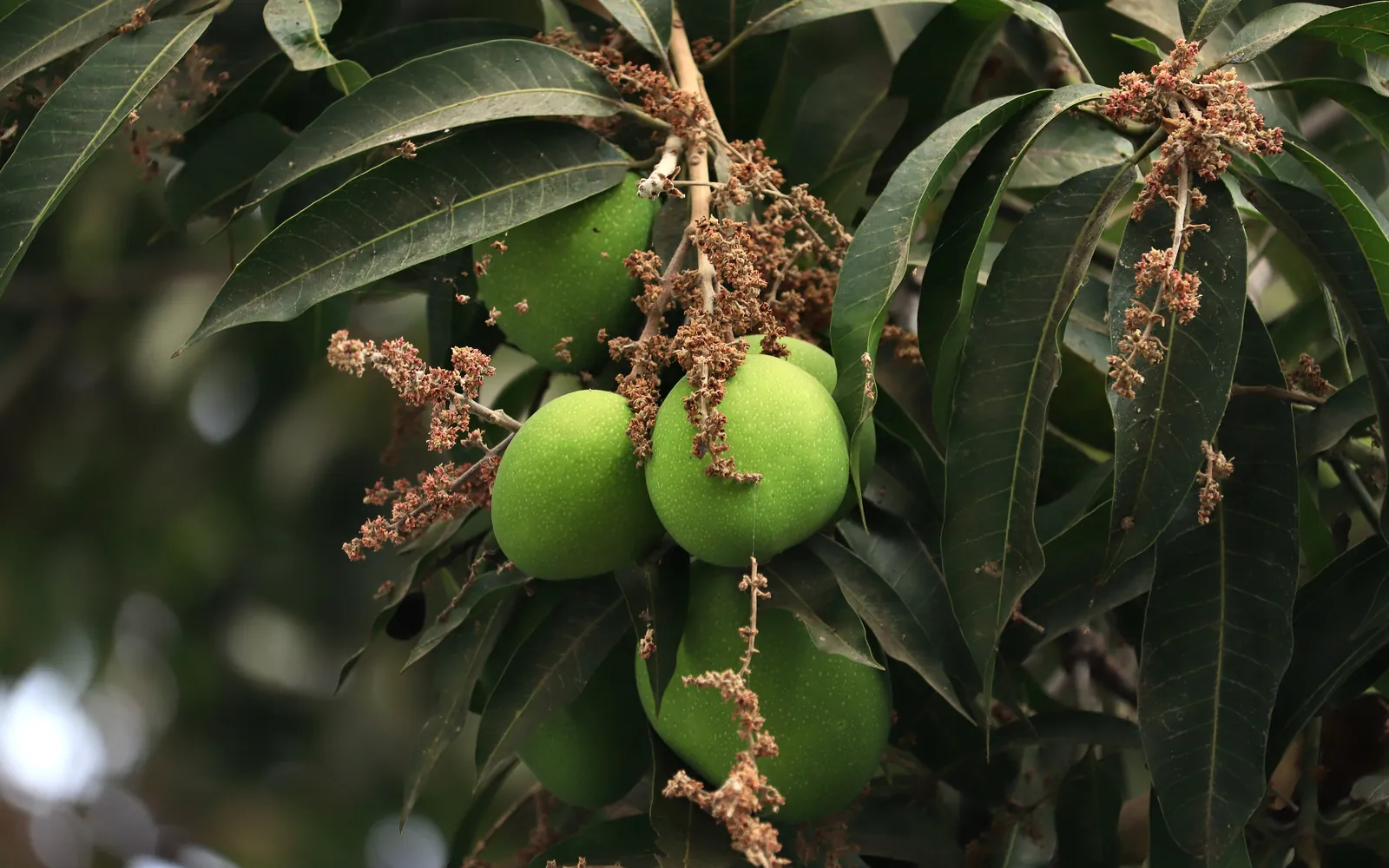
This guide shows how traditional farmers usually plant mangga. Use it as a starting point. For a higher yield, update it: plant certified seed or clean planting material, test your soil, and follow the right spacing and fertilizer.
This guide shows how Filipino growers usually plant a grafted carabao mango and care for it until the first fruits. It is for backyards and small orchards, from the hole and the grafted seedling to the first harvest.
Before you plant, get the field ready with our land preparation guide for fruit and plantation trees. Then choose your seed or planting material with the mangga varieties sold here. If the leaves turn pale later on, the mangga nutrient deficiency guide helps you find what is missing. For more on the crop, read pagtatanim ng puno.
When to plant mangga
Grafted seedlings are planted as the rains begin, around May to July, so they root before the dry months. Mango does best where there is a clear dry season of 3 to 4 months, as in Pangasinan, Zambales, Ilocos, Guimaras and much of Mindanao, since the dry months bring on the flowers.
What you plant
Most growers now plant a grafted seedling about 8 to 10 months old: a scion from a proven carabao mother tree joined to a sturdy native rootstock. Pick one with a healed graft union, dark green mature leaves and a firm ball of soil, and keep it in light shade a few days before planting. In the old way many farmers grew carabao mango straight from the seed, which comes true to type but takes many more years to bear.
Paano magtanim ng mangga, step by step
A grafted carabao mango usually gives its first real crop at about 4 to 5 years. A tree grown from seed takes several years longer. The crop is ready about 5 years after planting.
Before planting (Bago magtanim)
2 months before planting: Clear the spot and dig the holes
Mark the planting spots about 12 m apart or more, since a carabao tree grows very wide. Old orchards use 12 m to 20 m. Dig each hole about 50 cm to 1 m wide and deep, keeping the topsoil on one side.
30 days before planting: Fill the hole and pick the seedling
Mix the topsoil with well rotted manure or compost and fill the hole back, then water it and let it settle. Choose a grafted seedling with a healed union, no pests and a firm soil ball, from a mother tree you know bears well.
The nursery (Punlaan)
10 months before planting: Graft your own seedlings (cleft grafting)
Some growers graft their own seedlings instead of buying them. Cleft or wedge grafting is the way most used here: a twig of a proven carabao tree is set into a split native seedling.
- Raise the rootstockSow seeds of native or carabao mango in bags and grow them into sturdy seedlings with a thick stem and plenty of roots. These carry the new tree.
- Take the scion from a proven treeCut a healthy twig from a tree that bears well every year, early in the morning. Pull off its leaves without hurting the buds and keep it wrapped and out of the sun so it does not dry.
- Split the rootstockCut off the top of the seedling where the stem is still growing actively, then split the stump down the middle with a clean, sharp knife.
- Shape the scion into a wedgeCut the base of the scion into a short wedge with two smooth, slanting strokes. A rough cut leaves gaps, and the graft heals slowly or fails.
- Set the wedge and bind itPush the wedge into the split so the bark edges of scion and stock meet. Wrap the joint and the whole scion firmly with a strip of thin plastic. The graft is tight enough when you can lift the seedling by the scion without moving the joint.
- Cover and care for itCover the scion with a small plastic bag or an ice candy wrapper so water cannot get into the joint, and keep the seedling in light shade. Rub off any shoot that grows below the graft.
- Unwrap when it sproutsOnce the scion pushes out fresh green leaves, the graft has taken. Remove the bag, unwind the plastic strip and cut the tie, and move the seedling to a bigger bag when it needs one.
Planting day (Pagtatanim)
Planting day: Plant the grafted seedling
Cut the bag away without breaking the soil ball and set the seedling in the middle of the hole at the same depth it grew in the bag. Keep the graft union above the soil, firm the soil around it, water well and tie it to a stake.
Care while it grows (Pag aalaga)
Day 3: Shade and mulch
Shade the new tree with a few coconut fronds against the hot sun. Spread dried grass or leaves around the base, a little off the stem, to keep the soil moist.
Day 30: Water in dry months
Water the young tree about once a week in dry months for its first three years, soaking the soil around it. Rain is enough in the wet months.
Day 45: Weed around the tree
Keep a clean circle around the young tree free of grass and vines. Low crops like mungbean, peanut or vegetables can grow farther out between the trees.
Month 2: Rub off rootstock shoots
Shoots that come out below the graft belong to the rootstock and steal food from the good variety. Rub or cut them off whenever they appear.
Month 3: First feeding while the soil is wet
Give the young tree a little complete fertilizer or urea with manure or compost, put in three to six small holes about 20 to 45 cm from the trunk and covered with soil. Young mango needs mostly nitrogen to grow leaves and branches.
Month 5: Second feeding before the rains end
Feed again just before the rains end while the ground is still moist. A common rule is about 100 g a tree a year in the second year, rising each year to about 250 g in the fifth, split between the two feedings.
Month 7: Shape the young tree
Cut the top of a tall, single stem so it branches, then keep three or four strong branches spread around the trunk. Remove crossing, weak or sick branches.
Month 9: Check new leaves for pests
Look at each new flush of leaves for hoppers, twig borers, scale insects and black leaf spots. Cut off and burn badly hit twigs and keep fallen leaves cleaned up.
Month 12: Pick off early flowers
A young grafted tree may flower in its first or second year. Many growers pick these flowers off so the tree puts its strength into growing a bigger frame first.
Month 55: Make the tree flower (pagpapabulak)
Carabao and piko mango flower poorly on their own. Most growers spray the bearing tree with a potassium nitrate mix when its leaves are old enough, which brings out the flowers together and lets them time the harvest.
- Wait for mature leaves4 to 9 months after the last flushSpray only when the tree's last flush of leaves has fully hardened and turned dark. Trees that flushed in the first three months of the year are usually ready seven to nine months later. Trees that flushed in the last three months are ready after four to six months.
- Mark the treesTie a tag on each tree as you plan its spray date, so you can follow each one to harvest.
- Mix the sprayWeigh 1 kg of potassium nitrate for every 100 liters of water. Dissolve it first in 1 to 2 liters of water, pour that into the drum and fill to 100 liters.
- Spray the whole canopySpray the leaves all over the crown, working down from the top of the tree, and stir the drum often while spraying.
- Watch for the flowers1 to 2 months before a second sprayIf the tree does not flower, or the flowers are lost to rain or disease, spray again one to two months later. Water the tree from flowering to fruit set in dry weather so fewer young fruits drop.
Harvest (Anihan)
Year 5: First real harvest
Fruits are ready about 115 to 130 days after flowering, when the shoulders fill out, the skin turns lighter with a powdery bloom and the stem end darkens. Pick by hand or with a pole and bag, leaving a short stem, and let the sap drain before packing.
Watering mangga, stage by stage
Mango here is mostly rain fed: young trees get a pail or a hose about once a week in the dry months of their first three years, and grown trees are left to the rain. Growers with a creek or a well nearby water bearing trees only when a dry spell runs into flowering and fruiting. Pails or a hose into a ring basin around young trees, and basin or furrow watering for bearing trees where a creek or well is near. A few orchards use small sprinklers under the trees or drip lines with two drippers for each young tree. Water in the cool early morning or late afternoon.
The first year after planting, when the roots are small and one dry month can kill the tree. Flowering and fruit set, when a dry spell makes flowers and young fruits fall. The first weeks of fruit growth, when most of the fruit drop happens.
| Stage | When | How often | How much |
|---|---|---|---|
| Planting to 3 months | Planting day to month 3 | Soak on planting day, then every 2 to 3 days when no rain falls for the first weeks, easing to about once a week | Half to one watering can (5 to 10 liters) a tree each time, into a small basin around the stem |
| Rest of the first year | Month 3 to 12 | About once a week in the dry months, every 2 to 3 days on sandy soil. Not needed in the rains | One to two watering cans a tree each time, soaked into the basin |
| Years 2 to 5, growing the frame | Month 12 to 52 | Every 4 to 5 days in the dry months where water is near, at least once a week otherwise | A deep soak that wets the soil about a forearm deep. Widen the basin to the edge of the leaves as the tree grows |
| Bearing trees: dry rest before flowering (each year) | Month 52 to 55 | Do not water for 2 to 3 months before flowering, or before the flower spray | None. Let the soil dry |
| Flowering and fruit set | Month 55 to 57 | Start watering when most of the flower buds show, then every 10 to 15 days if no rain falls | A deep soak that wets the ground under the whole crown, not just near the trunk, to about 60 to 80 cm deep |
| Fruit growth | Month 57 to 59 | Every 10 to 15 days in dry weather, keeping the soil evenly moist | The same deep soak under the crown. A big bearing tree uses about 50 to 120 liters a day in hot weather |
| Before harvest | Month 59 to 60 | Ease off and stop watering about 2 to 4 weeks before picking | None in the last weeks |
| After harvest, new leaves | Month 60 to 63 | Water with the after harvest feeding if the rains have not come, then leave it to the rain | One deep soak of the basin |
Without irrigation. Plant as the rains begin, shade the new tree with fronds and keep a mulch of dried grass around it, off the stem. In the first three years carry a pail or two to each tree about once a week in the dry months. A grown tree roots deep and needs no water in a normal year. A long dry season even helps it flower, but if the dry spell runs on into flowering and fruiting, a few deep soakings save the crop.
In the dry season. Young trees: about once a week, or every 2 to 3 days in the first weeks and on sandy soil. Bearing trees: no water in the 2 to 3 months before flowering, then every 10 to 15 days from flowering through fruit growth when no rain falls, stopping 2 to 4 weeks before picking. Water a young tree when its new leaves droop in the afternoon and are still limp by evening.
In the rainy season. Mango does not like wet feet: plant on well drained ground or a low mound and open a drain from any low spot. Rain during flowering spreads the black rot of flowers and washes off pollen, so fruit sets poorly, which is why growers time the flower spray for the dry months. Heavy rain or watering in the months before flowering pushes new leaves instead of flowers.
- Too little water: Young leaves droop in the afternoon and stay limp by evening, older leaves turn dull and roll, a young tree stops putting out new leaves, and a bearing tree drops many small fruits.
- Too much water: Yellow leaves, twigs dying back from the tips, rotting roots and a sour smell in a waterlogged basin. Wet soil before flowering gives a flush of leaves and few flowers.
To water better for a higher yield: Stop watering before flowering and start again when most flower buds show. This gives more even flowering and better fruit set than watering all year round. Wet the ground under the whole crown, not just a small ring at the trunk, with drip or a wide mulched basin, for bigger fruits with less water.
Spacing, water and fertilizer for mangga
Spacing
Carabao trees grow very wide, so traditional orchards set them about 12 m by 12 m up to 20 m by 20 m. Some growers use about 10 m. Closer spacing works only with yearly pruning to keep the trees low. One seedling a hole.
Water
Mostly rain fed. Young trees are watered about once a week in the dry months of their first three years and mulched. Bearing trees are watered during flowering and fruit growth if the dry spell is long, which cuts fruit drop, and watering stops about a month before harvest.
Fertilizer
Manure or compost mixed into the hole at planting. Young trees get complete fertilizer or urea with manure, mostly for nitrogen, twice a year: at the start and again before the rains end, in three to six small holes or a ring trench around the tree. A common rule is about 100 g a tree a year in the second year, 150 g in the third, 200 g in the fourth and 250 g in the fifth, rising to several kilos for big old trees. Bearing trees get more phosphorus and potash. To read what a bag really gives, see our guide to fertilizer for this crop.
Care and harvest
Care while it grows
Shading and mulching the new seedling, weekly watering in dry months, weeding a clean circle, removing rootstock shoots, shaping the tree to three or four main branches, picking off early flowers and checking each leaf flush for pests. In the old days farmers brought on flowering of grown trees by smudging, keeping a smoky fire under the tree for some weeks. Now most spray a flower inducer when the tree is mature.
When and how to harvest
Fruits are ready about 115 to 120 days after flowering in dry months and 120 to 130 days in the wet season. Signs: full, rounded shoulders, lighter green skin with a powdery bloom, a darker stem end and flesh starting to turn yellow. Many growers check that most sample fruits sink in water. Pick by hand or with a pole and net, keep a short stem, let the sap drain stem down, and never let fruit touch the bare ground. Many growers bag the young fruits with old newspaper about 50 to 60 days after flowering.
Common mistakes when planting mangga
- Planting a seedling of unknown parentage, so the fruit is small or sour.
- Burying the graft union under the soil or letting rootstock shoots take over.
- Planting too close, so the grown trees shade each other and bear only on the top.
- Letting a very young tree carry fruit before it has a good frame.
- No water and no mulch in the first dry season, so many seedlings die.
- Never pruning, so the canopy turns thick, dark and full of pests.
How to get a higher yield of mangga
The traditional way gets a crop, but small changes add up. These are the first things to change, one season at a time.
- Buy grafted seedlings from an accredited nursery with known carabao mother trees.
- Test the soil and feed by the result, with more potash and phosphorus once the tree bears.
- Shape and prune every year after harvest to keep the tree open and easy to spray and pick.
- Bag the fruits early and keep the orchard floor clean to cut fruit fly and disease.
- Scout each flush and flowering for hoppers, twig borers and leaf spots, and act early.
- Water during flowering and fruit growth in long dry spells for better fruit set.
anee.io helps with each of these. The NPK Plus calculator checks that your fertilizer plan feeds the yield you want, the pest and disease finders tell you what is on the leaves before you spray, and Anee, the smart farm technician answers your questions in Tagalog or English.
Members open this guide in the How to Plant tool and send every step to the Protocol Builder in one tap, each on its own day. There you can change the seed, the spacing and the fertilizer, then turn it into a cropping calendar for your lots.
Start from the traditional way, make it better, and let anee.io date every task from your own planting day. Free to start.
Start freeQuestions about planting mangga
Paano magtanim ng mangga?
When do farmers plant mangga in the Philippines?
How far apart do you plant mangga?
How long before mangga can be harvested?
How often do you water mangga?
What do you plant to grow mangga?
See every step of planting it the traditional way
Register for free to read every step with its day, the spacing, water and fertilizer, the common mistakes and what to change for a higher yield. Then send it to your Protocol Builder in one tap.
Free to register. No credit card. Works on any phone.