Paano Magtanim ng Durian: How to Plant Durian the Traditional Way
Paano magtanim ng durian? Here is how traditional Filipino farmers usually plant duryan (durian), step by step from getting the field ready to the harvest, with the day of each step and what to change for a higher yield.
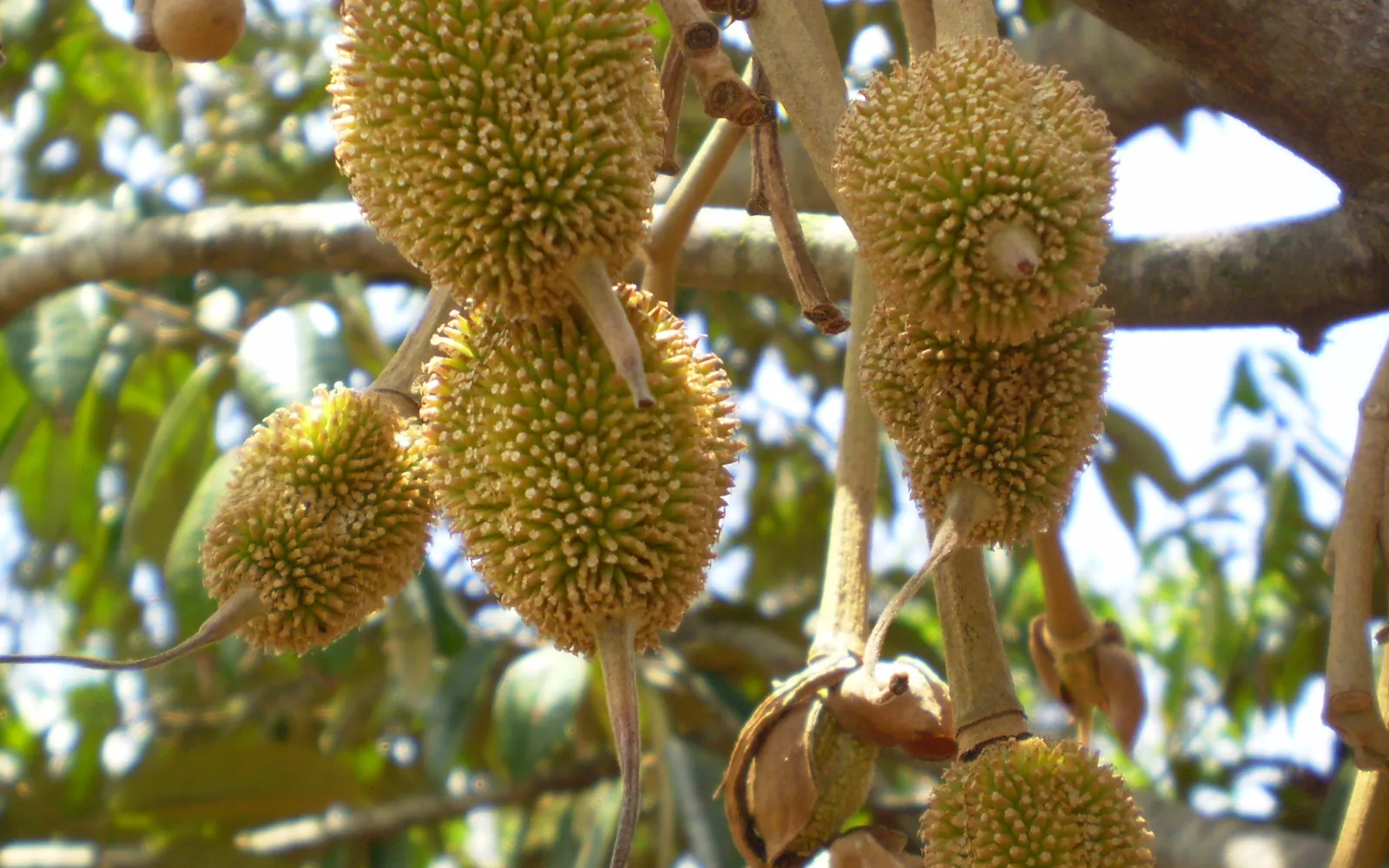
This guide shows how traditional farmers usually plant duryan. Use it as a starting point. For a higher yield, update it: plant certified seed or clean planting material, test your soil, and follow the right spacing and fertilizer.
This guide shows how Filipino growers, mostly in Mindanao, usually plant a grafted durian seedling under light shade and care for it until the first fruits. It is for small orchards and coconut farms.
Before you plant, get the field ready with our land preparation guide for fruit and plantation trees. Then choose your seed or planting material with the duryan varieties sold here. If the leaves turn pale later on, the duryan nutrient deficiency guide helps you find what is missing. For more on the crop, read pagtatanim ng puno.
When to plant duryan
Seedlings are planted as the rains begin, or in any wet month where rain spreads through the year as in Davao and much of Mindanao. Durian likes deep, loose, well drained soil with plenty of organic matter, from the lowlands up to about 800 m.
What you plant
Most growers now plant a grafted seedling of a known variety such as Puyat, Arancillo, Duyaya or Alcon, joined to a seedling rootstock and planted about 5 months or more after grafting. Some growers prefer bigger, year old grafted plants. In the old way native durian was grown from the seed of a good fruit, which bears much later and gives mixed fruit.
Paano magtanim ng durian, step by step
A well cared grafted durian starts bearing at about 5 years. Some early varieties give a few fruits sooner. The crop is ready about 5 years after planting.
Before planting (Bago magtanim)
30 days before planting: Clear the land and mark the spots
Clear the brush and stumps and loosen the soil, leaving new forest land untilled. Mark the planting spots about 8 m apart each way, or about 10 m by 10 m between tall coconut trees. Tip: Plant lakatan banana a few months ahead so it can shade the young durian.
7 days before planting: Dig the holes
Dig holes about 30 cm wide and 30 cm deep. Put about half a kilo of dried chicken dung, vermicast or animal manure in each hole as a base.
Planting day (Pagtatanim)
Planting day: Plant the grafted seedling
Mix about 50 g, or 5 tablespoons, of complete fertilizer into the hole, remove the bag without breaking the soil ball and set the seedling so the soil comes to about its old soil line, within an inch. Cover with topsoil and press gently. Tip: Durian roots rot in standing water, so never plant in a low, wet spot.
Care while it grows (Pag aalaga)
Day 1: Shade the new seedling
Give the new tree about half shade with fronds or a net for its first weeks, or a couple of months in hot weather, so it settles and its leaves do not burn. Young trees keep doing best in partial shade.
Day 14: Mulch and water
Mulch around the tree with cut grass, rice hull, coir dust, dried leaves or coconut husks, especially in the dry season. Water when the soil dries.
Day 30: Ring weed, then feed
Weed a circle around the tree before each feeding and leave the cut weeds as mulch. In the first year feed about four times, each time about 2 kg of chicken dung with dolomite and vermicast spread around the tree.
Month 2: Plant short crops between the rows
Grow cowpea, corn or other short crops between the durian rows while the trees are small. They earn some money and keep weeds down.
Month 3: Watch young leaves and the trunk
Check new shoots for beetles, psyllids and mealybugs and the trunk for borer holes or canker. Cut and burn damaged twigs and scrape canker spots on the bark.
Month 12: Shape the young tree
Remove dead, broken or sick branches and water shoots to build a good canopy shape. Keep feeding three to four times a year, a little more each year.
Harvest (Anihan)
Year 5: First harvest
Fruit of local varieties is ready about 106 to 108 days after the flowers set, when the husk turns from green to light brown, the spines at the middle bend easily, it sounds dull and hollow when tapped and smells strong. Cut the stalk with a sharp knife before the fruit falls, or let it drop onto nets.
Watering duryan, stage by stage
Durian here is mostly rain fed: young trees get water when the soil dries and a thick mulch in the dry season, and bearing trees are left to the rain. Growers in Davao and other durian areas who have a spring or a pump water in the dry months while the fruits grow. A pail or hose into a mulched ring basin for young trees, and basin, sprinkler or drip watering for bearing trees where water is at hand. Water in the cool early morning or late afternoon.
The first year after planting, when young durian dies easily in dry soil. Flowering and fruit set, when a dry spell makes the flowers and young fruits shed. Fruit growth, the months when the tree needs the most water.
| Stage | When | How often | How much |
|---|---|---|---|
| Grafted seedlings in bags | 5 months before planting to planting day | Every 2 to 3 days, or whenever the bag soil dries | Enough to wet each bag right through |
| Planting to 3 months | Planting day to month 3 | Water when the soil dries, about every 3 to 4 days in dry weather, and keep the half shade on | A good soak of a ring basin around the stem |
| First and second year | Month 3 to 24 | About once a week in the dry months, not needed while the rains are steady | A deep soak of the mulched ring under the leaves |
| Years 3 to 5, before flowering | Month 24 to 54 | Every 7 to 10 days in the dry months where water is near | A deep soak of the ring, widened as the crown spreads |
| Bearing trees: dry rest before flowering (each year) | Month 54 to 56 | Do not water for several weeks in the dry months. In one study durian began to flower about 50 days after the last rain | None |
| Flowering and fruit set | Month 56 to 57 | Once the flower buds show, start watering again, lightly at first and more each week | A light soak at first, building to a deep soak under the whole crown |
| Fruit growth to harvest | Month 57 to 60 | Every 5 to 7 days in dry weather, the most water of the whole year | A deep soak of all the ground under the crown |
| After harvest, new leaves | Month 60 to 63 | Water with the after harvest feeding if the rains have not come | A deep soak under the crown |
Without irrigation. Plant at the start of the rains, or in any wet month where rain falls most of the year. Shade the new tree for the first weeks, and in the dry season mulch it thickly with dried straw, leaves, cut grass, coconut husks or chopped banana trunks. Rain fed trees in places with a clear dry season flower after it ends. In a year with a long, hard drought many flowers and young fruits fall.
In the dry season. Young trees about once a week. Bearing trees, no water in the weeks before flowering, then more each week from the first flower buds through fruit growth. Water a young tree when its leaves hang down and lose their shine by midday.
In the rainy season. Durian roots rot in wet, heavy soil, and trunk canker spreads where water stands. Plant on deep, well drained ground or a mound, open drains, keep water away from the trunk, and scrape and treat canker spots on the bark. Steady rain through the flowering weeks washes off pollen and gives poor fruit set.
- Too little water: Leaves hang down and lose their shine, older leaves yellow and drop, new shoots stop, and flowers and small fruits fall.
- Too much water: Leaves yellow and wilt even in wet soil, roots rot, bark at the base turns dark and wet with oozing sap, and branches die back.
To water better for a higher yield: Drip lines run lightly once the flower buds show and more as the fruits grow give better flowering and fruit set than flooding or sprinklers. Give the bearing tree its dry rest before flowering, then water steadily. Keep a thick mulch all year.
Spacing, water and fertilizer for duryan
Spacing
About 8 m by 8 m, one seedling a hole. Some growers plant 6 m by 6 m for a denser orchard. Between tall coconut trees, about 10 m by 10 m or more.
Water
Mostly rain fed, with mulch in the dry season. Young trees are watered when the soil dries. Bearing trees need little water when new shoots come out, more at flowering and fruit set, and the most while the fruit grows.
Fertilizer
About 50 g of complete fertilizer and half a kilo of chicken dung, vermicast or animal manure in the hole at planting. Young trees get about 100 g of complete fertilizer a tree at each feeding in the first five years, raised little by little to about 4 kg a tree by the twelfth year. Organic growers instead give about 2 kg of chicken dung with dolomite and vermicast a tree, about four times a year in the first two years, rising to 3 to 4 kg later. Weed around the tree before every feeding. To read what a bag really gives, see our guide to fertilizer for this crop.
Care and harvest
Care while it grows
Half shade for new seedlings, mulching, ring weeding before each feeding, short crops between rows, pruning dead and sick branches and water shoots, bagging young fruits, and checking for psyllids, mealybugs, borers, canker and pink disease. Fruit fly traps and rat baits are set in bearing orchards.
When and how to harvest
A ripe fruit gives a sweet smell at its base and a loose, hollow sound when knocked. Many growers let ripe fruit drop onto nets or soft ground, saying it tastes best. Others cut the stalk close to the branch with a sharp knife. Fruit is carried in bamboo baskets and kept off the bare soil to avoid rot.
Common mistakes when planting duryan
- Planting in heavy clay or low, wet ground, where the roots rot.
- Planting in full sun with no shade in the first months.
- Planting seedlings of unknown variety, which bear late and give mixed fruit.
- Not bagging the young fruits, so borers and rats ruin them.
- Letting fallen fruit lie on bare soil, which spreads rot.
- Never pruning, so the canopy turns dense and diseased.
How to get a higher yield of duryan
The traditional way gets a crop, but small changes add up. These are the first things to change, one season at a time.
- Plant grafted seedlings of a proven variety from an accredited nursery.
- Test the soil and feed by the result, with lime or dolomite where the soil is sour.
- Give half shade to young trees and mulch them every dry season.
- Bag fruits early and set fruit fly traps and rat baits in bearing blocks.
- Scout every month for psyllids, borers and stem canker and act early.
- Water during flowering and fruit growth in dry spells for better fruit set.
anee.io helps with each of these. The NPK Plus calculator checks that your fertilizer plan feeds the yield you want, the pest and disease finders tell you what is on the leaves before you spray, and Anee, the smart farm technician answers your questions in Tagalog or English.
Members open this guide in the How to Plant tool and send every step to the Protocol Builder in one tap, each on its own day. There you can change the seed, the spacing and the fertilizer, then turn it into a cropping calendar for your lots.
Start from the traditional way, make it better, and let anee.io date every task from your own planting day. Free to start.
Start freeQuestions about planting duryan
Paano magtanim ng durian?
When do farmers plant duryan in the Philippines?
How far apart do you plant duryan?
How long before duryan can be harvested?
How often do you water duryan?
What do you plant to grow duryan?
See every step of planting it the traditional way
Register for free to read every step with its day, the spacing, water and fertilizer, the common mistakes and what to change for a higher yield. Then send it to your Protocol Builder in one tap.
Free to register. No credit card. Works on any phone.