Paano Magtanim ng Kasoy: How to Plant Cashew the Traditional Way
Paano magtanim ng kasoy? Here is how traditional Filipino farmers usually plant kasoy (cashew), step by step from getting the field ready to the harvest, with the day of each step and what to change for a higher yield.
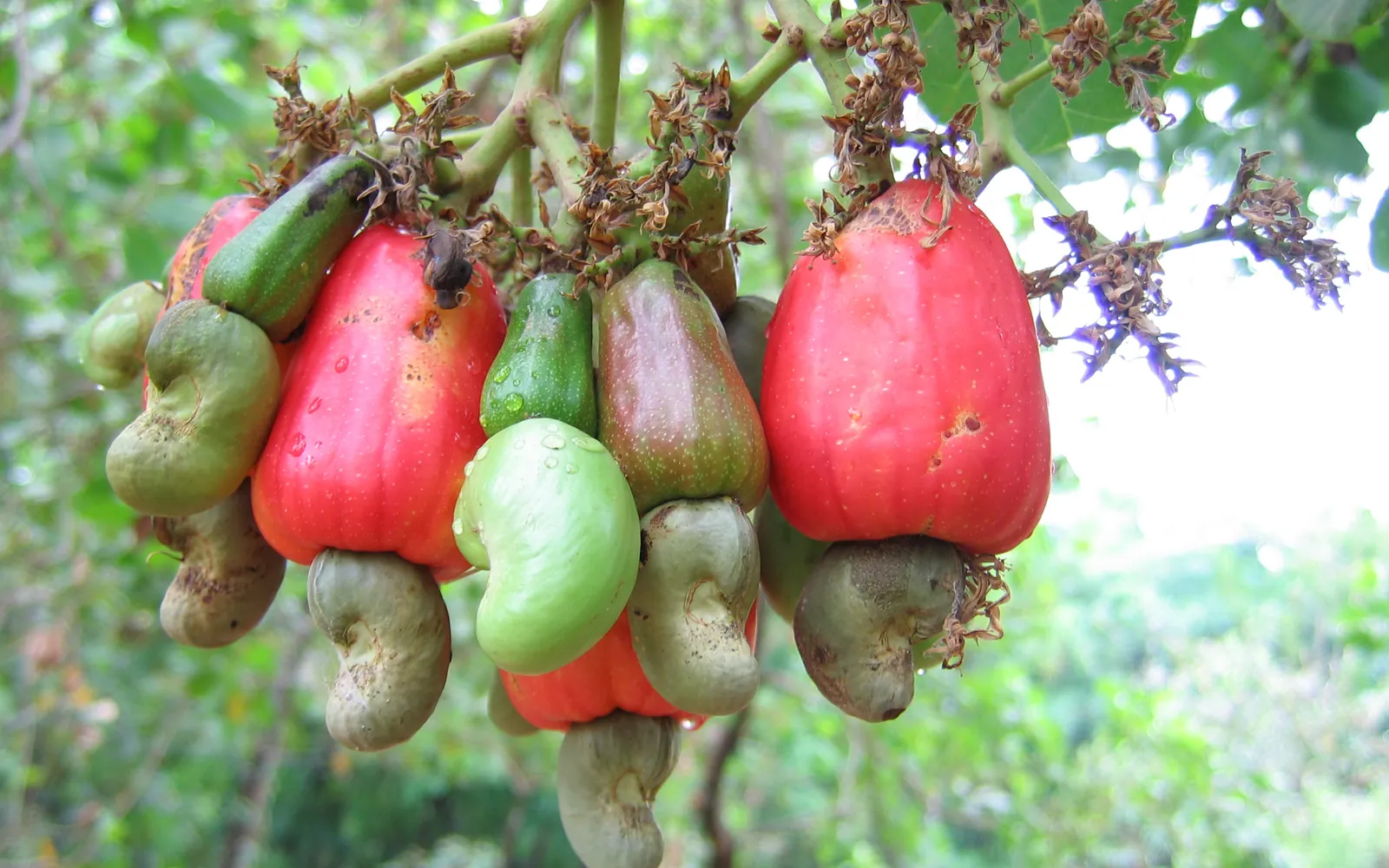
This guide shows how traditional farmers usually plant kasoy. Use it as a starting point. For a higher yield, update it: plant certified seed or clean planting material, test your soil, and follow the right spacing and fertilizer.
How Filipino growers, most of them in Palawan, plant kasoy the old way from nuts sown in the field or from bagged and grafted seedlings, and raise the trees to the first crop of nuts. It is a tough tree for dry, sandy and poor soils, often planted with upland rice or root crops between the young trees.
Before you plant, get the field ready with our land preparation guide for fruit and plantation trees. Then choose your seed or planting material with the kasoy varieties sold here. If the leaves turn pale later on, the kasoy nutrient deficiency guide helps you find what is missing. For more on the crop, read pagtatanim ng puno.
When to plant kasoy
Land is cleared in the dry months and the nuts or seedlings go in at the start of the rains, about May to July. Trees flower from about November to March and the nuts are gathered from about February to May, sometimes into early June. Rain at flowering brings poor nuts.
What you plant
Most old farms grew from nuts of good mother trees. Farmers pick big, heavy nuts from last season's best trees, drop them in water and keep only those that sink, then soak them a day or two before sowing. Because the taproot grows fast and hates being disturbed, nuts are sown straight in the field or in bags for only a short time. Grafted seedlings of recommended varieties are bought from nurseries for new farms.
Paano magtanim ng kasoy, step by step
Trees from nuts usually start bearing in the third year, about 36 months (1,080 days), and give a real crop from the fourth or fifth year. Grafted trees can start earlier. The crop is ready about 3 years after sowing.
Before planting (Bago magtanim)
2 months before sowing: Clear and stake in the dry season
Slash and clear the land before the rains. Stake the planting spots in a square, about 8 to 10 m apart each way, and dig holes about 30 to 60 cm wide and deep, refilled with topsoil and some manure or compost.
2 days before sowing: Pick and soak the nuts
Choose big, heavy nuts from the best trees, drop them in water, and throw away the ones that float. Soak the good ones for a day or two.
- Choose the mother treeTake nuts from a known, outstanding tree that has borne well for many years, best an old tree of about 15 to 25 years. Gather them at the peak of the harvest, when the nuts are fully mature.
- Use the nuts freshSow nuts gathered this season as soon as you can. Cashew seed loses its life quickly, so old nuts from last year sprout poorly.
- Drop them in waterPour the nuts into a basin of water and throw away every nut that floats. The heavy nuts that sink make stronger, healthier seedlings.
- Soak the good nuts1 to 2 daysLeave the nuts that sank in clean water for a day or two before sowing, so they swell and sprout faster.
Planting day (Pagtatanim)
Sowing day: Sow two or three nuts a hole
Once the rains are steady, push two or three nuts about 5 cm deep in each hole, a hand's width apart, with the end that held the stalk pointing up. Cover lightly and press the soil. Tip: Do not dig up and move young cashew. The long taproot breaks easily.
- Push them in slanting, stalk end upSet each nut about 5 to 10 cm deep, leaning a little, with the end that held the stalk pointing up. The shoot then comes out quickly, before rats, ants, snails and birds can eat the seed leaves.
- Space three in a triangleWhen you sow three nuts in a hole, set them about 30 cm apart in a triangle so each seedling has room until thinning.
- Fill with topsoil and keep it moist1 to 2 weeks to sproutCover the nuts with the dark topsoil, not the pale subsoil from the bottom of the hole. With enough moisture in the soil they come up in one to two weeks.
Care while it grows (Pag aalaga)
Day 21: Check for sprouts
The nuts come up in about two to three weeks. Resow any hole where nothing came up while the rains last, and watch for rats and ants digging up the nuts.
Month 2: Keep the strongest plant
When the seedlings have several leaves, cut off the weaker ones at the soil and keep one strong plant a hole.
Month 2: Weed and plant crops between
Ring weed around each young tree. Many farmers plant upland rice, cassava, peanuts or mungbean between the rows while the trees are small, which keeps the weeds down and earns money.
Month 4: Feed if you can
Few farmers fertilize kasoy, but young trees grow faster with a little manure or compost, or complete fertilizer (14 14 14), spread in a ring at the start and near the end of the rains.
Month 12: Clean the trunk and shape the tree
Cut off the low side branches so the trunk is clear for about half a meter to a meter, and keep three or four well spaced main branches. Cut out dead and crossing branches.
Month 30: Clean the farm at flowering
When the trees start to flower, slash the undergrowth to remove hiding places for pests. Watch the flowers and young nuts for tea mosquito bugs and for black spots of anthracnose in rainy spells.
Harvest (Anihan)
Year 3: Gather the fallen nuts
Trees start bearing in the third year. Gather the fruits that fall, or pick them when the apple is fully colored, every day or two, and twist the nut off the apple. Tip: Use or sell the apples for juice or feed instead of leaving them to rot.
Year 3: Sun dry the nuts
Spread the nuts on mats or a clean floor in the sun for a few days, turning them, until the kernel rattles inside. Store them in dry sacks off the floor. Tip: Never crack raw nuts with bare hands. The shell oil burns the skin, so they are roasted first.
- Twist off and clean the nutsTwist each nut off its apple the day you gather it and wipe off the juice and dirt, so the nuts do not rot in a wet pile.
- Spread them in the sun2 days or moreSpread the nuts in one layer on mats, nets or a clean floor in full sun for two days or more, turning them now and then and covering them at night.
- Shake to testShake a handful together: dry nuts sound brittle and rattle. By then their moisture is down to about 7 percent.
- Store them dryKeep the dry nuts in sacks or bags, raised off the floor in a dry room, for use through the year. Nuts that soak up damp air grow mold and the kernels turn dark.
Watering kasoy, stage by stage
Kasoy here is rain fed: the nuts are sown once the rains are steady, and after that the trees live through the long dry season on their deep taproot. Only young trees on very sandy soil get a pail of water in their first dry season, where a well or creek is near. A pail or hose into a ring basin for young trees. A few farms use small sprinklers under the trees or drip lines. Water the soil in the early morning, not the flowers.
The first dry season after sowing, while the taproot is still short. Flowering to nut growth, when a dry spell makes young nuts drop early.
| Stage | When | How often | How much |
|---|---|---|---|
| Sowing to sprouting | Sowing day to day 21 | Sow only when the rains are steady. Water lightly only if a dry week comes | A light soak of each hole |
| Seedlings in the first rains | Day 21 to month 5 | Rain is enough. No watering | None |
| First dry season | Month 5 to 12 | Every week or two for young trees on sandy soil, where water is near | A deep soak of a ring basin around the stem |
| Years 2 and 3, before bearing | Month 12 to 30 | Rain fed. In a long dry season, a deep soak every two weeks or so for trees that wilt | A deep soak of the ring, widened as the tree grows |
| Flowering and nut set (about November to March) | Month 30 to 33 | Rain fed trees get none. Where water is at hand, a deep soak at the base every week or two | About 200 liters a grown tree every two weeks, or about 20 liters a tree a day on drip, always on the soil and never over the flowers |
| Nut and apple growth | Month 33 to 35 | The same deep soak every week or two where water is at hand | About 200 liters a grown tree each time |
| Nut fall and harvest (about February to May) | Month 35 to 38 | Stop watering once the nuts begin to fall | None |
Without irrigation. Sow once the rains are steady and cover the holes with straw mulch. Cashew does best on deep, well drained sand or loam with a clear dry season, where its taproot reaches deep water. It needs as little as about 1,000 mm of rain a year. A clear dry season brings one strong flowering, and rain fed trees give their nuts from about February to May.
In the dry season. Grown trees need no water to survive. Young trees on sandy soil: every week or two in their first dry seasons. Bearing trees, where water is at hand: a deep soak every week or two from flowering to nut growth, stopping when the nuts fall. Water a young tree when its leaves droop and its older leaves yellow and fall.
In the rainy season. On shallow or waterlogged soil cashew grows a poor root system and the trees blow over in the wet season, so plant on deep ground that drains. Rain at flowering brings black spot and flower drop, and rain on the growing nuts rots them. Never sprinkle water over a tree in flower.
- Too little water: Young trees stop growing and drop their older leaves. Bearing trees drop many small nuts before they fill.
- Too much water: Seedlings rot at the base in soggy soil, leaves yellow on waterlogged ground, and flowers turn black and drop in rainy spells.
To water better for a higher yield: Water young trees through their first dry seasons. They grow much faster and start bearing sooner. Where a pond or well is near, a deep soak at the base every week or two from flowering to nut growth cuts early nut drop. Stop as the nuts begin to fall.
Spacing, water and fertilizer for kasoy
Spacing
About 8 to 10 m apart each way in a square, from about 100 to 156 trees a hectare. Some farmers go as close as 5 m. Two or three nuts a hole, thinned to one plant.
Water
Rain fed. Planting waits for steady rain. After that cashew lives through long dry seasons. Young trees on very sandy soil may be watered in their first dry season if water is near.
Fertilizer
Most traditional farms give nothing. Farmers who do feed use manure or compost and complete fertilizer (14 14 14) at the start and near the end of the rains, in a ring under the edge of the leaves, more as the tree grows. To read what a bag really gives, see our guide to fertilizer for this crop.
Care and harvest
Care while it grows
Ring weeding and slashing, annual crops between the young trees, thinning to one plant a hole, clearing the lower trunk and shaping three or four main branches, and slashing undergrowth at flowering. Old, crowded farms are replanted rather than rebuilt.
When and how to harvest
Nuts are ready when the fruit falls or the apple is fully colored and the nut gray and hard, from about February to May. Fallen fruits are gathered every day or two, the nuts twisted off, sun dried a few days until the kernel rattles, and stored dry in sacks for selling or roasting.
Common mistakes when planting kasoy
- Moving young seedlings and breaking the taproot, so they die or stall.
- Sowing light nuts that float. Most of them fail.
- Planting too close, so the trees shade each other and bear little.
- Leaving the farm bushy at flowering, so pests build up.
- Leaving fallen nuts on wet ground for days, so they spoil.
- Cracking raw nuts by hand and burning the skin with the shell oil.
How to get a higher yield of kasoy
The traditional way gets a crop, but small changes add up. These are the first things to change, one season at a time.
- Plant grafted seedlings of recommended high yielding varieties from accredited nurseries.
- Feed young and bearing trees by a soil test, twice a year, instead of nothing.
- Prune to an open shape and keep the farm clean, especially at flowering.
- Gather nuts daily and dry them well to keep the quality and the price up.
- Scout for tea mosquito bugs, borers and anthracnose and use integrated pest management.
- Process the cashew apples into juice, wine or jam for extra income.
anee.io helps with each of these. The NPK Plus calculator checks that your fertilizer plan feeds the yield you want, the pest and disease finders tell you what is on the leaves before you spray, and Anee, the smart farm technician answers your questions in Tagalog or English.
Members open this guide in the How to Plant tool and send every step to the Protocol Builder in one tap, each on its own day. There you can change the seed, the spacing and the fertilizer, then turn it into a cropping calendar for your lots.
Start from the traditional way, make it better, and let anee.io date every task from your own planting day. Free to start.
Start freeQuestions about planting kasoy
Paano magtanim ng kasoy?
When do farmers plant kasoy in the Philippines?
How far apart do you plant kasoy?
How long before kasoy can be harvested?
How often do you water kasoy?
What do you plant to grow kasoy?
See every step of planting it the traditional way
Register for free to read every step with its day, the spacing, water and fertilizer, the common mistakes and what to change for a higher yield. Then send it to your Protocol Builder in one tap.
Free to register. No credit card. Works on any phone.