Paano Magtanim ng Mansanas: How to Plant Apple the Traditional Way
Paano magtanim ng mansanas? Here is how traditional Filipino farmers usually plant mansanas (apple), step by step from getting the field ready to the harvest, with the day of each step and what to change for a higher yield.
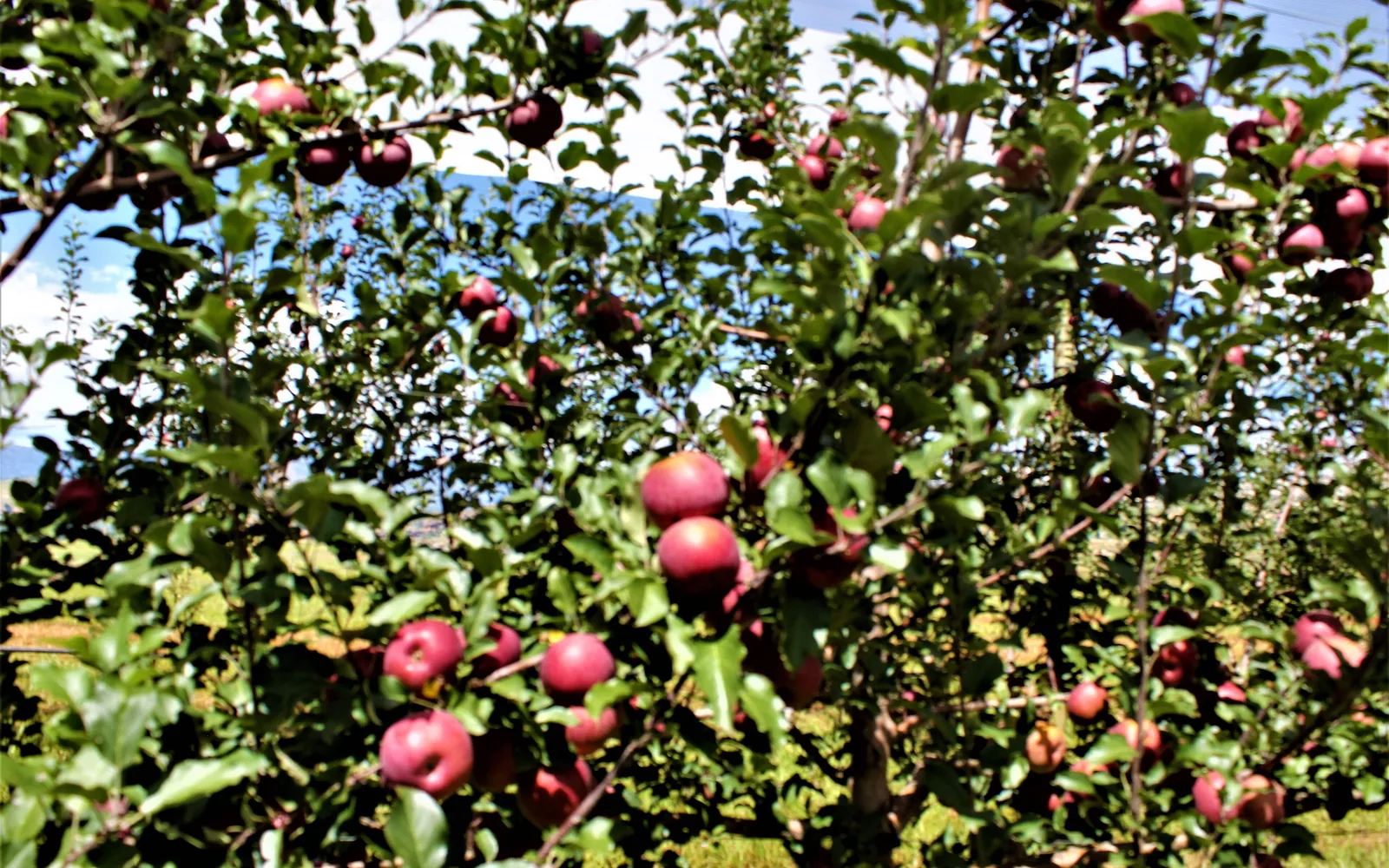
This guide shows how traditional farmers usually plant mansanas. Use it as a starting point. For a higher yield, update it: plant certified seed or clean planting material, test your soil, and follow the right spacing and fertilizer.
Apple is rare in the Philippines: there is no traditional apple farming here, only a few growers in cool highlands, best known a farm in Kapatagan, Digos City on the slopes of Mt. Apo, and hobby trees in Baguio and Benguet. This short guide shows how those few growers do it with grafted low chill types and by stripping leaves and bending branches to make the tree flower without a winter.
Before you plant, get the field ready with our land preparation guide for fruit and plantation trees. For more on the crop, read pagtatanim ng puno.
When to plant mansanas
Trees are planted at the start of the rains, about May to July. With no winter, growers make their own seasons: after each harvest they strip the leaves and bend the branches, and the tree flowers again, so some trees give two small crops a year.
What you plant
Grafted trees of low chill apple types, which need little cold, bought from a specialty nursery or grafted on hardy rootstock. Trees from the seeds of store apples grow but rarely bear good fruit, and take many years.
Paano magtanim ng mansanas, step by step
Grafted trees in warm places can set a few fruits within a year, but we count the first real harvest at about 36 months (1,080 days). The crop is ready about 3 years after planting.
Before planting (Bago magtanim)
14 days before planting: Pick a cool, sunny, well drained spot
Choose the coolest high ground you have, in full sun, where water never stands. Dig holes about 50 cm wide and deep and mix the topsoil with rotted manure or compost.
- Lay out the holesStake the planting spots about 3 by 3 m apart, wider for big, spreading types.
- Dig and keep the soils apartDig each hole about 50 cm square and 60 cm deep, piling the dark topsoil on one side and the paler subsoil on the other. Break up the hard bottom with an iron bar.
- Mix the subsoilInto the subsoil, mix about 500 g of agricultural lime, chicken manure or compost, about half a kerosene can, and about 500 g of complete fertilizer (14 14 14).
- Fill the hole in two layersPut the mixed subsoil into the hole first and the topsoil over it, then open a small hole in the middle for the tree. Leave it to settle until planting.
- Keep the bud union highWhen you plant, trim off broken roots, bury the tree only as deep as it sat in its bag, and keep the graft joint at least 15 cm above the soil. Crumble fine soil around the roots and tramp it firm so no air pockets stay.
Planting day (Pagtatanim)
Planting day: Plant at the start of the rains
Set the grafted tree at the same depth it grew, graft joint above the soil, firm the soil, water and stake it. Growers plant about 3 to 4 m apart. Trials used rows as close as 3 m x 1 m.
Care while it grows (Pag aalaga)
Day 7: Mulch, water and feed lightly
Mulch the base, water in dry spells, and give compost or manure with a little complete fertilizer (14 14 14) every few months.
Month 6: Bend the long branches
Pull long upright branches down toward level and tie them with string to stakes or the trunk. Bent branches form flower buds instead of only leaves.
- Choose young branches full of budsPick branches one to two years old that carry many sleeping buds along their length.
- Pull them down levelBend each one gently out to the side until it lies flat, at a right angle to the trunk, and tie its tip with straw rope to a peg driven into the ground.
- Let the spurs formBuds on the upper side of the bent branch push out shoots, and most of them stay short as fruiting spurs. These spurs carry the flowers in the following year.
Month 12: Strip the leaves to force flowers
When the leaves are mature and growth stops, pick off the leaves by hand. New leaves and flowers push out in the following weeks. Growers repeat this after each crop, about twice a year.
- Strip every leaf from the bent branchesWhen growth has stopped and the leaves are mature, pick off all the leaves on the bent branches by hand. In the highlands the trees never get enough cold to wake their buds, and leaf stripping does that job instead.
- Watch for flowers in three weeksabout 3 weeksAbout three weeks after bending and stripping, the flower buds at the branch tips open and new shoots start from the sleeping buds.
- Repeat on the spurs next year2 to 3 weeksOn older trees, strip the old leaves from the spurs after each crop. Their flower buds open two to three weeks later.
Month 13: Thin and watch the fruit
Keep one or two fruits per cluster and remove the rest so they size up. Watch for fruit flies and bag young fruits in paper or net bags.
Harvest (Anihan)
Year 3: Pick colored, firm fruit
We count the first real crop at about three years. Pick when the fruit has colored, comes off with a gentle lift and twist, and the seeds inside are brown.
Watering mansanas, stage by stage
The few apple trees here, mostly in the highlands and in trial plots, live on rain and get a pail of water in dry spells. Growers plant them on sloping or raised ground so the roots never stand in water. A pail or hose into a ring basin around the tree. Water in the morning.
Flowering to about four weeks after bloom, when fruit set and size are decided. The last two months before picking, when the fruits swell.
| Stage | When | How often | How much |
|---|---|---|---|
| Planting to 3 months | Planting day to month 3 | Soak at planting, then whenever the soil dries in a dry spell, until the tree is clearly growing | A good soak of the mulched ring around the stem |
| Rest of the first year | Month 3 to 12 | Only in dry spells, when the soil a hand deep is dry | A deep soak of the ring, never leaving water standing |
| Leaf stripping to new shoots and flowers (each crop cycle) | Month 12 to 13 | Keep the soil moist after the leaves are stripped and the branches bent. Water if a dry spell comes | A deep soak of the ring under the leaves |
| Flowering to four weeks after bloom | Month 13 to 14 | Never let the soil dry out in these weeks | A deep soak whenever the soil a hand deep is dry |
| Fruit growth to harvest (first real crop) | Month 33 to 36 | Steady water in dry spells right up to picking | A deep soak of the ring |
Without irrigation. Plant as the rains begin on the coolest, sunniest high ground with fast drainage, and mulch the ring. Most highland trees get by on rain, with a pail of water in dry spells around flowering and fruit growth.
In the dry season. Water when the soil a hand deep is dry, most of all from leaf stripping through flowering and fruit growth.
In the rainy season. Apples dislike waterlogged roots: plant on slopes or raised ground and never let water stand around the trunk.
- Too little water: Leaves droop and edges brown, few fruits set, and fruits stay small.
- Too much water: Yellow leaves, poor growth and rotting roots on soggy ground.
To water better for a higher yield: Keep the soil steadily moist from leaf stripping until four weeks after bloom, and again in the last two months before picking.
Spacing, water and fertilizer for mansanas
Spacing
About 3 to 4 m between trees for home and small farm plantings. Trials used close rows of 3 m x 1 m with small, bent trees.
Water
Rain fed, with watering in dry spells. Apples dislike waterlogged roots, so they go on sloping or raised ground.
Fertilizer
Compost and rotted manure, with small amounts of complete fertilizer (14 14 14) every few months. More potash as fruit fills. To read what a bag really gives, see our guide to fertilizer for this crop.
Care and harvest
Care while it grows
Branch bending, leaf stripping after each crop to bring on flowers, light pruning to keep the tree small and open, fruit thinning and bagging.
When and how to harvest
Fruit is picked when colored and firm, with brown seeds, a few months after flowering. Crops are small, and most fruit is sold to visitors or eaten at home.
Common mistakes when planting mansanas
- Planting seeds from store apples and expecting fruit.
- Buying high chill types that never flower without a real winter.
- Letting branches grow straight up, so the tree makes leaves and no flowers.
- Planting in low, wet ground.
How to get a higher yield of mansanas
The traditional way gets a crop, but small changes add up. These are the first things to change, one season at a time.
- Buy grafted low chill varieties from a nursery you trust.
- Plant only on the coolest high ground you have.
- Strip leaves and bend branches on a schedule after each crop.
- Test the soil and feed by the result. Bag fruit against flies.
anee.io helps with each of these. The NPK Plus calculator checks that your fertilizer plan feeds the yield you want, the pest and disease finders tell you what is on the leaves before you spray, and Anee, the smart farm technician answers your questions in Tagalog or English.
Members open this guide in the How to Plant tool and send every step to the Protocol Builder in one tap, each on its own day. There you can change the seed, the spacing and the fertilizer, then turn it into a cropping calendar for your lots.
Start from the traditional way, make it better, and let anee.io date every task from your own planting day. Free to start.
Start freeQuestions about planting mansanas
Paano magtanim ng mansanas?
When do farmers plant mansanas in the Philippines?
How far apart do you plant mansanas?
How long before mansanas can be harvested?
How often do you water mansanas?
What do you plant to grow mansanas?
See every step of planting it the traditional way
Register for free to read every step with its day, the spacing, water and fertilizer, the common mistakes and what to change for a higher yield. Then send it to your Protocol Builder in one tap.
Free to register. No credit card. Works on any phone.