Banana Weevil: How to Spot the Corm Borer and Stop It
The banana weevil, Cosmopolites sordidus, is a small black beetle whose grubs tunnel in the corm at the base of the banana plant. Tunnels weaken the plant, cut the bunch size and can topple it. This page shows the signs, the traps and the planting steps that keep it low.
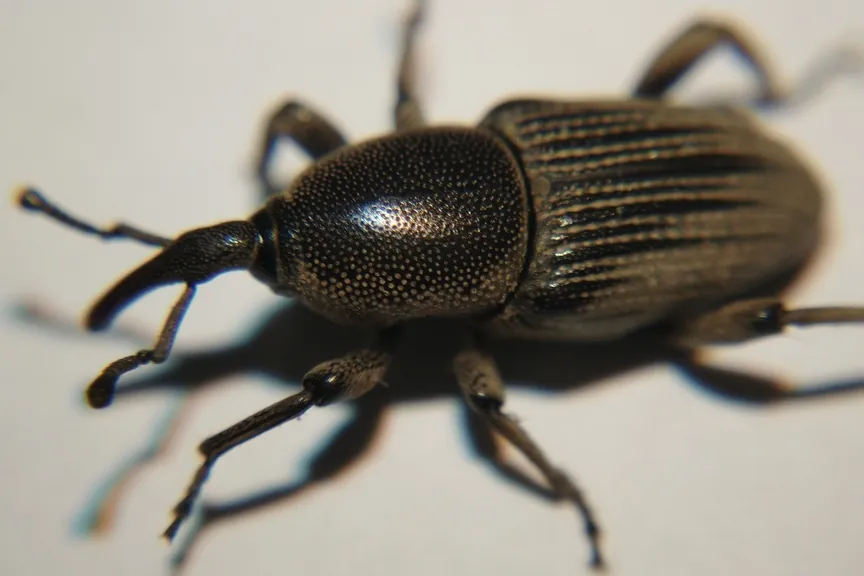
What Is Banana Weevil?
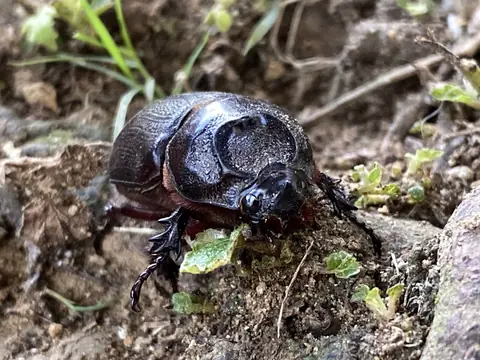
The adult starts out reddish brown and darkens to black. It is about 12 mm long and has the long snout every weevil has. Its larvae have no legs and are cream colored, with reddish brown heads. The adults hide in soil and plant debris in the day, and they move short distances at night.
The weevil attacks all banana varieties and also abaca, Manila hemp. In many countries no insect does more harm to banana and plantain. Farmers often blame the poor plant on a lack of fertilizer or on nematodes, so the true cause goes unnoticed.
| Fact | Details |
|---|---|
| Name | Banana weevil |
| Scientific name | Cosmopolites sordidus |
| Kind | Insect |
| Crops it attacks | Banana |
| Local names | None recorded |
| Where it strikes | Roots and base and stems and tillers |
| When it strikes | It attacks at all growth stages, and the damage is worst in new plantings and in old mats that were not cleaned after harvest. |
| Life cycle | It spreads mostly in infested planting material, since the adults rarely fly and usually move less than 10 meters in a month. A full cycle takes about 6 weeks in warm tropical places and up to 6 months in cool weather. Adults can live up to 2 years. |
How to Identify Banana Weevil
Cut a weak plant at the base or split an old corm. Tunnels inside the corm and cream colored grubs with brown heads show the weevil. Look also for tunneling at the base of the outer leaf sheath. Banana roots rotting from nematodes show no tunnels.
- Tunnels run through the corm and the base of the pseudostem.
- Roots rot and the plant takes up less food, so leaves die early.
- The plant looks weak and can lodge, or fall over.
- Suckers die back and bunches come out small.
- New plantings fail when many weevils are in the planting material.
Weak, yellow banana plants can come from low nutrients or from nematodes. Split the corm. Tunnels and grubs mean banana weevil.
How Banana Weevil Hurts Your Crop
Larvae tunnel in the corm, which cuts the uptake of nutrients and weakens the plant. In a new planting, the attack can cause crop failure. In an established field, it lowers bunch weight, kills mats and shortens the life of the stand.
Because the damage looks like nutrient or nematode trouble, many farmers apply more fertilizer and lose money. Check the corm before you spend. A similar banana problem is the banana aphid, which spreads a virus instead of boring.
How to Control Banana Weevil
- Use clean planting material. Tissue cultured plants are free of weevils, so they are best, and you should inspect and trim every sucker for larvae before planting.
- After removing old mats, rest the land before you replant. The Pacific fact sheet says at least 3 months, but a University of Pretoria review of African and Australian work says at least 1 year, and prefers 18 months to 2 years. Rest it as long as you can.
- Keep the field clean. Cut old pseudostems and corm remains below ground level and chop them into pieces so they dry out and cannot feed grubs.
- Set pseudostem or corm traps. A pseudostem split lengthwise and laid cut side down on the soil near the mat attracts adults, and you collect and destroy them. Replace the traps often until the weevils are under control.
- Protect natural enemies, such as the predatory beetles Plaesius javanus and Plaesius laevigatus and the ant Tetramorium bicarinatum, which help in some places.
- Use the aggregation pheromone sordidin for monitoring and mass trapping where it is available. A trial in Mexico found that four pheromone and corm traps per hectare gave partial control, with young plants benefiting after 6 months and mature plants after 13 months.
When a Spray Makes Sense
Chemicals come last. The Pacific fact sheet lists several active ingredients for banana weevil, and the University of Pretoria review says chemicals work mainly against the adults and are mostly non systemic. Check what is registered for banana in the Philippines through the FPA before you buy. Follow the label.
| Active ingredient | IRAC group | On Philippine labels |
|---|---|---|
| Fipronil | IRAC 2B | A sound second choice. 2 registered products name it on banana. |
| Bifenthrin | IRAC 3A | A sound second choice. 1 registered product names it on banana. |
| Carbofuran | IRAC 1A | Older or broad chemistry: a last resort. 2 registered products name it on banana. |
| Oxamyl | IRAC 1A | Older or broad chemistry: a last resort. 1 registered product names it on banana. |
Resistance. Banana weevils have resisted cyclodienes, organophosphates and carbamates in other banana countries where one soil product was used for years. Rotate fipronil (2B), bifenthrin (3A) and imidacloprid (4A), and let clean suckers and traps carry most of the load.
Use only products registered with the Fertilizer and Pesticide Authority, and follow the label for the rate, the timing and the protective clothing. Switch to a different insecticide group next time, so the pest does not learn to survive it. Our guide to integrated pest management explains how.
Keep It Out Next Season
- Plant tissue cultured plantlets, or pare suckers down to clean white flesh and throw out any with tunnels.
- A hot water dip of pared suckers, about 53 to 55 C for 20 minutes, kills grubs and eggs and also nematodes.
- After clearing an old field, rest it or grow another crop as long as you can before banana again. A year beats 3 months.
- Cut harvested stems at ground level, chop them and spread the pieces to dry. Rotting stumps breed weevils.
- Lay split pseudostem traps cut side down by the mats, collect the weevils every few days, and change the traps every 2 weeks.
- Desucker on time and keep old corms out of the field, so adults find fewer places to lay eggs.
Natural Enemies and Biological Help
- Beauveria bassiana put on the cut face of pseudostem traps infects the weevils that come, and they carry it to others.
- Predatory beetles (Plaesius) and some ants eat weevil eggs and grubs in the mat. Avoid soaking the soil with broad insecticides.
Not Sure What You Are Seeing?
Take a clear photo of the insect, the damage and the whole plant, then ask Anee, the smart farm technician in anee.io, in Tagalog or English. Anee tells you what it most likely is and what to do at the age of your crop. You can also put your scouting days on the cropping calendar, so the team knows when to walk the field.
anee.io keeps your scouting, spraying and harvest on one calendar, and Anee answers when something looks wrong.
- Scouting days dated from each lot's own planting day
- Photos and notes for every lot
- Anee, the smart farm technician, in Tagalog or English
Questions Farmers Ask About Banana Weevil
How does the banana weevil spread?
How do I trap banana weevils?
How long should I rest the land?
Stop Banana Weevil from costing you the harvest
With Libre + Anee, read the whole guide: how to be sure it is this pest, when it pays to act, and what to spray, by active ingredient.
The account is free, no credit card.