Legume Land Preparation: After Rice, Furrows and Mulch
Legume land preparation is mostly about timing and water. Mungbean, peanut, soybean and sitao often follow rice, when the paddy soil is wet, packed and poor in structure. Philippine trials show you can plant with zero or minimum tillage, but only if the soil is drained and the sowing date is right.
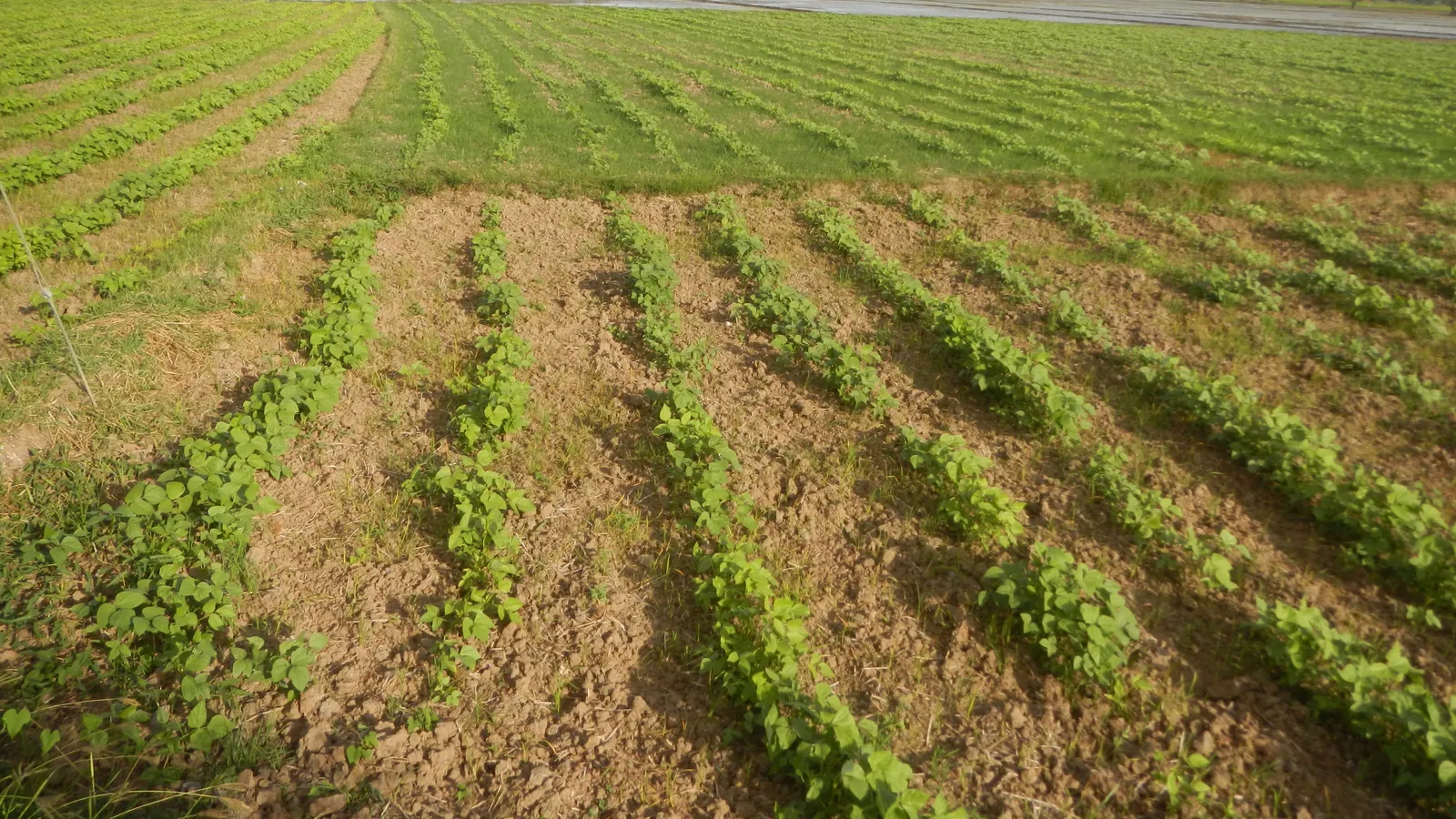
The firmest numbers below are for mungbean and sitao. For peanut and soybean the numbers come from Philippine trials, so those parts are shorter. Treat every number as a starting point and ask your municipal agriculturist before you plant.
Legumes also fix nitrogen, so they follow rice well. But they need the opposite of what rice likes. Rice grows in puddled, flooded soil. Legumes need loose, aerobic soil that drains.
Legume land preparation after rice
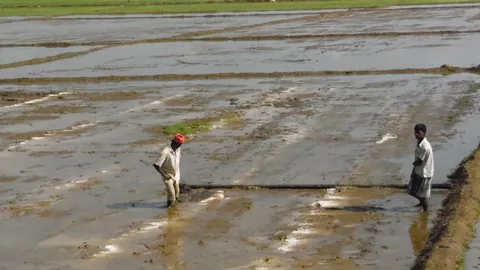
A trial of mungbean, soybean and peanut after rainfed rice, with sites in Pangasinan, explains the problem. When the wetland rice comes off, the soil is still soaked, and seed sown into it can drown before it comes up or roots. As the puddled layer dries, its strength rises fast, so roots struggle to get through. That is why the authors say the sowing window is narrow and the timing makes or breaks the crop.
So the first job after the rice harvest is to read the soil. Do not plant into a sticky paddy, and do not wait until the soil is a brick. Work it at a moisture where it crumbles.
Zero tillage or minimum tillage
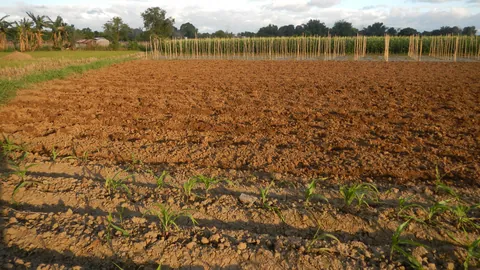
For post rice culture, mungbean can be grown with zero or minimum tillage. Philippine research supports this. In one study, a minimum tilled plot with 8 tons per hectare of rice straw mulch and 400,000 plants per hectare gave the best mungbean yield. Zero tillage matched it for seed yield but grew less. A 1987 thesis on soybean and mungbean after rice found zero tillage gave higher grain yield, seeds per pod and pods per plant than conventional tillage, and mulch added soil moisture.
However, weeds were worse in the minimum tilled plots, and the rice straw mulch held them back. So mulch is part of the method, not an extra.
| Option | What you do | Notes |
|---|---|---|
| Zero tillage | Drain the paddy, make planting holes or shallow lines, mulch with rice straw | Works for mungbean after rice. Soybean and mungbean yielded well in a 1987 thesis |
| Minimum tillage | Open furrows only, leave the rest of the soil | Best mungbean result with 8 tons per hectare rice straw mulch |
| Conventional tillage | Plow, then harrow at weekly intervals | The method for upland fields. Needs the right soil moisture |
Mungbean: furrows, drainage and flooding
For upland fields, plow alternated with harrowing at weekly intervals so seeds germinate evenly and compete with weeds. Drill the seeds in shallow furrows 60 cm apart. Twenty kg of seed is enough for a hectare.
For post rice culture, there is a clear trick. Let water into the paddy one or two days ahead of planting, and drain it off before you broadcast the seed. That gives the moisture seeds need without leaving the field wet.
Soil pH should be 5.8 to 6.5. In the wet season the soil must be well drained, because mungbean is sensitive to extended waterlogging. Heavy soils suit only dry season planting.
Coat seeds with an appropriate Rhizobia inoculant if it is available, right before planting, and keep coated seeds out of direct sun. With inoculant, only 20 kg per hectare of nitrogen is needed. If you cannot source inoculant, skip it and use the basal rate below.
Sitao, soybean and peanut
Sitao. It does best in rich, loose, crumbly soil full of organic matter that drains well, at pH 5.5 to 6.6. Plow 15 to 20 cm deep two to three times, a week apart, and harrow after each pass. Then set furrows 2.5 to 3.0 m apart. Without a soil test, give each hectare 3 bags of 14 14 14 complete fertilizer plus 20 bags of compost or organic fertilizer. Pole sitao needs stakes 1.5 to 2 m long by 25 days after emergence at the latest. Corn can serve as a living trellis, planted at 100 cm between furrows and 30 cm between hills.
Soybean. Philippine trials found zero tillage after lowland rice gave higher grain yield than conventional tillage. Mulch raised soil moisture. We give no furrow sizes for soybean here, so check the DA office in your region.
Peanut. In the post rice trials, peanut reached 2.3 megagrams per hectare, which is 2.3 tons. Intensive tillage is not needed before sowing peanut on light soils. A 1995 study also grew peanut after wetland rice, with one site in Bulacan. Ask your municipal agriculturist for peanut furrow sizes.
Land preparation days go on the calendar, dated back from planting. Add your legume lot to anee.io and it dates the draining, tillage and sowing for you.
See the cropping calendarRice straw mulch and basal fertilizer
In the trial across the Philippines and Indonesia, mulch tended to raise yields in drier areas because it saves water. In wetter areas mulch was not needed and could even cut yield when conditions were too wet. So use straw mulch where the dry season is real, and thin it where it rains often.
If you have no soil test, use this basal rate for dry season mungbean: 150 kg of 14 14 14 per hectare on heavy soils such as loam to clay loam, and 200 kg on light soils such as sandy to sandy loam. In the same trial set, residual fertilizer from the rice crop mattered in wetter areas. Put the fertilizer in the furrows and cover it with a thin layer of fine soil before seeding. Read our fertilizer application methods guide for more.
Change the work by soil and season
- Heavy clay. For mungbean, use it only in the dry season. Open drain furrows before planting.
- Sandy loam. Mungbean is fairly well adapted. Use the higher basal rate of 200 kg of 14 14 14.
- Acidic soil. Mungbean wants pH 5.8 to 6.5 and sitao 5.5 to 6.6. If your test is lower, read acidic soil preparation.
- Salty or alkaline soil. See saline soil preparation and sodic and alkaline soil preparation.
- Seasons. Mungbean is planted in May to June, September to October and February to March. Humid weather from continuous rain can reduce seed quality.
Common mistakes
- Sowing into saturated paddy soil that has not drained.
- Waiting until the puddled layer dries hard, then trying to push seeds through it.
- Planting mungbean on heavy soil in the wet season.
- Mulching too thick in a wet area.
- Leaving seed inoculant in the sun.
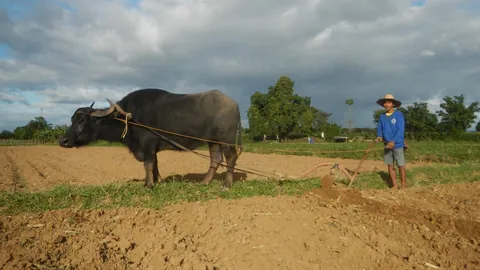
Off bar 15 days after planting, hand weed, then hill up with a carabao drawn plow. For legume pests such as the bean fly and legume pod borer, see our pest pages. Anee, the smart farm technician, can also read a photo of a damaged leaf.
Questions about legume land preparation
Can I plant mungbean right after rice without plowing?
How far apart are mungbean furrows?
Do I need rice straw mulch?
Do legumes need inoculant?
What is the best time to sow after rice?
Get every step of legume land preparation right
Register for free to read every step, then date each one on your own calendar with the Land Prep Planner, counted back from your planting day.
Free to register. No credit card. Works on any phone.