Legume Pod Borer: How to Spot It and Protect Your Sitaw and Beans
The legume pod borer is a moth caterpillar that webs flowers together and bores into the pods of sitaw, cowpea, pigeon pea and mungbean. It eats the seeds from the inside, where sprays hardly reach. This page shows how to spot the legume pod borer early and how to cut the loss.
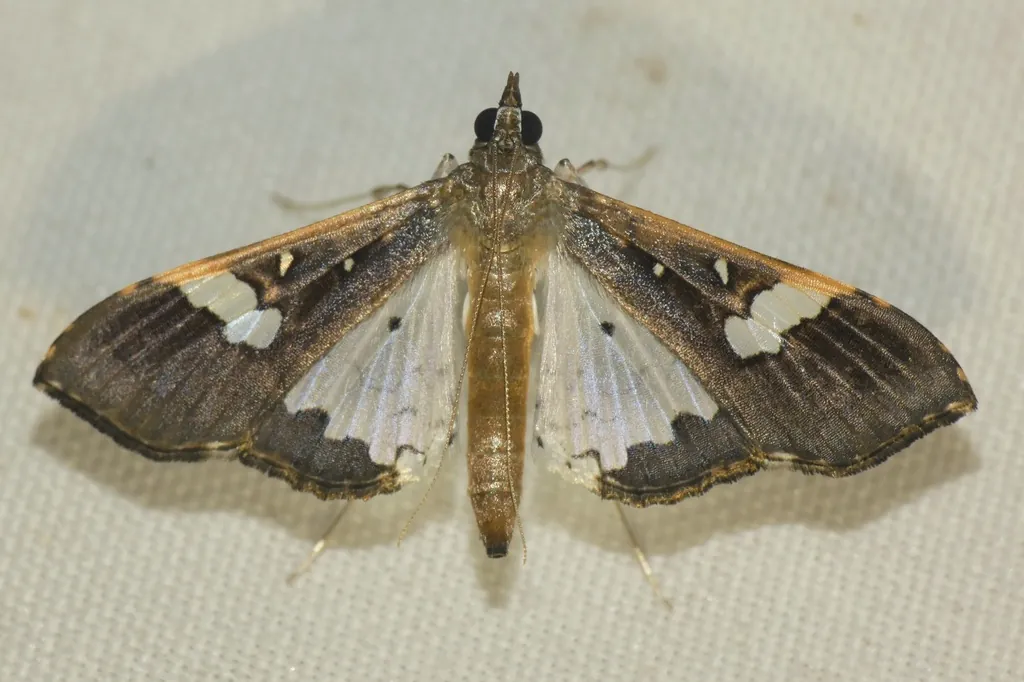
What Is Legume Pod Borer?
The legume pod borer (Maruca vitrata) is also called the bean pod borer. It lives in the tropics worldwide, including Asia. Many legumes host it, such as French bean, cowpea, pigeon pea, yardlong bean and mungbean.
It counts as a major pest. The caterpillars tunnel into the pods and feed on the seeds, so what you harvest is empty or spoiled. Because they hide inside flowers and pods, the damage often shows only when it is too late for a spray to help.
| Fact | Details |
|---|---|
| Name | Legume pod borer |
| Scientific name | Maruca vitrata |
| Kind | Insect |
| Crops it attacks | Sitaw (yardlong bean), string bean, cowpea, pigeon pea, mungbean and other legumes |
| Local names | None recorded |
| Where it strikes | Fruits, pods and nuts |
| When it strikes | It attacks from flowering to pod filling, and the young caterpillars hide in the flowers before they move into the pods. |
| Life cycle | The moth lays pale eggs one by one on stems, young leaves, flowers and pods. For about a week the young caterpillars eat inside the flowers, and then they tunnel into the pods. When they reach 18 mm, they leave the pod and pupate in the soil. |
How to Identify Legume Pod Borer
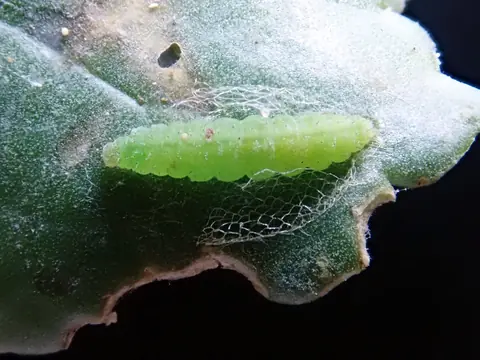
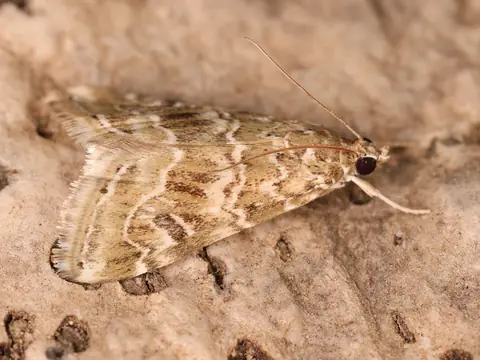
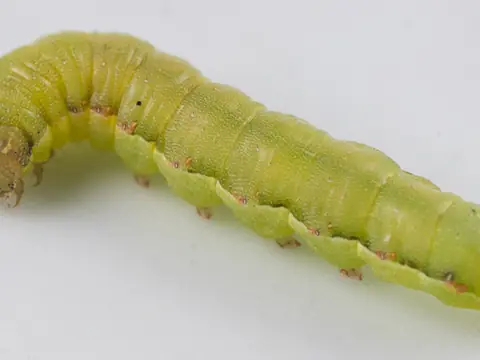
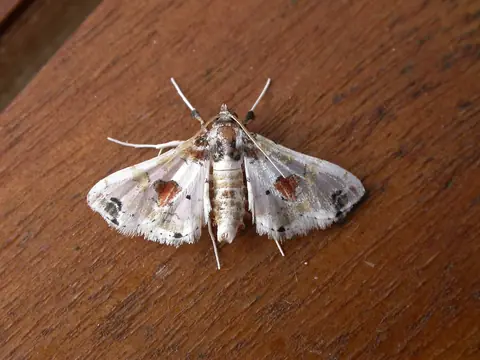
Look at the flowers first. Damaged flowers, and leaves, buds and pods tied together with fine webbing, are the early sign. Then check the pods for small entry holes with frass, which is the chewed remains and droppings, around them. Open a pod and you will find a caterpillar of up to 18 mm. The adult moth has brown front wings with white patches and mostly white hind wings edged with brown. A related pest, the bean fly, attacks only seedlings, not the pods.
- Flowers that are chewed, webbed together or dropping.
- Leaves, buds and pods tied together with fine silk.
- Small entry holes in the pods with frass around them.
- Seeds eaten out and pods that rot inside.
- Caterpillars up to 18 mm long inside flowers and pods.
- Frass, the chewed remains and droppings, around the entry holes and on the pods.
The bean fly also attacks legumes, but it hits seedlings in the first 3 to 4 weeks. This pest attacks the flowers and pods.
How Legume Pod Borer Hurts Your Crop
The caterpillars cause the main loss by eating the seeds, according to the Pacific Pests fact sheet. The webbing damage on buds, flowers and leaves is minor next to the pod damage.
We found no Philippine yield loss figure or action threshold in the sources we could open. The sheet does say that sprays often disappoint, because the caterpillars hide, the cost is high, the natural enemies die and resistance builds up. So the best plan is to check the flowers every few days and remove infested parts early.
In one cowpea trial in India, a sequence of three sprays from 50 percent flowering, at 10 day intervals, cut pod damage to about 12 percent and gave about 66 percent protection over the untreated plots. That is one trial, so your result may differ. A study in Burkina Faso found that the larvae prefer the reproductive parts of the flowers, which is why early checks at flowering matter.
How to Control Legume Pod Borer
- Check the flowers and the young pods every two or three days once the plants begin to flower. Look for webbing and for caterpillars inside the flowers, which are where the larvae feed first.
- Handpick the caterpillars and the webbed flowers early, when the infestation is still small, and destroy them.
- Do not plant sitaw or beans next to a field that is already infested. Avoid planting legume after legume in the same plot.
- Plant the beans in rows between rows of maize or sorghum. The Pacific Pests fact sheet says this intercropping works in Africa, so test it on a small part of your field first.
- After harvest, destroy all crop remains, so the pupae and the remaining caterpillars do not feed the next generation.
- Plant tolerant varieties when they are sold for your area, and keep the broad spectrum sprays away from the field, so the natural enemies stay. See the integrated pest management guide.
When a Spray Makes Sense
Pacific Pests discourages routine spraying, because the caterpillars hide, sprays kill natural enemies and resistance builds up. If you must spray, use plant based or biological products first. Time the spray at flowering, when the young caterpillars still feed in the flowers, and follow the FPA registered label and the waiting time before harvest. An Indian trial rotated three different groups at 10 day intervals from half flowering, which also helps slow resistance.
| Active ingredient | IRAC group | On Philippine labels |
|---|---|---|
| Chlorantraniliprole | IRAC 28 | A first choice. Registered products name it on mungbean, soybean, string bean and cowpea. |
| Spinosad | IRAC 5 | A first choice. Registered products name it on mungbean, soybean, string bean and cowpea. |
| Flubendiamide | IRAC 28 | A first choice. 4 registered products name it on string bean. |
| Indoxacarb | IRAC 22A | A sound second choice. 7 registered products name it on string bean. |
| Chlorantraniliprole plus thiamethoxam | IRAC 28 plus 4A | A sound second choice. 3 registered products name it on string bean. |
| Cyantraniliprole | IRAC 28 | A sound second choice. 1 registered product names it on string bean. |
| Cypermethrin | IRAC 3A | Older or broad chemistry: a last resort. Registered products name it on mungbean, soybean, string bean and cowpea. |
| Lambda cyhalothrin | IRAC 3A | Older or broad chemistry: a last resort. 85 registered products name it on mungbean. |
| Methomyl | IRAC 1A | Older or broad chemistry: a last resort. Registered products name it on mungbean, soybean, string bean and cowpea. |
| Malathion | IRAC 1B | Older or broad chemistry: a last resort. Registered products name it on mungbean, soybean, string bean and cowpea. |
The table stops at the ten best. 14 more on Philippine labels for it are older or broad chemistry. The Pest Finder in anee.io lists every one, crop by crop, with the products sold here.
Resistance. Pod borer in parts of Asia already survives some pyrethroids and organophosphates. Keep one group per window and switch: a diamide (28), then spinosad (5), then indoxacarb (22A) or emamectin (6).
Use only products registered with the Fertilizer and Pesticide Authority, and follow the label for the rate, the timing and the protective clothing. Switch to a different insecticide group next time, so the pest does not learn to survive it. Our guide to integrated pest management explains how.
Keep It Out Next Season
- From first bloom, check flowers and young pods every 2 to 3 days and pick off webbed flowers and larvae by hand.
- Do not plant beans beside an infested field, and avoid legume after legume in the same plot.
- Rows of corn or sorghum between bean rows can cut borer attack. Try it on a small plot first.
- Pick pods often. Old pods left on the vine breed more borers.
- Destroy crop remains right after harvest, so pupae and larvae do not feed the next generation.
- Grow tolerant varieties where they are sold for your area.
Natural Enemies and Biological Help
- Small wasps, spiders and earwigs attack the larvae. Broad sprays kill them and the borer returns.
- Bt and neem sprayed at flowering reach young larvae in the flowers before they enter the pods.
Not Sure What You Are Seeing?
Take a clear photo of the insect, the damage and the whole plant, then ask Anee, the smart farm technician in anee.io, in Tagalog or English. Anee tells you what it most likely is and what to do at the age of your crop. You can also put your scouting days on the cropping calendar, so the team knows when to walk the field.
anee.io keeps your scouting, spraying and harvest on one calendar, and Anee answers when something looks wrong.
- Scouting days dated from each lot's own planting day
- Photos and notes for every lot
- Anee, the smart farm technician, in Tagalog or English
Questions Farmers Ask About Legume Pod Borer
Why are my sitaw pods rotten and empty inside?
When should I check for the legume pod borer?
Why does spraying not stop the damage?
Stop Legume Pod Borer from costing you the harvest
With Libre + Anee, read the whole guide: how to be sure it is this pest, when it pays to act, and what to spray, by active ingredient.
The account is free, no credit card.