Paano Magtanim ng Tabako: How to Plant Tobacco the Traditional Way
Paano magtanim ng tabako? Here is how traditional Filipino farmers usually plant tabako (tobacco), step by step from getting the field ready to the harvest, with the day of each step and what to change for a higher yield.
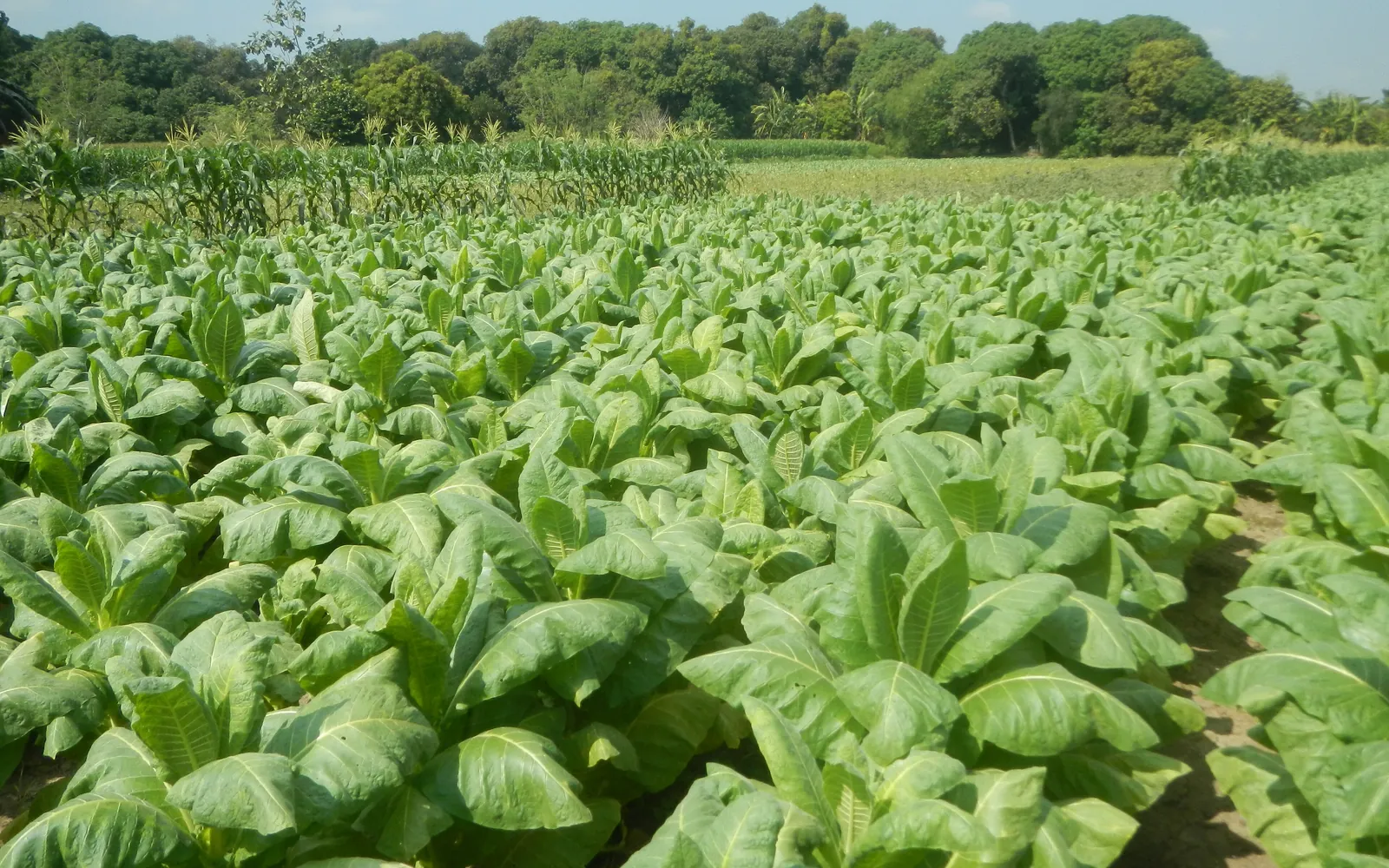
This guide shows how traditional farmers usually plant tabako. Use it as a starting point. For a higher yield, update it: plant certified seed or clean planting material, test your soil, and follow the right spacing and fertilizer.
This guide shows how Filipino tobacco growers in Ilocos, La Union, Abra, Pangasinan and Cagayan Valley usually raise tobacco: seedlings in a raised seedbed, transplanting into furrows after the rice harvest, topping, picking the leaves as they ripen and curing them. It covers Virginia (barn cured), burley (shed cured) and native tobacco (sun cured).
Before you plant, get the field ready with our land preparation guide for every crop. Then choose your seed or planting material with the tabako nutrient deficiency guide.
When to plant tabako
Tobacco is a dry season crop. In Luzon, seeds are sown in seedbeds from about September to November, and seedlings go to the field from about November to mid January, mostly on rice land right after the wet season harvest. Leaves are picked from about February to May. Native tobacco in Luzon runs a little later, from about mid November to July. In the Visayas native tobacco is grown from about March to August or September, and in Mindanao from about April or May to October or November.
What you plant
Tiny seeds sown in a raised seedbed, then seedlings moved to the field. Growers under contract get seed of the variety the buying company wants. Many native tobacco growers keep their own seed. Seedlings are ready at about 45 to 60 days from sowing, when they are pencil thick and about a hand tall, and are hardened in full sun with less water for the last week.
Paano magtanim ng tabako, step by step
Days are counted from transplanting. Leaves are picked from about 55 to 60 days, a few at a time every week, until the last top leaves at about 100 to 110 days. Native tobacco starts a little later, at about 60 to 65 days. The crop is ready about 105 days after transplanting.
Before planting (Bago magtanim)
25 days before transplanting: Plow the field after the rice
Once the rice is cut and the field has dried enough, plow and harrow it twice, the second time about a week before transplanting, until the soil is fine. Open furrows about 1 to 1.2 m apart on the day of transplanting or the day before.
The nursery (Punlaan)
55 days before transplanting: Make the raised seedbeds
Make beds about 1 m wide and raised above the ground so they never flood, with fine, loose soil mixed with well rotted manure or compost. Put up a light roof of straw, nipa or net for shade and rain. Tip: Pick high ground for the beds. Seedbeds in low spots drown in the last storms of the year.
55 days before transplanting: Sow the seeds
Mix the tiny seeds with fine sand or ash so they spread thin and even, scatter them over the bed and water with a fine sprinkler morning and afternoon. Keep the bed damp but not wet until the seeds come up.
35 days before transplanting: Thin and weed the bed
Pull out the weeds and the crowded seedlings so each one has room to grow thick. Open the shade little by little as they grow.
7 days before transplanting: Harden the seedlings
For the last week, remove the shade and give the bed less water so the seedlings toughen up. Water the bed well the evening before pulling.
Planting day (Pagtatanim)
Transplanting day: Band the first fertilizer
Drop the basal fertilizer, usually a tobacco grade like 10 18 24 with sulfate of potash (0 0 50), in a band along the bottom of the furrow and cover it with a little soil.
Transplanting day: Transplant the seedlings
Plant the seedlings along the furrow about 45 to 50 cm apart, late in the afternoon. Press the soil around each root and pour about a liter of water on each plant.
Care while it grows (Pag aalaga)
Day 5: Replant and water again
Within five days, replace any seedling that died, then give each plant about another liter of water.
Day 7: Look for cutworms and budworms
Walk the rows early in the morning. Dig out cutworms near cut seedlings and pick off budworms from the shoot tips. Spray only when the damage is spreading.
Day 12: Off barring and side dressing
Plow lightly away from the rows to cut the weeds, then put ammonium sulfate (21 0 0) or urea beside the plants.
Day 14: First furrow irrigation
Give each plant 2 to 3 liters of water, or let water run down the furrows from a shallow well or canal, then again every week or two as the soil dries.
Day 26: Hill up the rows
Plow soil back against the stems to form a ridge, bury the weeds and hold the plants up. Many growers hill up a second time at about 35 to 40 days.
Day 50: Top and desucker
When the flower buds show, break off the top of each plant, leaving about 16 to 22 leaves. Snap off the side shoots by hand every few days so the leaves fill out.
Harvest (Anihan)
Day 57: First priming
Pick the two or three lowest leaves that have turned from green to yellow green, with yellow tips and a pale midrib. Do not pick right after rain or watering.
Day 57: Stick and cure the same day
Lay the leaves butt down in the shade, sort them by ripeness and size and tie them onto sticks. Virginia goes into the flue barn and the fire starts within half a day. Burley hangs in an airy shed. Native leaf is sun dried on racks for about 10 to 14 days, covered at night and in rain.
- Haul and pile in the shadeCarry the primed leaves out of the sun right away and lay them on bamboo slats, cheesecloth or a buri mat, never on bare ground. Stand them upright in piles with the butt ends down.
- Sort before stickingSort the leaves by ripeness, damage and length, so each stick holds leaves that cure alike. Prime only as many leaves as you can stick in one day.
- Tie the leaves on sticksString or tie the leaves by their butts along the curing sticks. For the flue barn, a 60 cm stick holds about 46 leaves. A stick of native batek holds about 28 to 30 leaves.
- Virginia: fire the barn within 12 hoursstart within 12 hoursHang the sticks in the tight flue barn the same day and light the furnace within 12 hours of loading. Follow the curing chart stage by stage, from yellowing to leaf drying, watching the thermometer. When done, open all vents and doors, let the leaves cool and soften, then unload.
- Burley: hang in the air shedHang the sticks about 15 to 25 cm apart in the shed. Keep the walls closed until the leaves have yellowed, then open the sides when the air inside is very damp, above about 70 percent, and close them when it dries below about 65. Burley is never sun dried. Tip: A hygrometer in the shed tells you when to open and close the sides.
- Native: sun wilt, then cureabout 3 to 5 weeksHang batek sticks in full sun for 10 to 14 days, or until the leaf blades turn brown, covering them with black plastic at night and in rain. When the blades are brown but the midribs still green, pile them under a weight for a day and put them back on the racks for about 14 to 21 more days, until the whole leaf is cured. Cigar filler is sun wilted on racks about 1.5 m high for no more than 5 to 7 days, then air cured in a shed until the midribs are dry, at least 25 to 30 days.
Day 105: Last priming
Keep picking a few ripe leaves every week, working up the stalk, until the top leaves are taken, usually after five or six pickings.
Day 108: Ferment cigar filler in a mandala
Native cigar filler is fermented after curing, in a big covered pile called a mandala, and turned whenever the pile heats up, for about a month.
- Moisten the buttsSpray the butt ends of the cured leaves lightly with water, or leave them out in the morning dew, so they are pliable before piling.
- Build the mandalaPile the leaves of each priming in a round heap with the butt ends facing out. Stand a small bamboo pole with holes in the middle and keep a thermometer inside it, then lay cheesecloth or buri mats over the heap and weigh it down.
- Read the heat twice a daytwice a dayCheck the thermometer every day at about 7 in the morning and 5 in the afternoon.
- Turn the pile as it heatsRebuild the mandala the first time when it reaches about 46 to 48 degrees, the second time at about 49 to 51 degrees, and the third time at about 52 to 54 degrees.
- Finish after a month30 to 35 daysFermenting takes about 30 to 35 days in all. Then classify the leaves and bundle them for sale.
Day 110: Sort and bale the cured leaves
Sort the cured leaves by place on the stalk, color, length and damage, and press them in bales of not more than 50 kg. Keep strings, plastic and other trash out, since buyers reject bales with foreign matter.
- Unload when the leaves are softTake the cured leaves down early in the morning, when they are soft and bend without breaking, and pile them by priming under cheesecloth or a buri mat.
- Rest the piles7 to 10 daysLet air cured leaves rest in the pile for about a week to ten days so they condition evenly. If the leaves are not sold within a week, rebuild the pile once a week so it does not heat and burn.
- Classify the leavesStrip the leaves off the sticks and sort them by place on the stalk, color, length and damage, keeping each class in its own pile.
- Bundle and bale dry leafTie the sorted leaves in small bundles and pack them into bales as the buyer asks. The leaf should hold no more than about 18 percent moisture, and the bale must be free of strings, plastic and other trash.
Watering tabako, stage by stage
Tobacco grows in the dry months, so watering is a big part of the work. Growers pour water on each plant with a can or a pail for the first two weeks, then run water down the furrows from shallow wells, pumps or canals every week or two, often in every other furrow, and stop near the end of picking. Hand watering hill to hill with a can, a pail or a hose for the first two weeks, then furrow watering from a shallow well pump or a canal, in every other furrow with small dikes across it. Water seedlings and new plants late in the afternoon.
The first two weeks after transplanting: each plant needs its waterings at the roots or it dies. Fast leaf growth, about day 14 to 50: a dry spell now gives small leaves and a light crop.
| Stage | When | How often | How much |
|---|---|---|---|
| Seedbed | 55 to 35 days before transplanting | Water with a fine sprinkler in the morning and the afternoon until the seeds are up, then whenever the top dries | Enough to keep the bed damp but never wet |
| Growing seedlings | 35 to 7 days before transplanting | Water the bed whenever the top dries, in the morning, and open the shade little by little | Damp, not wet |
| Hardening | 7 days before transplanting to transplanting day | Water less for the last week, then soak the bed well the evening before pulling | Just enough to keep the seedlings from wilting |
| Transplanting and settling in | Transplanting day to day 14 | Water each plant at transplanting, again at about day 5, and again at about day 10 to 14 | About 1 liter a plant at transplanting and at day 5, then about 2 to 3 liters a plant |
| Fast leaf growth | Day 14 to 50 | Run water down the furrows after the hilling up and after each side dressing, then about every week or two as the soil dries | Water in every other furrow, about half way up the ridge, with small dikes across the furrow |
| Topping and picking | Day 50 to 105 | Water after a picking when the soil is dry, about every two weeks, and stop after the second to the fourth picking depending on the type and the soil | A lighter furrow watering than before |
Without irrigation. Plant on rice land right after the wet season harvest while the soil is still moist, and plant in furrows in a dry year. Where no water can be run down the furrows, water each plant by hand with about 3 to 5 liters at about 3, 4 and 6 weeks after transplanting.
In the dry season. The whole crop grows in the dry months. After the first two weeks, water the furrows every week or two, more often on sandy soil, and water when the leaves stay limp after midday or the soil a hand deep in the ridge is dry.
In the rainy season. In a rainy year plant on raised ridges instead of in furrows, and keep the furrow ends open so rain drains away. Standing water brings root rot and wilts and spreads black shank and bacterial wilt. Never pick leaves right after rain or watering.
- Too little water: Leaves droop at midday and stay limp into the afternoon, the plants stay short with small, thick, narrow leaves, and the lower leaves ripen and yellow too early.
- Too much water: Lower leaves yellow, plants wilt even in wet soil, the roots rot and the base of the stem turns dark.
To water better for a higher yield: Time the furrow waterings with the side dressings so the fertilizer goes in with the water, and use every other furrow with small dikes to save water and avoid waterlogging. Keep to the stage schedule instead of watering by habit, and stop watering on time so the leaves ripen evenly and cure well.
Spacing, water and fertilizer for tabako
Spacing
Virginia: furrows 1 to 1.2 m apart and plants 45 to 50 cm apart in the row, about 16,000 to 20,000 plants a hectare. Burley: rows 80 to 90 cm apart and plants 45 to 50 cm apart, about 24,000 to 25,000 plants. Native tobacco: about 90 cm to 1 m each way, about 10,000 to 12,000 plants.
Water
A dry season crop, so water is the main work. Each seedling gets about a liter at transplanting and again at about five days, then 2 to 3 liters at two weeks. After that growers run water down the furrows from shallow wells, pumps or canals every week or two, often in every other furrow, and stop near the end of picking.
Fertilizer
A band of tobacco grade fertilizer such as 10 18 24 in the furrow at transplanting, with sulfate of potash (0 0 50) because the chloride in muriate of potash spoils how the leaf burns. Ammonium sulfate (21 0 0) or urea is side dressed at about 10 to 28 days after transplanting. Native tobacco growers use more urea. Some add manure or compost to the seedbed. To read what a bag really gives, see our guide to fertilizer for this crop.
Care and harvest
Care while it grows
Replanting within five days, off barring at about 10 to 14 days, hilling up at about 25 and again at about 35 to 40 days, and hand weeding where needed. Topping at the button stage and snapping off side shoots every few days. Growers walk the field for cutworms, budworms, aphids and leaf eating worms, and pull up plants sick with mosaic or wilt.
When and how to harvest
Leaves are picked from the bottom up as they ripen, from about 55 to 65 days after transplanting, two to four leaves a plant each week, until the top. Ripe leaves are yellow green with yellow tips and a pale midrib. Virginia is cured in a fired barn within the day of picking, burley in an airy curing shed, and native leaf in the sun on racks for about 10 to 14 days, then piled under weight and hung again until fully cured. Cured leaves are sorted, baled and sold to the company or to buyers by grade.
Common mistakes when planting tabako
- Sowing the seedbed too thick, which gives thin, weak seedlings.
- Transplanting seedlings that are too old or were never hardened.
- Putting the nitrogen late, so leaves stay green and cure poorly.
- Topping late or leaving the side shoots, which makes small, thin leaves.
- Picking unripe leaves, or picking right after rain or irrigation.
- Letting plastic, strings and other trash get into the cured leaves.
How to get a higher yield of tabako
The traditional way gets a crop, but small changes add up. These are the first things to change, one season at a time.
- Use seed of a variety that resists wilt and nematodes, and raise seedlings in trays or float beds for an even stand.
- Have the soil tested and match the fertilizer to it, using sulfate of potash.
- Transplant on time so the picking ends before the rains come back.
- Scout every week and spray only when pests pass the level that really hurts the crop.
- Top at the button stage and keep the plants free of side shoots.
- Cure with a thermometer and humidity gauge, and keep every bale clean and dry.
anee.io helps with each of these. The NPK Plus calculator checks that your fertilizer plan feeds the yield you want, the pest and disease finders tell you what is on the leaves before you spray, and Anee, the smart farm technician answers your questions in Tagalog or English.
Members open this guide in the How to Plant tool and send every step to the Protocol Builder in one tap, each on its own day. There you can change the seed, the spacing and the fertilizer, then turn it into a cropping calendar for your lots.
Start from the traditional way, make it better, and let anee.io date every task from your own planting day. Free to start.
Start freeQuestions about planting tabako
Paano magtanim ng tabako?
When do farmers plant tabako in the Philippines?
How far apart do you plant tabako?
How long before tabako can be harvested?
How often do you water tabako?
What do you plant to grow tabako?
See every step of planting it the traditional way
Register for free to read every step with its day, the spacing, water and fertilizer, the common mistakes and what to change for a higher yield. Then send it to your Protocol Builder in one tap.
Free to register. No credit card. Works on any phone.