

Sugarcane aphid (yellow sorghum aphid)
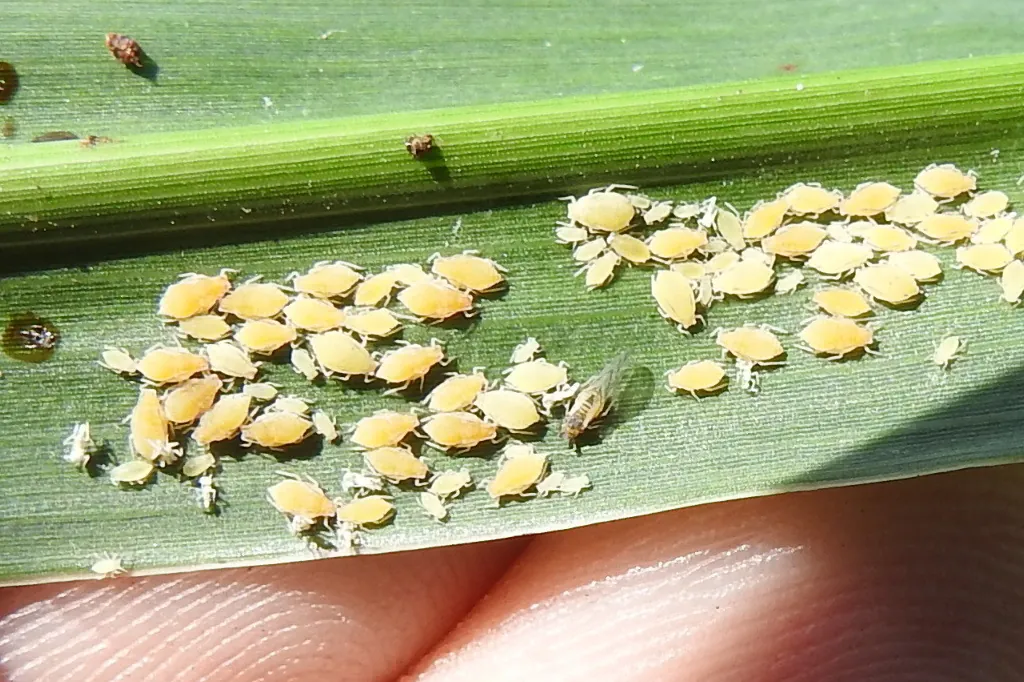
Pale yellow to gray aphids pack the underside of the lower leaves, which turn shiny with honeydew and then black with sooty mold.
Crops it attacks
Where the damage shows
When to act
From the boot stage, check the underside of the lower and middle leaves on 20 plants at each of five spots every week. The usual rule is to act when about one plant in four carries colonies of 50 or more aphids with honeydew showing. In cane, watch young fields in dry spells, when colonies spread fastest.
What to spray
- Thiamethoxam (seed treatment)IRAC 4AShopeeLazada
- ImidaclopridIRAC 4AShopeeLazada
- Neem (azadirachtin)IRAC UNShopeeLazada
Active ingredients only, never brands. The IRAC group tells how it works: switch to a different group next time, so the pest does not learn to survive it. Spray only when the damage is worth the cost, and only with products registered with the Fertilizer and Pesticide Authority for your crop. Follow the label. The Shopee and Lazada links only show who sells something with that active ingredient, not a recommendation of any seller or product.
How to prevent it
- Plant early and at the same time as nearby fields. Late sorghum gets hit hardest.
- Use treated seed and a tolerant sorghum hybrid where one is sold.
- Do not spray pyrethroids or organophosphates for other pests: they kill the lady beetles and set off aphid outbreaks.
- Remove Johnson grass, volunteer sorghum and old ratoon cane that carry the aphid between crops.
- Water in dry spells, since stressed plants suffer most.
Natural enemies and biological help
- Lady beetles, hover fly larvae, lacewings and small parasitic wasps often hold colonies down. Spare them.
- Beauveria or Lecanicillium fungus infects aphids in humid weather.
Not sure it is this one?
Many pests look alike. Send a photo to Anee, the smart farm technician in anee.io. She reads it with your crop, its age and the weather, and tells you what it most likely is and what to do first. In Tagalog or English.