

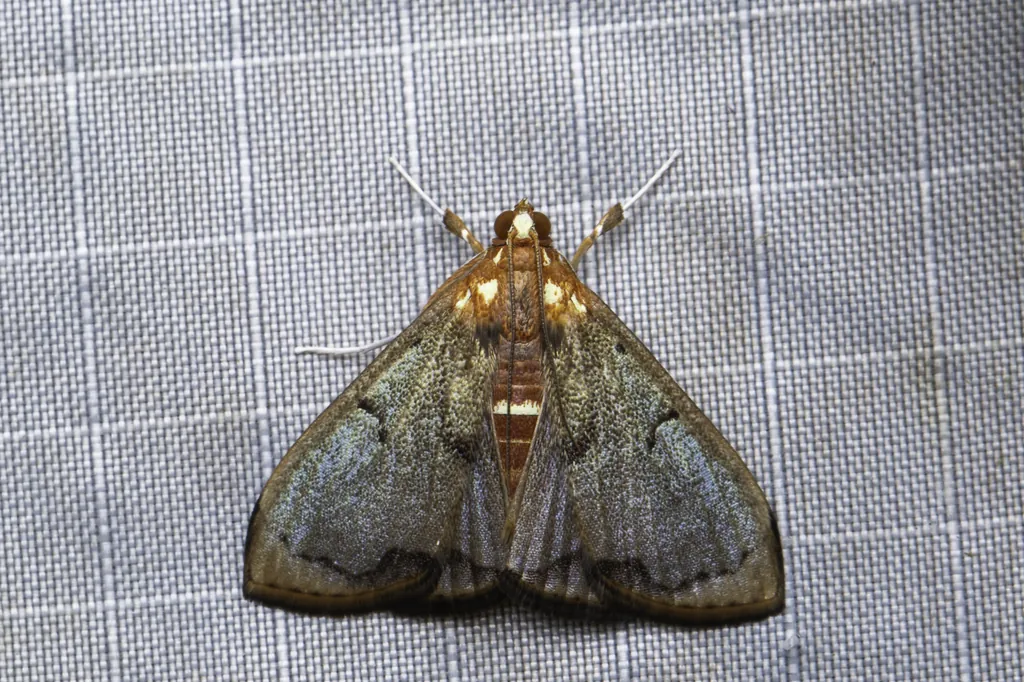
Mango seed borer (red banded mango caterpillar)
Caterpillars bore in near the tip of young fruits and eat the flesh and seed, leaving holes that ooze, and the fruits crack, rot and drop.
Crops it attacks
Where the damage shows
When to act
From about 45 days after flower induction, check 20 fruits per tree on 10 trees each week for a dark sticky stain running down from a hole near the stalk end. Act at the first stains: pick off those fruits and bag the rest.
What to spray
Active ingredients only, never brands. The IRAC group tells how it works: switch to a different group next time, so the pest does not learn to survive it. Spray only when the damage is worth the cost, and only with products registered with the Fertilizer and Pesticide Authority for your crop. Follow the label. The Shopee and Lazada links only show who sells something with that active ingredient, not a recommendation of any seller or product.
How to prevent it
- Bag the fruits during growth. Eggs go on the fruit stalk and base, and newly hatched caterpillars bore in from the side.
- Pick off and destroy fruits with dark stains every week. They hold the caterpillars.
- In the off season, gather and burn dead wood and scrape loose bark, where the caterpillars pupate.
- Keep anthracnose low. Moths also lay eggs in the cracks of anthracnose spots.
- Leave weaver ants on the trees. In one trial a broad spray that killed them gave more damage than no spray.
Natural enemies and biological help
- Two egg wasps, Trichogramma chilonis and Trichogramma chilotraeae, attack the eggs in the Philippines. Spare them.
- Weaver ants (hantik) catch the moths. Neem sprays every 10 days from flowering cut damage in one country.
Not sure it is this one?
Many pests look alike. Send a photo to Anee, the smart farm technician in anee.io. She reads it with your crop, its age and the weather, and tells you what it most likely is and what to do first. In Tagalog or English.