

Scale insects of fruit trees
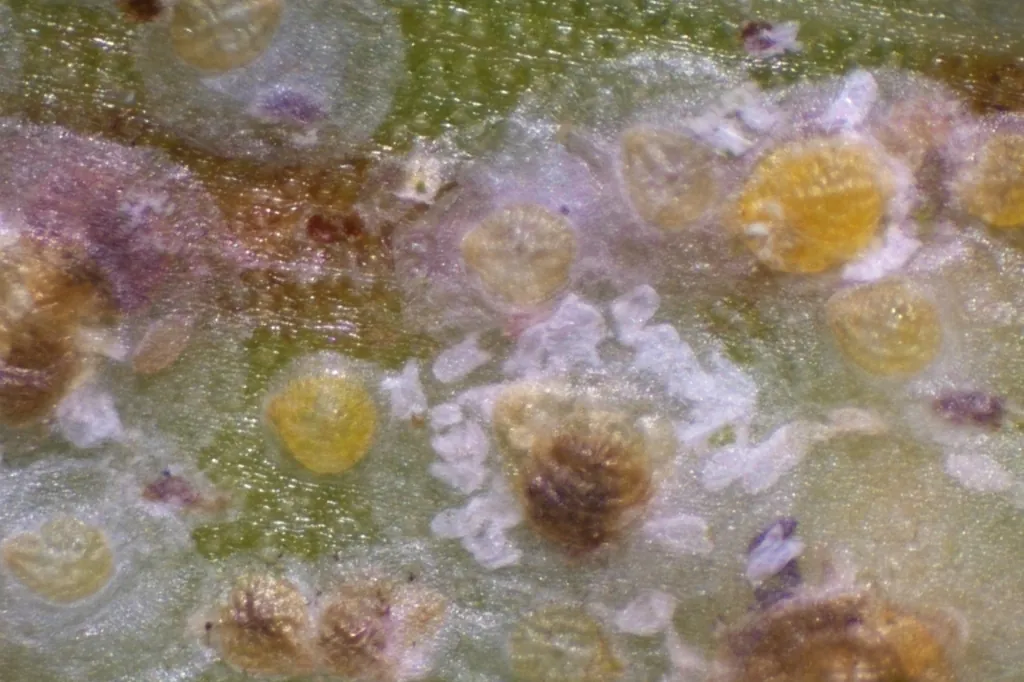
Small flat or domed bumps crowd on leaves, twigs and fruits, the plant yellows and weakens, and black sooty mold follows.
Crops it attacks
Where the damage shows
When to act
Each month, and every two weeks in the dry season, look at 10 twigs, leaves and fruits on 10 trees per block. Spray only where live scales crowd twigs or fruit and few covers show the small round exit hole of a wasp. Time it to the crawler stage, when tiny moving yellow specks show on tape wrapped around a twig.
What to spray
- ImidaclopridIRAC 4AShopeeLazada
- BuprofezinIRAC 16ShopeeLazada
- Mineral oilShopeeLazada
- Potassium salts of fatty acidsShopeeLazada
- MalathionIRAC 1BShopeeLazada
- FenitrothionIRAC 1BShopeeLazada
- PhenthoateIRAC 1BShopeeLazada
- DimethoateIRAC 1BShopeeLazada
- Fenobucarb (BPMC)IRAC 1AShopeeLazada
- Phenthoate plus fenobucarb (BPMC)IRAC 1B plus 1AShopeeLazada
- CarbosulfanIRAC 1AShopeeLazada
- BifenthrinIRAC 3AShopeeLazada
Active ingredients only, never brands. The IRAC group tells how it works: switch to a different group next time, so the pest does not learn to survive it. Spray only when the damage is worth the cost, and only with products registered with the Fertilizer and Pesticide Authority for your crop. Follow the label. The Shopee and Lazada links only show who sells something with that active ingredient, not a recommendation of any seller or product.
How to prevent it
- Prune and burn or bury twigs and branches crusted with scales, and open the crown to light and wind.
- Check seedlings, budwood and cuttings before planting. Scales arrive on planting material and on wind blown crawlers.
- Keep ants off the trunks with sticky bands. Ants guard soft scales and chase away their enemies.
- Water and feed trees well in the dry season. Scales build up on stressed, dusty trees.
- Keep road dust down and avoid broad sprays. Both kill the tiny wasps that keep scales low.
- A light oil spray on the crawlers, where an oil product is labeled for the crop, spares most natural enemies.
Natural enemies and biological help
- Tiny wasps such as Aphytis and Comperiella parasitize scales. A small round hole in a scale cover means a wasp came out.
- Lady beetles such as Chilocorus and their spiny larvae eat many scales. Protect them by spraying less.
- The fungus Lecanicillium lecanii often wipes out green scale on coffee and citrus in wet months.
Not sure it is this one?
Many pests look alike. Send a photo to Anee, the smart farm technician in anee.io. She reads it with your crop, its age and the weather, and tells you what it most likely is and what to do first. In Tagalog or English.