Golden Apple Snail: How to Spot It and Stop It in Your Palay
The golden apple snail, Pomacea canaliculata, is the pink egged snail that eats newly planted palay from the base. It can wipe out a paddy in a night, so the first weeks after planting decide your stand. This page shows the signs, the damage and the steps that work.
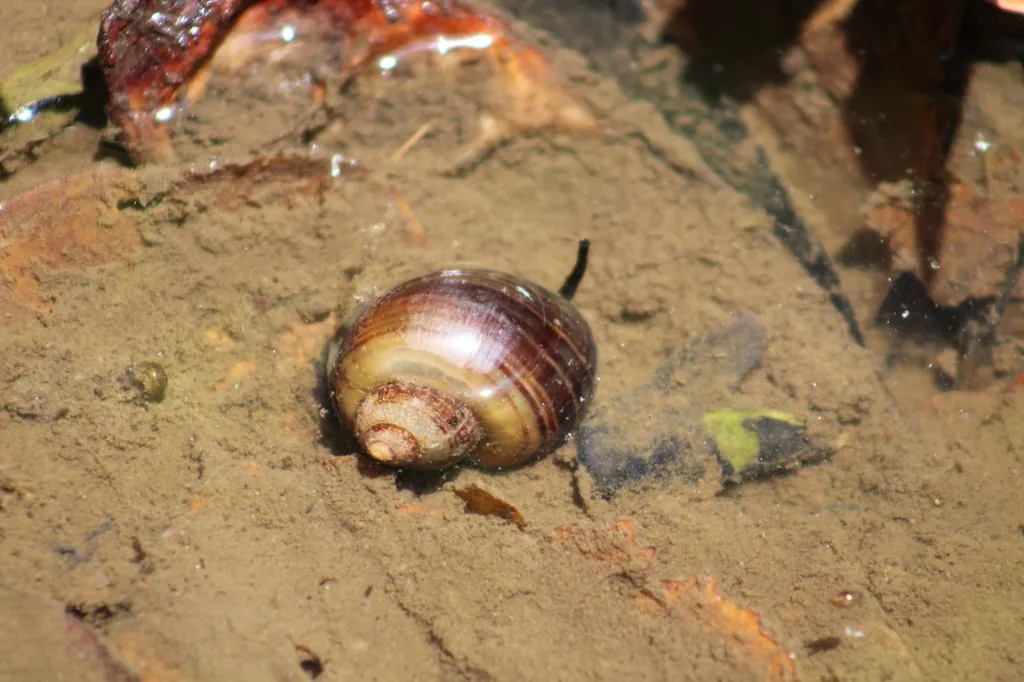
What Is Golden Apple Snail?
The golden apple snail is a freshwater snail from South America. Private farmers brought it to the Philippines in the early 1980s, hoping to export it as food. It escaped into rice fields and canals. Today it is a major pest of lowland rice, both transplanted and wet seeded.
Farmers care because the snail eats young plants from the base, and a cut seedling does not grow back. It can reduce yield by up to 40 percent. Older rice is safe, because plants about 30 days old are thick enough to resist it. That is why the early days matter most.
| Fact | Details |
|---|---|
| Name | Golden apple snail |
| Scientific name | Pomacea canaliculata |
| Kind | Snail (a mollusk) |
| Crops it attacks | Rice |
| Local names | Kuhol |
| Where it strikes | Seedlings and leaves |
| When it strikes | From land preparation until the rice is about 30 days old. The worst damage comes in the first 10 to 15 days after transplanting and the first 21 days after wet seeding. |
| Life cycle | Females lay bright pink egg masses on stems and pilapil above the water line, up to 500 eggs a week. The eggs hatch in 7 to 14 days. The snails move through irrigation water and flooded fields. |
How to Identify Golden Apple Snail
Look for a round, brownish snail the size of a small fist in the water. Look also for bright pink egg masses stuck on stems, pilapil and posts just above the water. Missing hills in rows, with cut leaves floating, point to the snail. Damage from rice whorl maggot leaves the seedling standing, while the snail removes it.
- Seedlings are cut at the base and the leaves float on the water.
- Rows of hills are missing, often starting near the irrigation inlet and the edges of the paddy.
- Bright pinkish red egg masses cling to rice stems, pilapil, canal walls and posts.
- Snails of different sizes sit in the water and in the mud, mostly in the early morning and late afternoon.
- Damage stops once the rice is about 30 days old, because the stems have grown thick.
Weather damage and rats can also cut seedlings, so look for the snail or its pink eggs before you act. See rice field rats.
How Golden Apple Snail Hurts Your Palay
The snail can cut yield by up to 40 percent. It can eat a whole young paddy overnight. A study found that one snail can damage up to 19 percent of the young plants in a square meter. The first 15 days after transplanting are the most dangerous.
Replanting costs seed, labor and time, and a late stand misses the best weather. That is why prevention is cheaper than repair. Count the snails and egg masses in the paddy before you transplant, and write the numbers in a note for the lot.
How to Control Golden Apple Snail
- Prepare the land well and remove snails by hand in the morning and late afternoon. Hand picking works best for large adults, which ducks do not eat.
- Dig small, deep strips or canals along the paddy. Place leaves of gabi, papaya or banana, or gugo, sambong, calamansi or makabuhay, so snails gather there for collection.
- Scrape off the pink egg masses from stems and pilapil and crush them, since they hatch in 7 to 14 days. Screen tapping and staking are physical methods too.
- Keep the water shallow, about 2 to 3 centimeters, starting 3 days after transplanting. Drain the field from time to time. A saturated field, with no standing water, gave 99 percent seedling survival in transplanted rice. Snails cannot swim there.
- Herd ducks into the fields after harvest and until final land preparation. Ducks eat the young snails and the flesh of broken ones. Red ants and long horned grasshoppers also eat the eggs.
- Level the field well, so the water stays even and no deep pockets of water hold snails.
When a Spray Makes Sense
A molluscicide comes last, after hand picking and water control. Controlled irrigation costs less than the P400 to P500 per hectare that farmers spend on synthetic molluscicide. If you still need one, use only a product registered with the FPA. Follow the label and the safety advice, since these chemicals can harm fish and ducks.
The timing and the choice both matter. Treat only where the snails will cause damage, and do it the day after transplanting, while the seedlings are smallest. Then pick the active ingredient by your water. Where irrigation runs strong and is hard to control, or sudden rain is likely, use metaldehyde. Where water is scarce and no rain is expected, use niclosamide. Apply either one only on a field with standing water, in the morning or the late afternoon. Our guide on when to spray rice pests has the timing for the rest of the season.
| Active ingredient | IRAC group | On Philippine labels |
|---|---|---|
| Niclosamide | Not grouped | A sound second choice. 115 registered products name it on rice. |
| Metaldehyde | Not grouped | A sound second choice. 49 registered products name it on rice. |
| Saponin (tea seed) | Not grouped | A sound second choice. 1 registered product names it on rice. |
| Abamectin plus niclosamide | IRAC 6 plus ? | Older or broad chemistry: a last resort. 2 registered products name it on rice. |
Use only products registered with the Fertilizer and Pesticide Authority, and follow the label for the rate, the timing and the protective clothing. Switch to a different insecticide group next time, so the pest does not learn to survive it. Our guide to integrated pest management explains how.
Keep It Out Next Season
- Put wire or woven bamboo screens on the water inlet and outlet to keep snails and hatchlings out and to trap them.
- At the last harrowing, dig small canals about 25 cm wide and 5 cm deep along the edges. Snails gather there when you drain.
- Keep the water at 2 to 3 cm from 3 days after transplanting, and drain now and then. Level the field so no deep pockets stay.
- Where snails are many, transplant older seedlings, about 25 to 30 days old, with stems too thick for the snail.
- Hand pick snails in the morning and late afternoon, set bamboo stakes for them to lay on, and crush the pink egg masses.
- Lay gabi, papaya or banana leaves in the canals as bait, then collect the snails that gather under them.
Natural Enemies and Biological Help
- Herd ducks into the field after harvest until the last harrowing, and again once the rice is past the danger stage. They eat young snails.
- Red ants and long horned grasshoppers eat the eggs. Pick the big adults by hand, since ducks skip them.
- Picked snails make duck or pig feed, or food when well cooked.
Not Sure What You Are Seeing?
Take a clear photo of the insect, the damage and the whole plant, then ask Anee, the smart farm technician in anee.io, in Tagalog or English. Anee tells you what it most likely is and what to do at the age of your crop. You can also put your scouting days on the cropping calendar, so the team knows when to walk the field.
anee.io keeps your scouting, spraying and harvest on one calendar, and Anee answers when something looks wrong.
- Scouting days dated from each lot's own planting day
- Photos and notes for every lot
- Anee, the smart farm technician, in Tagalog or English
Questions Farmers Ask About Golden Apple Snail
How long does the golden apple snail threaten my rice?
Does shallow water really stop the snail?
Should I spray a molluscicide first?
Can I use the snails for something?
Stop Golden Apple Snail from costing you the harvest
With Libre + Anee, read the whole guide: how to be sure it is this pest, when it pays to act, and what to spray, by active ingredient.
The account is free, no credit card.