Rice Whorl Maggot: Why the Leaf Tips Look Torn and What to Do
The rice whorl maggot is a tiny fly whose larvae scrape the unopened leaves of young palay. The new leaves open with white patches, yellow spots and pinholes. This page shows how to spot it and why most fields recover without any spray.
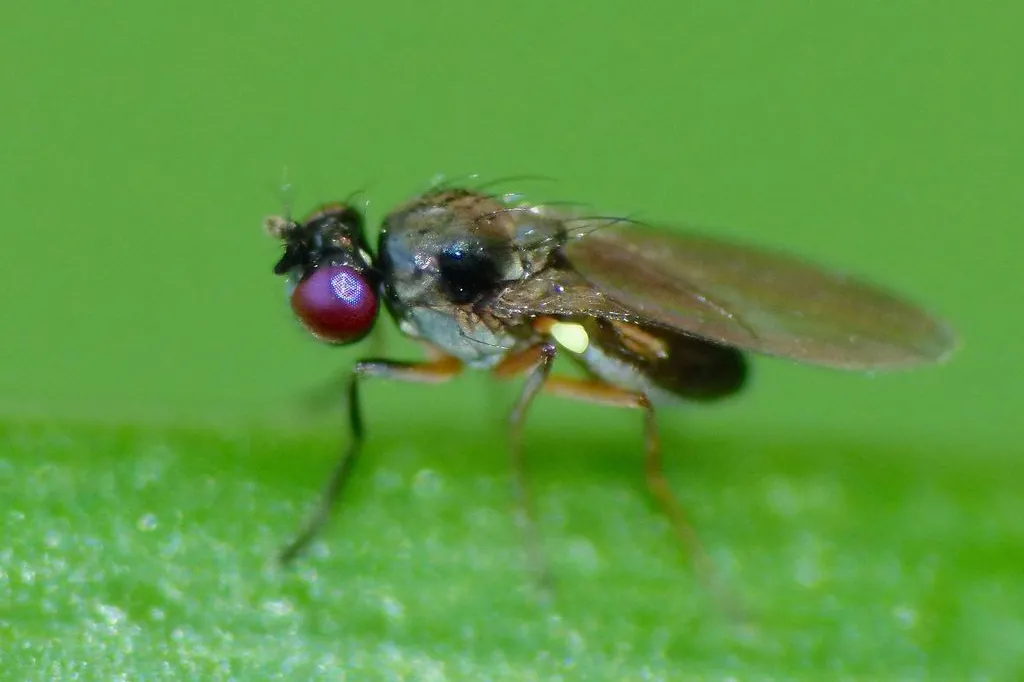
What Is Rice Whorl Maggot?
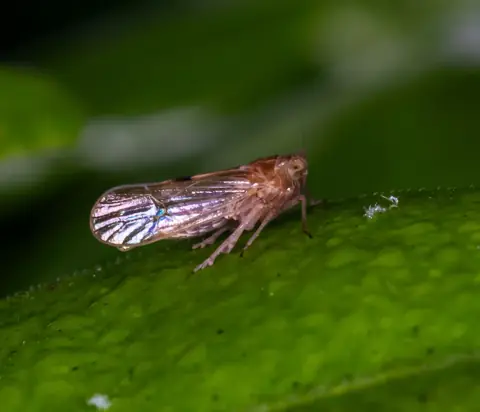
The rice whorl maggot (Hydrellia philippina) is a small fly of rice fields with standing water. Its larvae use hardened mouth hooks to rasp the tissue of unopened leaves and the growing points of new ones. As the leaves open, the damage shows.
It favors transplanted rice in irrigated paddies, and it does not occur in upland or direct seeded fields. The torn leaves often worry farmers, but rice grows past this damage and makes up for it.
| Fact | Details |
|---|---|
| Name | Rice whorl maggot |
| Scientific name | Hydrellia philippina |
| Kind | Insect |
| Crops it attacks | Rice |
| Local names | None recorded |
| Where it strikes | Leaves and seedlings |
| When it strikes | From seedling to maximum tillering, mostly in transplanted, flooded fields. |
| Life cycle | Small flies rest on leaves near the water, lay eggs on the leaves, and the maggots feed inside the unopened leaf for 10 to 12 days before they pupate. |
How to Identify Rice Whorl Maggot
Look at the youngest leaves of the hill. Yellow spots, white or see through patches and tiny holes along the inner edges of the leaves, with weak tips that tear in the wind, point to the maggot. Dead central shoots are not the work of this pest. That is the work of the rice stem borer, which tunnels the stem.
- Yellow spots or streaks appear on the inner edges of new leaves.
- White or transparent patches show where the maggot scraped the tissue.
- Pinholes line the leaf blade once it unfolds.
- Damaged leaves are fragile and break easily in the wind.
- The symptoms fade by the maximum tillering stage as new leaves grow clean.
Wind tears, thrips and the rice hispa can all leave marks on the leaves. Whorl maggot marks are on the inner margins of unopened leaves and fade after tillering.
How Rice Whorl Maggot Hurts Your Palay
The rice plant can compensate for whorl maggot damage and the symptoms disappear during the maximum tillering stage. We found no percent yield loss for it, so we state none.
Because the plant recovers, a spray is rarely worth the cost. No action threshold was found in the sources we read.
How to Control Rice Whorl Maggot
- Check the youngest leaves in the first weeks after transplanting, and note how many hills show the patches.
- Do not rush to spray. The plant usually grows out of the damage by maximum tillering.
- Leave the natural enemies alone. Small wasps go after the eggs and the maggots, dolichopodid flies eat the eggs, and the adult flies are eaten by spiders and ephydrid flies.
- Follow the growth stages of the lot, so you know when it reaches maximum tillering. The growth stages view shows it.
- If a lot is badly hit, ask an agricultural technician before taking any action.
When a Spray Makes Sense
The sources we read give no insecticide for this pest. There is no cultural control, and the plants usually recover, so we do not list any ingredient. Early sprays also kill the spiders and wasps that protect the crop.
Active Ingredients on Philippine Labels
| Active ingredient | IRAC group | On Philippine labels |
|---|---|---|
| Cartap hydrochloride | IRAC 14 | A sound second choice. 80 registered products name it on rice. |
| Chlorantraniliprole plus thiamethoxam | IRAC 28 plus 4A | A sound second choice. 6 registered products name it on rice. |
| Imidacloprid | IRAC 4A | A sound second choice. 3 registered products name it on rice. |
| Carbofuran | IRAC 1A | Older or broad chemistry: a last resort. 21 registered products name it on rice. |
| Acephate | IRAC 1B | Older or broad chemistry: a last resort. 16 registered products name it on rice. |
| Phenthoate | IRAC 1B | Older or broad chemistry: a last resort. 10 registered products name it on rice. |
| Acephate plus imidacloprid | IRAC 1B plus 4A | Older or broad chemistry: a last resort. 2 registered products name it on rice. |
| Carbosulfan | IRAC 1A | Older or broad chemistry: a last resort. 2 registered products name it on rice. |
| Phenthoate plus fenobucarb (BPMC) | IRAC 1B plus 1A | Older or broad chemistry: a last resort. 2 registered products name it on rice. |
| Imidacloprid plus fipronil | IRAC 4A plus 2B | Older or broad chemistry: a last resort. 1 registered product names it on rice. |
These are on Philippine labels for it, but we leave them off the list above, for the reasons below.
- Deltamethrin, beta cyfluthrin, alpha cypermethrin, beta cypermethrin, esfenvalerate and permethrin: Early pyrethroid sprays kill spiders and set off planthopper outbreaks, for damage rice outgrows anyway.
- Diazinon: An early spray known to set off planthopper outbreaks, for damage that rice outgrows anyway.
- Lambda cyhalothrin plus thiamethoxam and bifenthrin plus imidacloprid: The pyrethroid half kills the young crop's spiders and sets off planthopper outbreaks.
- Chlorpyrifos plus cypermethrin: Kills the young crop's spiders and sets off planthopper outbreaks, for damage rice outgrows anyway.
Use only products registered with the Fertilizer and Pesticide Authority, and follow the label for the rate, the timing and the protective clothing. Switch to a different insecticide group next time, so the pest does not learn to survive it. Our guide to integrated pest management explains how.
Keep It Out Next Season
- Expect some streaked, torn young leaves in flooded transplanted fields. It is not an emergency.
- Keep every insecticide off the crop for the first 30 to 40 days, so spiders and wasps settle in for later pests.
- Plant healthy, well rooted seedlings and give balanced fertilizer, so the crop outgrows the damage quickly.
- Write down how many hills show damage in each lot, so you can tell a true outbreak from the usual few leaves.
Natural Enemies and Biological Help
- Small wasps attack the eggs and maggots, long legged flies eat the eggs, and spiders catch the adult flies.
Not Sure What You Are Seeing?
Take a clear photo of the insect, the damage and the whole plant, then ask Anee, the smart farm technician in anee.io, in Tagalog or English. Anee tells you what it most likely is and what to do at the age of your crop. You can also put your scouting days on the cropping calendar, so the team knows when to walk the field.
anee.io keeps your scouting, spraying and harvest on one calendar, and Anee answers when something looks wrong.
- Scouting days dated from each lot's own planting day
- Photos and notes for every lot
- Anee, the smart farm technician, in Tagalog or English
Questions Farmers Ask About Rice Whorl Maggot
Will the rice whorl maggot ruin my crop?
Does it attack direct seeded rice?
Should I spray the damaged hills?
Stop Rice Whorl Maggot from costing you the harvest
With Libre + Anee, read the whole guide: how to be sure it is this pest, when it pays to act, and what to spray, by active ingredient.
The account is free, no credit card.