Rice Hispa: White Streaks, Burnt Looking Fields and Control
Rice hispa is a small spiny beetle that scrapes the green tissue of rice leaves. The leaves show white streaks and turn papery, and heavy attacks make a field look burnt. This page shows how to spot rice hispa and how to keep it low without wasteful spraying.
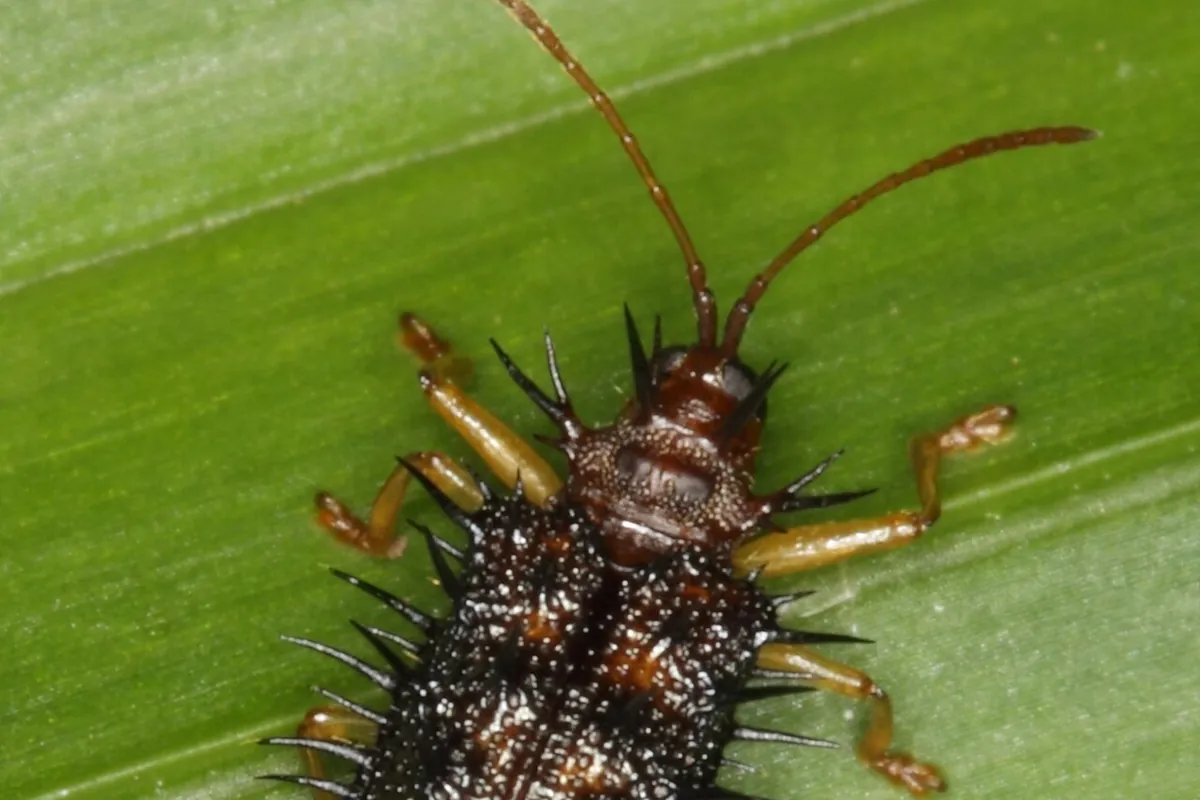
What Is Rice Hispa?
Rice hispa (Dicladispa armigera) is a leaf beetle. The adults scrape away the top layer of the leaf and leave only the thin skin underneath. The grubs tunnel between the two skins of the leaf and make irregular, translucent patches.
EPPO lists the beetle as present in the Philippines, without details on how common it is. It is also listed in many other rice countries in Asia. So it is worth knowing, because a bad attack looks like a burnt field.
| Fact | Details |
|---|---|
| Name | Rice hispa |
| Scientific name | Dicladispa armigera |
| Kind | Insect |
| Crops it attacks | Rice |
| Local names | None recorded |
| Where it strikes | Leaves |
| When it strikes | In the vegetative stage, more in the rainy season and in crowded, heavily fertilized fields. |
| Life cycle | Adult beetles scrape the leaf surface, and the grubs mine inside the leaf between its two skins. |
How to Identify Rice Hispa
Hold up a damaged leaf to the light. White streaks running parallel to the midrib are the adult feeding. Irregular, translucent white patches that follow the leaf veins are the grub mines. Look for the small spiny beetles on the leaves. White patches on the inner leaf margins of unopened leaves point to the rice whorl maggot instead.
- White streaks run along the leaf, parallel to the midrib.
- Irregular translucent patches follow the leaf veins where grubs mined.
- Damaged leaves turn whitish and papery, and wither.
- Heavy attacks make whole patches of the field look burnt.
- Plants are less vigorous when the damage is severe.
Wind tears, the rice leaffolder and the whorl maggot all leave pale marks. Hispa leaves streaks along the leaf and spiny beetles on it.
How Rice Hispa Hurts Your Palay
Badly damaged plants lose their vigor. The sources we read give no percent yield loss and no action threshold, so we state none. The best guide is your own field. Check the leaves each week in the vegetative stage and note how many hills show fresh streaks.
How to Control Rice Hispa
- Avoid over fertilizing, because heavily fertilized fields favor the beetle.
- Do not plant too close. Wide spacing keeps the leaf density low, and dense leaves favor hispa.
- Remove grassy weeds in the field and along the bunds, because they are alternate hosts.
- Walk the field in the vegetative stage and look for the beetles and the white streaks.
- Protect the natural enemies. Small wasps attack the eggs and grubs, reduviid bugs attack the adults, and three fungi infect them. See the guide on rice insects.
When a Spray Makes Sense
The sources we read name no insecticide for rice hispa in the Philippines, so we list no ingredient. EPPO gives no detail on how common the beetle is here. Ask a DA technician before you spray anything. Early sprays also kill the spiders and wasps that protect the crop.
Use only products registered with the Fertilizer and Pesticide Authority, and follow the label for the rate, the timing and the protective clothing. Switch to a different insecticide group next time, so the pest does not learn to survive it. Our guide to integrated pest management explains how.
Keep It Out Next Season
- Do not over fertilize. Heavily fertilized, lush fields draw the beetles.
- Use the recommended spacing, not closer, so the leaves stay less dense.
- Remove grassy weeds in the field and along the bunds and canals. They are the beetle's other hosts.
- Sweep a net over the seedbed and the young crop to catch the adults while numbers are low.
- Keep insecticides off the crop for the first 30 to 40 days, so the beetle's enemies stay.
Natural Enemies and Biological Help
- Small wasps attack the eggs and grubs inside the leaf, and reduviid bugs and spiders hunt the adults.
- Fungi such as Beauveria and Metarhizium infect the beetles in humid weather.
Not Sure What You Are Seeing?
Take a clear photo of the insect, the damage and the whole plant, then ask Anee, the smart farm technician in anee.io, in Tagalog or English. Anee tells you what it most likely is and what to do at the age of your crop. You can also put your scouting days on the cropping calendar, so the team knows when to walk the field.
anee.io keeps your scouting, spraying and harvest on one calendar, and Anee answers when something looks wrong.
- Scouting days dated from each lot's own planting day
- Photos and notes for every lot
- Anee, the smart farm technician, in Tagalog or English
Questions Farmers Ask About Rice Hispa
Is rice hispa common in the Philippines?
What does hispa damage look like?
How do I keep it away?
Stop Rice Hispa from costing you the harvest
With Libre + Anee, read the whole guide: how to be sure it is this pest, when it pays to act, and what to spray, by active ingredient.
The account is free, no credit card.