Sugarcane Land Preparation: Deep Plowing, Subsoiling and Furrows
Sugarcane land preparation is the heaviest tillage job on a Philippine farm, because the crop roots deep and stays in the field for years of ratoons. The work is deep plowing, harrowing, subsoiling where there is a hard pan, and furrowing right before planting. This guide follows the practices of a Tarlac mill district office and adds machine notes.
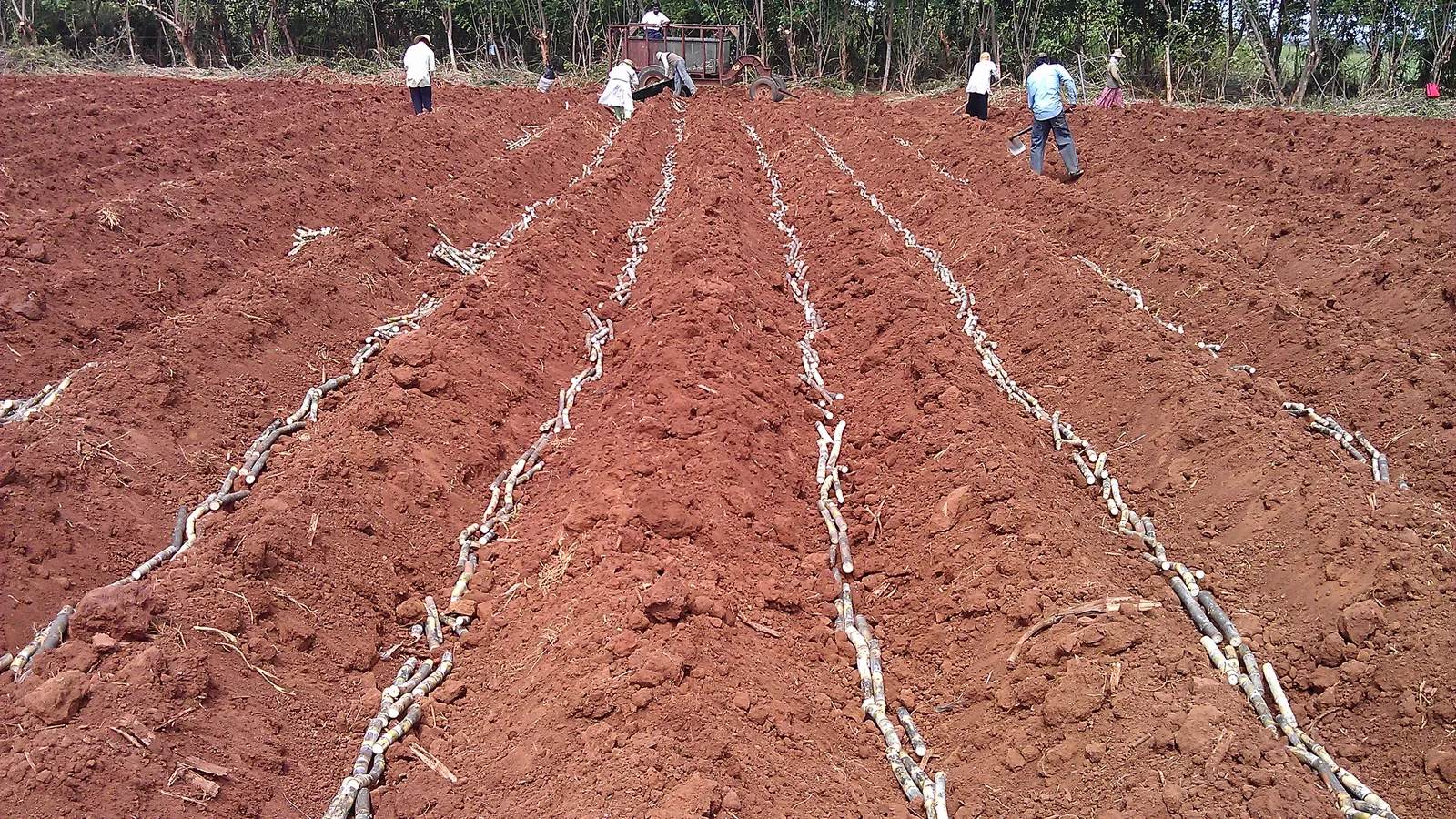
Why sugarcane land preparation is different
The Tarlac Mill District Office calls sugarcane a fairly deep rooted plant. So the soil must be loose to a good depth if the roots are to take in water and nutrients, especially in a dry spell. A shallow, hurried job shows up later as thin stands and weak ratoons.
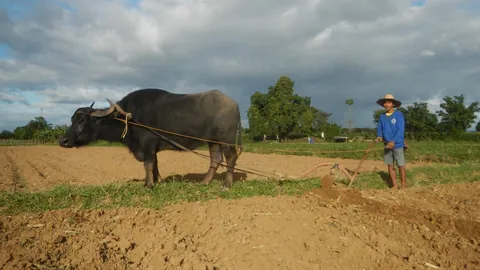
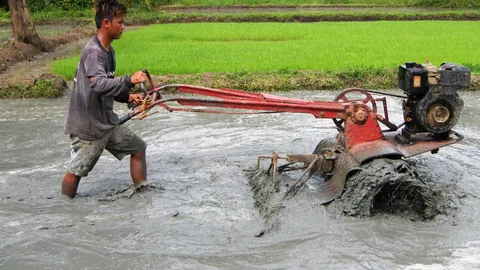
Cane is a tractor crop in the Philippines. A UN CSAM review of Philippine mechanization says that sugarcane plantations use four wheel tractors, while rice and corn farms mostly rely on the carabao and the hand tractor. Their usual tools are the moldboard plow, the disk plow, the disk harrow and the rotavator.
For the big picture on all crops, read land preparation in the Philippines.
Sugarcane land preparation step by step
Choose the direction of the work
In a rectangular field, plow and harrow in the direction that gives the best efficiency. On rolling land, work along the contour so the soil does not wash away.
Plow deep
In deep soil, the Tarlac guide says to plow 45 to 90 cm deep so the roots can go deep. In shallow soil with a hard pan, plow only 15 to 20 cm, or up to where the hard pan begins, so you do not bring the infertile subsoil to the surface.
Harrow
Harrow to break the clods and smooth the surface. Heavy soils such as clay and clay loam take more passes of the plow and harrow than light soils do.
Subsoil if there is a hard pan
Subsoiling breaks the compacted layer without turning the infertile subsoil up. Go at least 50 to 175 cm deep, and do it while the soil is fairly dry, so the hard pan shatters.
Furrow just before planting
Make furrows only when the cane points are ready to plant, so that you use the moisture in the freshly opened soil.
Deep plowing and harrowing: how many passes
No single number fits every farm. The Tarlac guide ties the number of rounds to the soil type, with clay needing more rounds than sandy loam. So count the rounds by what the soil looks like, not by a fixed number.
A good rule is to stop when the clods are broken and the soil is loose at the planting depth. A technician in your mill district can check the field with you.
Subsoiling: when and how deep
Subsoiling uses a tractor drawn subsoiler. The Tarlac guide says to make one or two passes, with the last pass crisscrossing the first. Do it when the soil is relatively dry, because a dry hard pan shatters while a wet one only smears.
Subsoiling is costly in fuel and time. So use it where you know there is a hard pan, for example where machines have run for years on the same lines.
The November to May window
In Tarlac the fields are prepared from November to May. That is right after harvest, when planting material is plentiful. This is the Luzon cane calendar. Other mill districts have their own harvest and planting months, so match your own mill's season.
In practice, plan the order of your fields so that the field you harvest first is the first plowed. Then every lot can go from stubble to furrow while the soil is still dry enough to work.
| Operation | Depth or measure | Note |
|---|---|---|
| Deep plowing, deep soil | 45 to 90 cm | So roots go deep for water and nutrients |
| Plowing, shallow soil with hard pan | 15 to 20 cm, or to the hard pan | Do not bring up the infertile subsoil |
| Subsoiling | At least 50 to 175 cm | One or two passes, the last crisscrossing the first, when the soil is relatively dry |
| Furrow spacing | About 1 m between furrows | Around three cane points per meter of furrow |
| Fertilizer in the furrow | Bury it under a little soil | Protects the buds from injury |
The guide is clear that furrows should be made only when cane points are ready to plant. Opened furrows lose moisture fast, so the cutting, hauling and planting crews must be on hand the same day.
Land preparation days go on the cropping calendar, dated back from planting. Add a lot, set the planting date, and the plowing, subsoiling and furrowing days line up for you, with your crew and machine hire on the same board.
See the cropping calendarLime and soil changes
For acid soils, the Tarlac guide calls for quality agricultural lime with at least 95 percent neutralizing value, applied at least one month before planting. A soil test tells you how much. See our guide on acidic soil preparation for how lime works.
On sodic or alkaline fields, see sodic and alkaline soil preparation. Near the coast, read saline soil preparation. For clay, plan more passes and work only at the right moisture. For light sandy soil, fewer passes are needed, but add organic matter.
Dry season and wet season
Cane land preparation usually falls in the dry months, because the tractor works best on dry soil and subsoiling needs a dry hard pan. In the wet season, wet clay smears under the plow, so wait for a dry spell.
The weather forecast in anee.io shows the week ahead per lot, so you can book the tractor for a dry window. You can also ask Anee, the smart farm technician, about the field if you are unsure.
Common mistakes in sugarcane land preparation
- Plowing shallow in deep soil, which limits the roots.
- Plowing deep over a hard pan in shallow soil, which brings up the infertile subsoil.
- Subsoiling when the soil is wet, so the hard pan smears instead of cracking.
- Opening furrows long before planting.
- Plowing up and down a slope, which invites erosion.
- Skipping lime on acid soil.
Questions about sugarcane land preparation
How deep should I plow for sugarcane?
What is subsoiling?
How far apart are the furrows?
When do I prepare the field?
Do I need lime?
Get every step of sugarcane land preparation right
Register for free to read every step, then date each one on your own calendar with the Land Prep Planner, counted back from your planting day.
Free to register. No credit card. Works on any phone.