Paano Magtanim ng Gabi: How to Plant Taro the Traditional Way
Paano magtanim ng gabi? Here is how traditional Filipino farmers usually plant gabi (taro), step by step from getting the field ready to the harvest, with the day of each step and what to change for a higher yield.
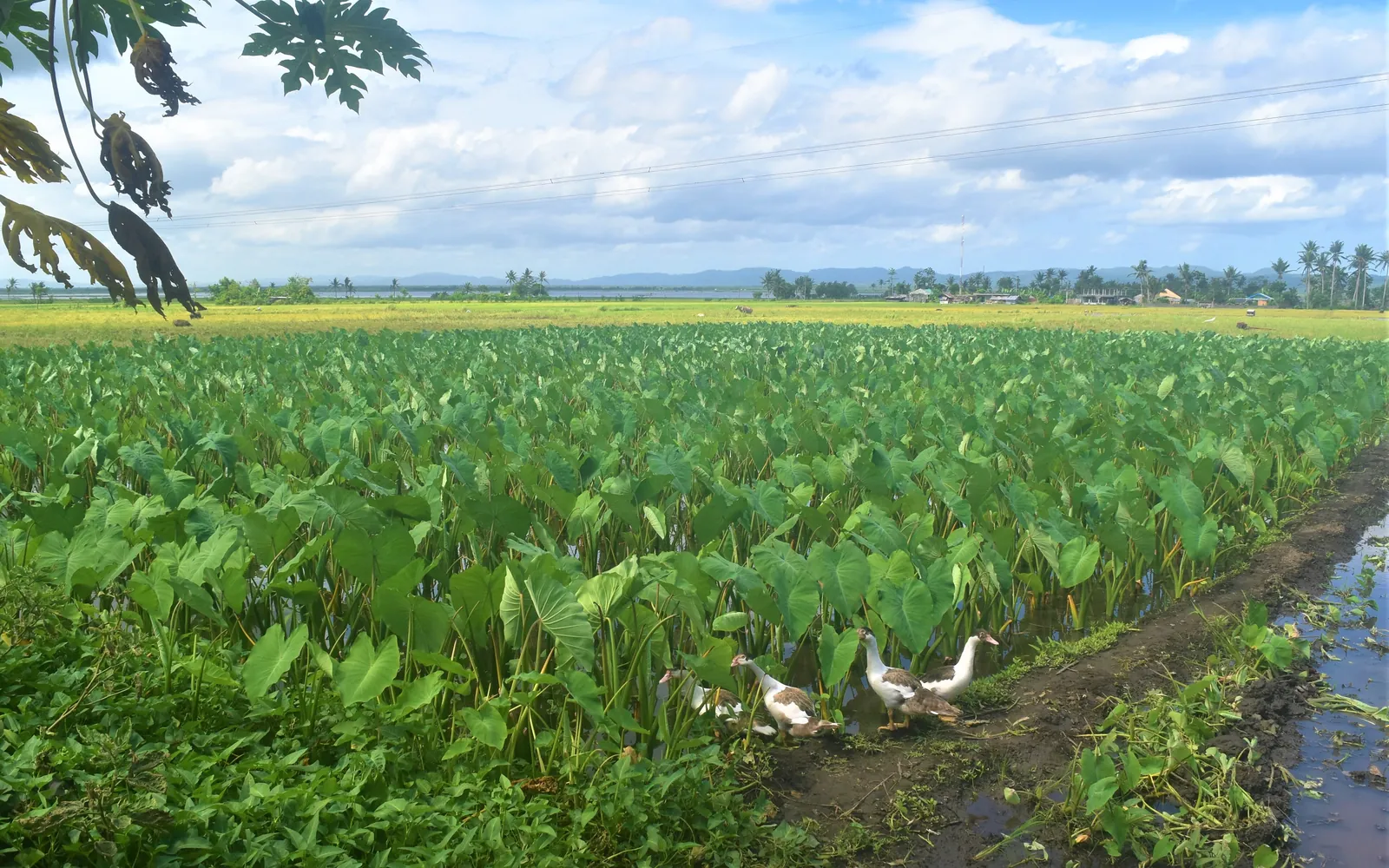
This guide shows how traditional farmers usually plant gabi. Use it as a starting point. For a higher yield, update it: plant certified seed or clean planting material, test your soil, and follow the right spacing and fertilizer.
How Filipino farmers usually plant gabi from corm tops and side shoots, on upland furrows or in wet lowland fields, up to the harvest of the corms. For small farms and backyard growers who also pick the leaves for laing and the runners for takway.
Before you plant, get the field ready with our land preparation guide for root crops. Then choose your seed or planting material with the gabi varieties sold here. If the leaves turn pale later on, the gabi nutrient deficiency guide helps you find what is missing.
When to plant gabi
Gabi likes warm weather and rain spread through the year. Upland gabi is planted as the rains begin, around May to June, so it grows on the rains. Lowland gabi in wet fields, along creeks or in paddies can be planted in most months because the soil stays wet.
What you plant
Most farmers plant setts (the top of a harvested corm with the base of the stalks, about 100 to 120 g), side shoots (suckers) dug from around the mother plant, or small corms. For setts they scrape off the roots and cut the stalks back to about 30 cm. Bigger setts give bigger corms.
Paano magtanim ng gabi: upland in furrows
This is the upland in furrows way (Upland in furrows (gabing lupa)). The crop is ready about 210 days after planting.
Upland in furrows: before planting (Bago magtanim)
21 days before planting: Plow twice
Plow the field two times to loosen the soil deeply. Gabi does best in loose, rich loam that holds moisture.
14 days before planting: Harrow and mix in manure
Harrow crosswise to break the clods. Work in manure or compost now so it has one to two weeks to settle before planting.
2 days before planting: Open the furrows
Make furrows about 75 cm apart. On hilly or uneven ground, dig planting holes instead.
Upland in furrows: the nursery (Punlaan)
1 day before planting: Ready the setts and shoots
Cut the tops off good corms with the stalk bases, scrape off old roots and trim the stalks to about 30 cm. Dig healthy side shoots from mother plants.
- Pick the mother plantsTake planting material only from strong gabi plants with clean leaves and firm corms, never from plants with rotting bases or blighted leaves. A big, heavy top makes a big corm later, so choose the larger ones. Tip: Small setts never catch up with big ones, even when the crop is left longer in the field.
- Cut off the corm topAt harvest, slice off the top of the corm together with the base of the leaf stalks, so each piece weighs about 100 to 120 grams. The eating part below goes to the kitchen or the market.
- Scrape off the rootsWith a sharp, curved knife or bolo, scrape the old roots and fiber off the bottom of the piece so fresh roots can push out cleanly.
- Cut back the stalksCut off the leaf blades and trim the stalks to about 30 cm above the corm. With no big leaves left, the sett loses less water and stands up easily in the soil.
- Dig and trim the side shootsSide shoots that grow around the mother plant can be dug out with some roots, separated with a clean cut and trimmed the same way, with the leaves off and the stalks short.
- Dry the cut faces or plant at onceMany farmers plant the setts the same day or the next. Others leave them in the shade for a short while so the cut faces dry before planting, which helps against rot in wet soil. Tip: Where leaf blight or corm rot was bad last season, some growers dip the setts in a fungicide before planting, following the label.
Upland in furrows: planting day (Pagtatanim)
Planting day: Plant along the furrow
Set one sett or shoot every 50 cm in the furrow, about 4 to 5 cm deep when the soil is wet and 8 to 10 cm when it is drier, and press soil around it. In holes, cover only partly and leave a small hollow around the plant.
Planting day: First fertilizer
Farmers who use complete fertilizer put the first half beside the plants at planting and cover it.
Upland in furrows: care while it grows (Pag aalaga)
Day 21: Replace missing plants
Fill gaps with spare shoots or setts where nothing came up.
Day 30: Weed and mulch
Hand pull weeds or plow lightly between the rows. Dry grass or leaves laid around the plants keep the soil moist in dry spells.
Day 60: Second fertilizer and hilling up
Put the second half of the fertilizer along the row and pull soil up to the base of the plants so the growing corms stay covered.
Day 90: Weed again and watch the leaves
Weed once more before the leaves close over the rows. Look for leaf eating caterpillars and leaf blight spots, and remove badly hit leaves.
Day 211: Clean and keep in the shade
Brush off soil, separate the side corms from the mother corm, sort by size and keep them in a cool, airy, shaded place until sold.
Upland in furrows: harvest (Anihan)
Day 210: Harvest when leaves yellow
Gabi is ready when the leaves turn yellow, dry up and the stalks get shorter. Lift the mother plant carefully with a fork or bolo, knock off the soil and cut off the tops. Tip: Keep the corm tops and side shoots for your next planting.
Lowland in wet fields, step by step
This is the lowland in wet fields way (Lowland in wet fields (gabing tubig)). The crop is ready about 240 days after planting.
Lowland in wet fields: before planting (Bago magtanim)
14 days before planting: Clear and puddle the field
Pull out weeds and stubble, flood the field and work the mud as you would for rice until it is soft and level.
Lowland in wet fields: the nursery (Punlaan)
1 day before planting: Ready the setts
Prepare setts or side shoots the same way as for upland gabi.
- Pick the mother plantsTake planting material only from strong gabi plants with clean leaves and firm corms, never from plants with rotting bases or blighted leaves. A big, heavy top makes a big corm later, so choose the larger ones. Tip: Small setts never catch up with big ones, even when the crop is left longer in the field.
- Cut off the corm topAt harvest, slice off the top of the corm together with the base of the leaf stalks, so each piece weighs about 100 to 120 grams. The eating part below goes to the kitchen or the market.
- Scrape off the rootsWith a sharp, curved knife or bolo, scrape the old roots and fiber off the bottom of the piece so fresh roots can push out cleanly.
- Cut back the stalksCut off the leaf blades and trim the stalks to about 30 cm above the corm. With no big leaves left, the sett loses less water and stands up easily in the soil.
- Dig and trim the side shootsSide shoots that grow around the mother plant can be dug out with some roots, separated with a clean cut and trimmed the same way, with the leaves off and the stalks short.
- Dry the cut faces or plant at onceMany farmers plant the setts the same day or the next. Others leave them in the shade for a short while so the cut faces dry before planting, which helps against rot in wet soil. Tip: Where leaf blight or corm rot was bad last season, some growers dip the setts in a fungicide before planting, following the label.
Lowland in wet fields: planting day (Pagtatanim)
Planting day: Plant in rows in the mud
Push setts into the soft mud in rows, 50 by 50 cm or 75 by 50 cm apart, shallow enough that the buds stay above the mud.
Lowland in wet fields: care while it grows (Pag aalaga)
Day 7: Keep the field wet
Keep the soil soaked or under shallow water. Let the water down a little while the plants are tiny so they are not drowned.
Day 30: Weed and fertilize
Pull the weeds by hand and put the fertilizer beside the plants when the water is low.
Day 90: Watch for pests and blight
Check the leaves for caterpillars, aphids and blight spots, and keep the field edges clean.
Lowland in wet fields: harvest (Anihan)
Day 240: Drain and harvest
When the leaves yellow and shorten, drain the field, lift the plants and cut off the tops.
Watering gabi, stage by stage
Upland in furrows: how to water
Upland gabi is a rain crop: it goes in as the rains begin, around May to June, and grows on rain spread through the months. Farmers lay dry grass or leaves around the plants to hold moisture in dry spells and water by hand only on small plots near a well. Mostly rain. Where water is near, farmers run it down the furrows or water each plant by can. Water in the morning or late afternoon.
The first month, while the setts root. Leaf growth and corm filling, roughly the third to sixth month: dry spells give small corms.
| Stage | When | How often | How much |
|---|---|---|---|
| Planting and rooting | Planting day to day 30 | Plant into moist soil with the first rains. Water the furrow or each plant if a dry week comes | Moisten the soil around each sett, no standing water |
| Leafy growth | Day 30 to 90 | Rain is usually enough. In a dry spell water by furrow or can about once a week and keep the mulch on | A soaking that wets the root zone, then drain |
| Corms filling | Day 90 to 180 | Keep the soil moist. Water in dry spells where you can | Even moisture, never soaked around the base |
| Leaves yellowing to harvest | Day 180 to 210 | Stop watering as the leaves turn yellow and the stalks shorten | No water |
Without irrigation. Plant as the rains begin so the whole growth falls in the wet months, on loose loam that holds moisture. Lay dry grass, leaves or straw around the plants after weeding, and plant along creeks or in low, moist spots where the soil stays damp longer.
In the dry season. Upland gabi is not planted into the dry season on purpose. If a dry spell comes, water by furrow or can about once a week, keep the mulch thick, and water when the big leaves droop or curl in the morning.
In the rainy season. Use furrows and ridges so heavy rain drains away and water does not pond around the base of the plants for long. Upland gabi likes wet soil but rots in long ponding, and wet weather spreads leaf blight.
- Too little water: Big leaves droop, curl and scorch at the edges, new leaves come small, and the corms stay small and hard.
- Too much water: Ponded plants yellow and the corm and roots rot from the base.
To water better for a higher yield: Thick mulch of grass, leaves or straw around the plants holds moisture through dry spells and keeps weeds down. Where you can, water about once a week through dry spells in the third to sixth month to keep the corms filling.
Lowland in wet fields: how to water
Lowland gabi grows in wet fields, paddies and along creeks where the soil stays soaked or under shallow water, so it keeps growing in the dry months. The grower holds a few cm of water in the field, lowers it while the plants are small or being fed, and drains the field before the harvest. The water level is held with the field's banks, inlet and outlet, or with a small pump. No hand watering is needed.
The first month, when the water must stay shallow so the young plants do not drown. The whole growth: the field must never dry and crack.
| Stage | When | How often | How much |
|---|---|---|---|
| Puddling the field | 14 days before planting to planting day | Flood the field and work the mud soft and level, as for rice | Enough water to make soft mud |
| Planting and rooting | Planting day to day 30 | Keep the soil soaked, with only a little water over it while the plants are tiny | Saturated mud to about 2 to 3 cm of water |
| Weeding and feeding | Day 30 to 31 | Lower the water, pull the weeds and put the fertilizer beside the plants, then bring the water back after a day or two | Low water while feeding |
| Growth and corm filling | Day 31 to 225 | Keep shallow standing water in the field all the time. Let fresh water flow through slowly if you can | About 4 to 8 cm of standing water |
| Drain and harvest | Day 225 to 240 | Drain the field when the leaves yellow and shorten | No water |
Without irrigation. Lowland gabi is grown where the ground stays wet on its own, in low paddies, swampy spots and creek sides. Where these dry in summer, keep the field banks high to hold rain, plant in the wettest part, or switch to upland gabi with mulch.
In the dry season. Keep the field flooded with a few cm of water through the dry months. Let in water from the canal, creek or pump whenever the mud starts to show.
In the rainy season. Keep an outlet open in the typhoon months so a big flood does not drown young plants or stand deep for long. Water deeper than a hand span for a long time cuts the corm yield, and warm, stale water brings corm rot.
- Too little water: Mud shows and cracks, the leaves droop and scorch at the edges, and growth stops.
- Too much water: Young plants under deep water yellow and die. In warm stale water the corms go soft and rotten.
To water better for a higher yield: Hold only about 4 to 8 cm of water: enough to keep weeds down without cutting the yield. Let cool, fresh water flow slowly through the field instead of leaving it stale and warm.
Spacing, water and fertilizer for gabi
Spacing
Upland: furrows about 75 cm apart and plants 50 cm apart in the row. Lowland: 50 by 50 cm or 75 by 50 cm. One sett or shoot a hill.
Water
Upland gabi is rainfed and needs rain spread through its growth, so it is planted with the rains and mulched in dry spells. Lowland gabi grows in soaked or shallow flooded fields, along creeks and in paddies, where it keeps growing in the dry months.
Fertilizer
Many backyard growers use only manure or compost mixed into the soil one to two weeks before planting. Farmers who buy fertilizer often use complete fertilizer (14 14 14), half at planting and half at the hilling up. A common guide is about 60 kg each of N, P and K a hectare, which is roughly 8 to 9 bags of 14 14 14. To read what a bag really gives, see our guide to fertilizer for this crop.
Care and harvest
Care while it grows
Hand weeding or plowing between the rows during the first months, mulching upland gabi with dry grass, and hilling up so the corms stay under the soil. Farmers pick a few young leaves for laing and runners for takway along the way, but taking too many leaves makes the corms small.
When and how to harvest
Most gabi is dug about seven to nine months after planting, when the leaves turn yellow, dry up and the stalks get short. Upland gabi usually comes earlier than gabi in wet fields. The plant is lifted gently, the soil knocked off and the tops cut off and kept for planting. Corms are sorted and kept in the shade.
Common mistakes when planting gabi
- Using small, weak setts or sick shoots, which give small corms however long you wait.
- Planting upland gabi late in the rains, so it runs dry while the corms fill.
- Leaving the corms uncovered instead of hilling up.
- Stripping too many leaves for laing while the corms are still filling.
- Harvesting before the leaves yellow, when the corms are watery and keep poorly.
How to get a higher yield of gabi
The traditional way gets a crop, but small changes add up. These are the first things to change, one season at a time.
- Pick big setts or strong side shoots from healthy, high yielding plants of a variety your buyers like.
- Test the soil and give balanced fertilizer in two splits instead of one guess.
- Keep the spacing even and fill gaps within three weeks.
- Mulch upland gabi and give water in dry spells. In wet fields keep the water steady.
- Scout every week or two for caterpillars and leaf blight, and remove sick leaves early.
- Rotate fields and do not replant gabi on the same spot season after season.
anee.io helps with each of these. The NPK Plus calculator checks that your fertilizer plan feeds the yield you want, the pest and disease finders tell you what is on the leaves before you spray, and Anee, the smart farm technician answers your questions in Tagalog or English.
Members open this guide in the How to Plant tool and send every step to the Protocol Builder in one tap, each on its own day. There you can change the seed, the spacing and the fertilizer, then turn it into a cropping calendar for your lots.
Start from the traditional way, make it better, and let anee.io date every task from your own planting day. Free to start.
Start freeQuestions about planting gabi
Paano magtanim ng gabi?
When do farmers plant gabi in the Philippines?
How far apart do you plant gabi?
How long before gabi can be harvested?
How often do you water gabi?
What do you plant to grow gabi?
See every step of planting it the traditional way
Register for free to read every step with its day, the spacing, water and fertilizer, the common mistakes and what to change for a higher yield. Then send it to your Protocol Builder in one tap.
Free to register. No credit card. Works on any phone.