Paano Magtanim ng Labanos: How to Plant Radish the Traditional Way
Paano magtanim ng labanos? Here is how traditional Filipino farmers usually plant labanos (radish), step by step from getting the field ready to the harvest, with the day of each step and what to change for a higher yield.
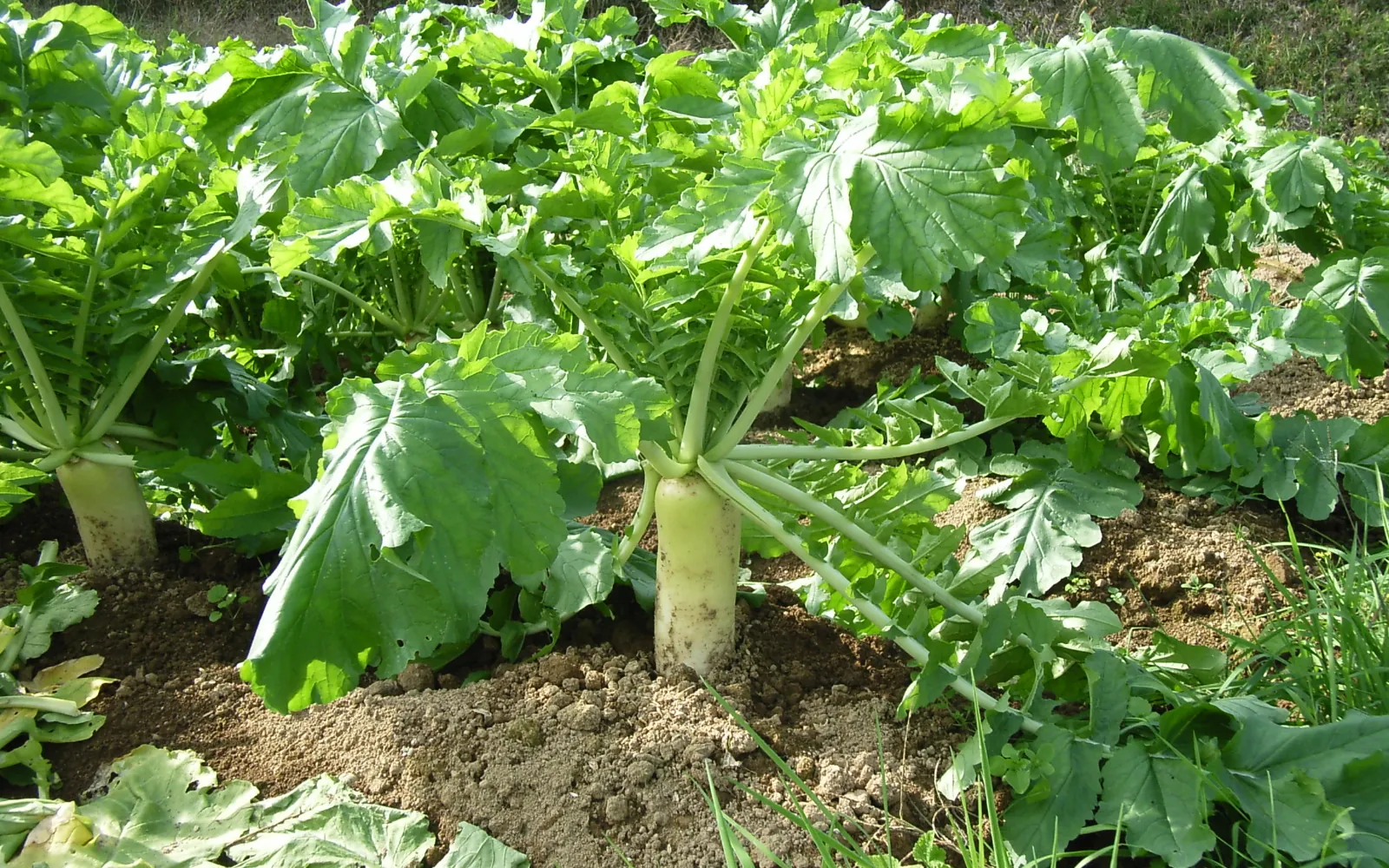
This guide shows how traditional farmers usually plant labanos. Use it as a starting point. For a higher yield, update it: plant certified seed or clean planting material, test your soil, and follow the right spacing and fertilizer.
How Filipino vegetable farmers usually grow long white labanos, sown straight on a well prepared field and pulled about 40 to 45 days later. For lowland and highland growers who want the usual routine and the few changes that give straight, white, heavy roots.
Before you plant, get the field ready with our land preparation guide for root crops. Then choose your seed or planting material with the labanos varieties sold here. If the leaves turn pale later on, the labanos nutrient deficiency guide helps you find what is missing.
When to plant labanos
In the lowlands labanos does best in the cooler dry months, but growers in places like Laguna and Quezon plant it in both the dry and the wet season, choosing varieties that stand rain and do not bolt. In the highlands, such as Atok and Kibungan in Benguet, it is grown through most of the year.
What you plant
Seed, broadcast over the field or sown in shallow rows. Open pollinated seed is cheap but farmers use more of it. Growers in Laguna report about 4 kg of open pollinated seed against about 2 kg of hybrid seed for a quarter hectare.
Paano magtanim ng labanos, step by step
The crop is ready about 45 days after sowing.
Before planting (Bago magtanim)
14 days before sowing: Plow and harrow until fine
Plow and harrow the field thoroughly so the soil is deep, loose and free of clods and stones. Lumps and stones make forked, crooked roots.
3 days before sowing: Spread rotted chicken manure
Spread plenty of well rotted chicken manure over the field and mix it into the top soil. One Laguna grower uses about 60 sacks for half a hectare. Tip: Never use fresh manure. It burns the seedlings and forks the roots.
Planting day (Pagtatanim)
Sowing day: Broadcast the seed
Scatter the seed as evenly as you can over the field or the beds, or drop it in shallow rows, then rake in lightly and water.
Care while it grows (Pag aalaga)
Day 1: Keep the soil moist
Water every day until the seedlings are up, then keep the soil evenly moist. Dry spells followed by heavy watering make the roots crack.
Day 10: Thin crowded spots
Pull out extra seedlings where they come up too close together so each root has room. The young plants can be cooked.
Day 12: Give urea early only
Side dress with a little urea while the plants are young, before the main root starts to swell. Do not give urea or other nitrogen after about 20 days, or the plant makes leaves instead of root.
Day 15: Weed by hand
Pull the weeds once or twice while the plants are small.
Day 20: Check leaves and roots
Look for flea beetle holes, aphids and green caterpillars on the leaves, and for rotting at the root top in wet weather. Pull and remove rotting plants.
Day 45: Wash and sort
Wash off the soil, sort the straight, smooth, white roots from the forked or cracked ones, and pack them in the shade for selling the same day or the next.
Harvest (Anihan)
Day 40: Pull the roots in rounds
From about 40 days, pull the biggest roots first and come back for the rest in later rounds. Most of the field is harvested by about 45 days. Tip: Do not leave roots too long. They turn pithy, woody and hot tasting.
Watering labanos, stage by stage
Labanos is watered every day at first, by hand, sprinkler or furrow, until the seedlings are up, and then kept evenly moist until it is pulled. In the rainy season farmers plant on raised beds so water does not stand around the roots. Watering cans and hoses on small beds, sprinklers in the highlands, and furrows on bigger lowland fields. Water in the morning or late afternoon.
Sowing to coming up: the top soil must stay damp. Root swelling: even moisture, with no dry spells followed by soaking.
| Stage | When | How often | How much |
|---|---|---|---|
| Sowing to coming up | Sowing day to day 5 | Water right after sowing, then every day until the seedlings are up | A fine spray that keeps the top soil damp without washing the seed |
| Leaves and root starting | Day 5 to 20 | Keep the soil evenly moist, about every day or two in dry weather. Water after thinning and after the early urea | Even waterings that wet the bed to the roots |
| Roots swelling | Day 20 to 40 | Keep the same even schedule, more often on sandy soil and in hot weather | The same amount each time, never a dry spell followed by a heavy soaking |
| Pulling | Day 40 to 45 | Keep watering lightly while pulling in rounds | Light |
Without irrigation. In the rainy season labanos grows on raised beds with little watering. In the dry months it needs daily water at first, so without a pump keep the beds near a well and mulch with rice straw or rice hull.
In the dry season. Water every day until the seedlings are up, then about every day or two to keep the soil evenly moist, more on sandy soil. Water when the top soil is dry to the touch or the leaves droop by late morning.
In the rainy season. Plant on raised beds so water does not stand around the roots, and skip watering in rainy weeks. Soaked soil rots the roots and splits them, and hard rain beats down the young leaves.
- Too little water: Leaves wilt in the heat, roots stay small, turn woody, pithy or very hot tasting, and plants flower early.
- Too much water: Roots split, turn soft or rot at the shoulder, and the leaves yellow.
To water better for a higher yield: Keep the watering even every day or two. It is the best guard against cracked and pithy roots. Mulch the beds with rice straw or rice hull to hold moisture between waterings.
Spacing, water and fertilizer for labanos
Spacing
Most growers broadcast the seed over a well prepared field and thin crowded spots by hand. Others sow in shallow rows on beds and thin along the row so the roots do not touch.
Water
Watered daily at first, by hand, sprinkler or furrow, then kept evenly moist. In the rainy season farmers plant on raised beds so water does not stand around the roots.
Fertilizer
The traditional base is a lot of well rotted chicken manure spread before sowing. Urea goes on only while the plants are young. Experienced growers stop giving nitrogen at about 20 to 25 days, when the main root starts to form. To read what a bag really gives, see our guide to fertilizer for this crop.
Care and harvest
Care while it grows
Daily watering in the first days, thinning of crowded spots, one or two hand weedings, and a single early side dressing of urea.
When and how to harvest
Long white labanos is ready about 40 to 45 days after sowing. Farmers pull the biggest roots first and go over the field in several rounds, then wash and sort the roots, keeping straight, smooth, white ones as first class.
Common mistakes when planting labanos
- Giving urea after the root starts to swell, so the plant grows leaves and a thin root.
- Sowing on cloddy or stony soil, or with fresh manure, which makes forked roots.
- Sowing too thick and never thinning, so the roots stay small and twisted.
- Uneven watering that makes the roots crack.
- Leaving the roots in the ground too long until they turn pithy and woody.
How to get a higher yield of labanos
The traditional way gets a crop, but small changes add up. These are the first things to change, one season at a time.
- Use fresh seed of a variety suited to your season and elevation, with tolerance to rain and bolting.
- Test the soil and lime sour soils. Feed with rotted manure plus balanced fertilizer by the result.
- Prepare deep, fine, raised beds, especially in the rainy months.
- Sow evenly and thin early so every root has room.
- Rotate labanos with crops outside the cabbage family and keep the field clean of old roots.
- Harvest on time and keep the roots shaded and cool after washing.
anee.io helps with each of these. The NPK Plus calculator checks that your fertilizer plan feeds the yield you want, the pest and disease finders tell you what is on the leaves before you spray, and Anee, the smart farm technician answers your questions in Tagalog or English.
Members open this guide in the How to Plant tool and send every step to the Protocol Builder in one tap, each on its own day. There you can change the seed, the spacing and the fertilizer, then turn it into a cropping calendar for your lots.
Start from the traditional way, make it better, and let anee.io date every task from your own planting day. Free to start.
Start freeQuestions about planting labanos
Paano magtanim ng labanos?
When do farmers plant labanos in the Philippines?
How far apart do you plant labanos?
How long before labanos can be harvested?
How often do you water labanos?
What do you plant to grow labanos?
See every step of planting it the traditional way
Register for free to read every step with its day, the spacing, water and fertilizer, the common mistakes and what to change for a higher yield. Then send it to your Protocol Builder in one tap.
Free to register. No credit card. Works on any phone.