Paano Magtanim ng Monggo: How to Plant Mungbean the Traditional Way
Paano magtanim ng monggo? Here is how traditional Filipino farmers usually plant monggo (mungbean), step by step from getting the field ready to the harvest, with the day of each step and what to change for a higher yield.
This guide shows how traditional farmers usually plant monggo. Use it as a starting point. For a higher yield, update it: plant certified seed or clean planting material, test your soil, and follow the right spacing and fertilizer.
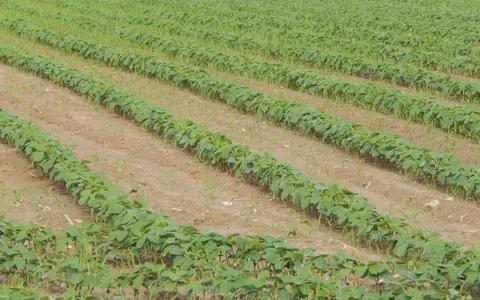
How Filipino farmers grow monggo, most often scattered into the paddy right after the rice harvest so it lives on the leftover moisture, and also in furrows on upland fields. It is a quick crop of about two months that needs little fertilizer.
Before you plant, get the field ready with our land preparation guide for legumes. Then choose your seed or planting material with the monggo varieties sold here. If the leaves turn pale later on, the monggo nutrient deficiency guide helps you find what is missing.
When to plant monggo
Mostly planted right after the rice harvest in the dry season, from about January to March, while the paddy soil is still moist, as farmers do across the Ilocos region and Central Luzon. It is also planted at the start of the rains, around May to June, on upland and rainfed fields, and after corn.
What you plant
Dry seed, kept from the last crop or bought. Farmers choose clean, plump seed and throw out shriveled grains and grains with weevil holes.
Paano magtanim ng monggo: broadcast after rice
This is the broadcast after rice way (Broadcast after rice (sabog sa pinag anihan)). The crop is ready about 65 days after sowing.
Broadcast after rice: before planting (Bago magtanim)
2 days before sowing: Get the paddy ready after harvest
Right after the rice harvest, cut the stubble low and rake the loose straw aside. The soil should be moist but firm enough to walk on without sinking.
Broadcast after rice: planting day (Pagtatanim)
Sowing day: Scatter the seed
Scatter the seed evenly over the moist field, then spread rice straw thinly back over it to hold the moisture and keep weeds down.
- Sow while the paddy is still moistBroadcast the seed soon after the rice is cut, while the soil still holds the last rains. About 15 to 20 gantas of seed, roughly 36 to 48 kg, covers a hectare when thrown this way.
- Shake the seed off the stubbleSeed that lands on the cut stubble dries out there. Pass a pegtooth harrow once over the field to knock it down to the soil.
- If you have water, flush first3 to 4 hours after flushingWhere water is at hand, some farmers plow once, let the weeds dry, flush the field with water once, and broadcast the seed a few hours later. A light pass or two of the pegtooth harrow covers it.
- Or sow before the rice is cut7 to 10 days before the rice harvestSome farmers throw the seed into the standing rice about a week before harvest, while the mud is still soft, so the monggo is already up when the rice comes off.
- Lay back the strawSpread the rice straw thinly back over the sown field. It holds the moisture in the soil and keeps many weeds from coming through.
Broadcast after rice: care while it grows (Pag aalaga)
Day 7: Check the stand
Look for bare patches and resow them while the soil is still moist. Ants and birds can take seed in the first days.
Day 20: Pull the weeds
Hand pull the weeds that push through the straw before the monggo covers the ground.
Day 25: Watch for insects
Check the young plants for bean fly and aphids, and the flowers and young pods for pod borers.
Broadcast after rice: harvest (Anihan)
Day 60: Pick the black pods
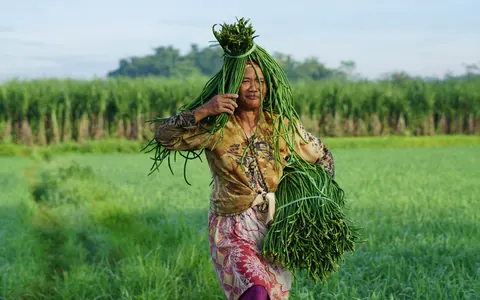
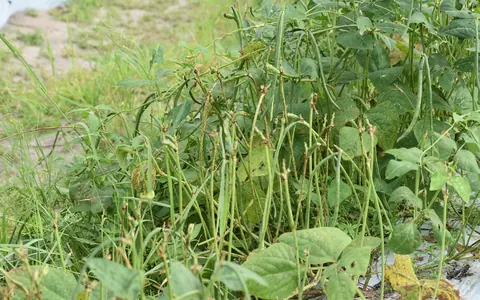
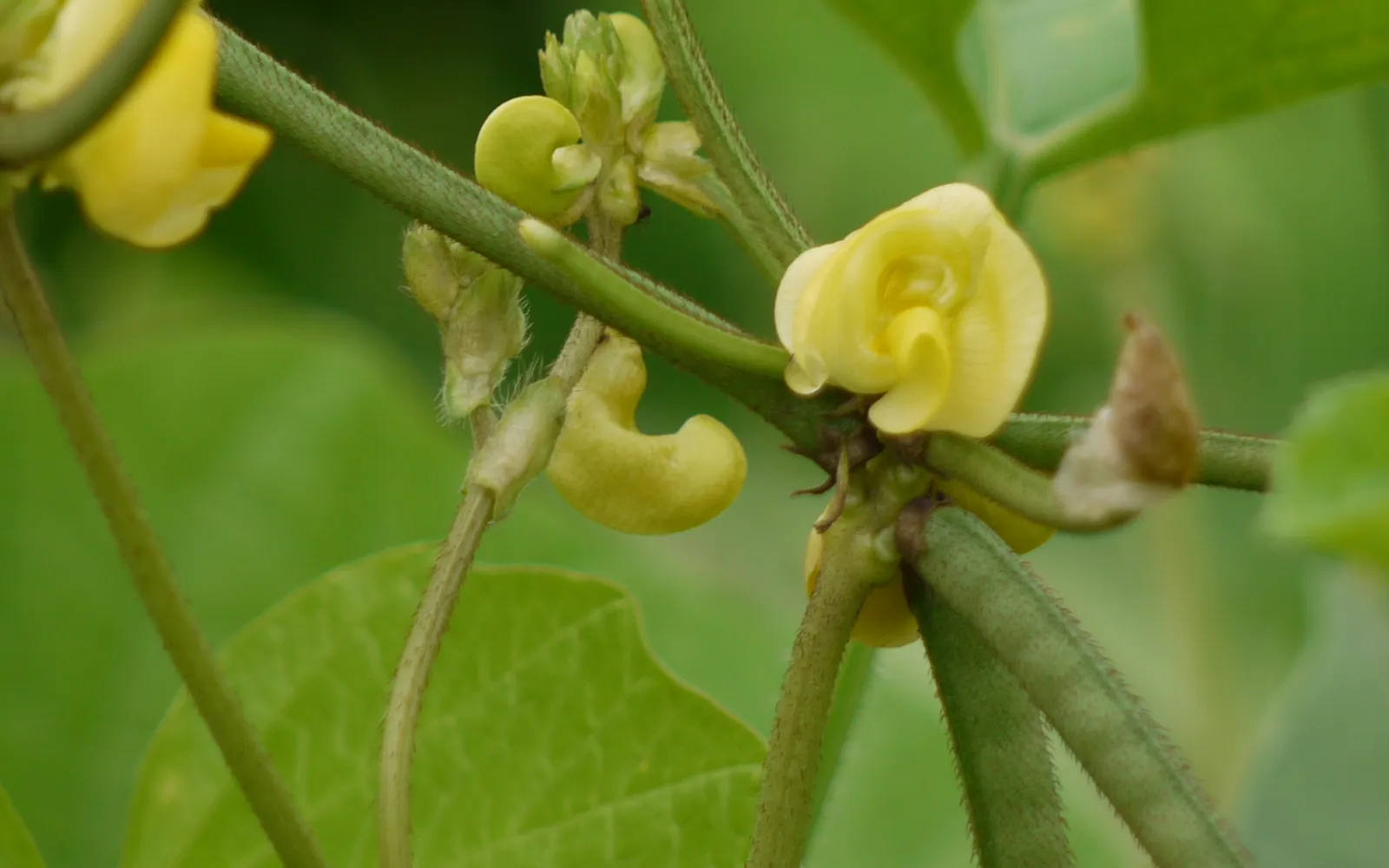
Start picking when the pods turn black, at about 55 to 65 days. Pick in the cool morning, before dry pods split, and go back every few days for two or three pickings.
Day 66: Dry, thresh and store
Sun dry the pods for two to three days, beat them inside a sack with a stick, winnow out the hulls and dry the seed again. Store it in a sealed container, and some farmers mix in clean ash to keep weevils away.
- Dry the podsSpread the picked black pods on mats, a sawali sheet or old nylon fish nets in the sun and turn them now and then, until they are brittle and start to split by themselves. The mats catch the seed that pops out.
- Beat out the seedTread on the dry pods, or beat them with a light stick of wood or bamboo, on the mat or inside a tied sack so the seed does not fly off. Some farmers use a small thresher.
- WinnowToss the beaten seed on a bilao in the wind, or shake it through a sieve, so the hulls, bits of pod and dirt are left behind. Pick out stones and clods by hand.
- Dry the seed again2 to 3 sunny daysSpread the clean seed in the full sun once more, turning it, until it is hard and rattles when you shake it. Damp seed molds and draws weevils.
- Set aside seed for plantingMost of the crop is sold. Keep a share of plump, clean seed from the best plants for the next planting, and throw out shriveled seed and seed with weevil holes.
- Store it dry and cleanabout 6 monthsKeep the seed in sacks or bins in a clean, airy room, or in a tightly closed jar or can in a cool corner. Seed dried well keeps for about six months at room heat. Some farmers mix in clean, dry ash before closing the jar to keep weevils off.
Planted in furrows, step by step
This is the planted in furrows way (Planted in furrows). The crop is ready about 65 days after sowing.
Planted in furrows: before planting (Bago magtanim)
14 days before sowing: Plow
Plow once when the soil is moist enough, with a carabao or a tractor.
7 days before sowing: Harrow
Harrow once or twice to break clods and kill sprouting weeds.
1 day before sowing: Open the furrows
Open shallow furrows about 50 to 60 cm apart.
Planted in furrows: planting day (Pagtatanim)
Sowing day: Fertilizer on poor soil
On poor soil drop a little complete fertilizer (14 14 14) or manure in the furrow and cover it. On good soil many farmers give none.
Sowing day: Drill the seed
Drop the seed thinly along the furrow and cover it with 2 to 3 cm of soil.
Planted in furrows: care while it grows (Pag aalaga)
Day 14: Off barring
Plow along the rows with the soil thrown away from the plants to cut the weeds, then hand pull weeds in the row.
Day 21: Hill up
Plow back toward the rows to pile soil at the base of the plants.
Day 25: Watch for insects
Check for bean fly, aphids and pod borers, especially at flowering.
Planted in furrows: harvest (Anihan)
Day 60: Pick the black pods
Pick the pods as they turn black, in the morning, every few days for two or three pickings.
Day 66: Dry, thresh and store
Sun dry, beat out the seed, winnow, dry again and keep it in sealed containers.
- Dry the podsSpread the picked black pods on mats, a sawali sheet or old nylon fish nets in the sun and turn them now and then, until they are brittle and start to split by themselves. The mats catch the seed that pops out.
- Beat out the seedTread on the dry pods, or beat them with a light stick of wood or bamboo, on the mat or inside a tied sack so the seed does not fly off. Some farmers use a small thresher.
- WinnowToss the beaten seed on a bilao in the wind, or shake it through a sieve, so the hulls, bits of pod and dirt are left behind. Pick out stones and clods by hand.
- Dry the seed again2 to 3 sunny daysSpread the clean seed in the full sun once more, turning it, until it is hard and rattles when you shake it. Damp seed molds and draws weevils.
- Set aside seed for plantingMost of the crop is sold. Keep a share of plump, clean seed from the best plants for the next planting, and throw out shriveled seed and seed with weevil holes.
- Store it dry and cleanabout 6 monthsKeep the seed in sacks or bins in a clean, airy room, or in a tightly closed jar or can in a cool corner. Seed dried well keeps for about six months at room heat. Some farmers mix in clean, dry ash before closing the jar to keep weevils off.
Watering monggo, stage by stage
Monggo after rice is almost never watered: farmers sow it into the wet paddy right after the harvest and it lives on the moisture left in the soil. Upland crops are sown with the rains, and only a few growers with a pump give a furrow or sprinkler watering in a dry spell. Mostly no watering. Where water is at hand, a quick flush from a canal or pump that is drained off within hours, furrow watering, or an overhead sprinkler, best in the morning.
Sowing: the soil must be moist, or the seed comes up patchy. Flowering and pod filling, about day 30 to 58: a long dry spell drops flowers and leaves light seed.
| Stage | When | How often | How much |
|---|---|---|---|
| Before sowing | 2 days before sowing to sowing day | After rice, if the paddy has already dried, let water in 1 to 2 days before sowing, then drain it. On upland fields, sow after a good rain | Enough to soak the topsoil, with all standing water drained before the seed goes in |
| Coming up | Sowing day to day 10 | No watering on moist soil. Never leave water standing on the field | None |
| Leaf growth | Day 10 to 30 | Usually none. Water only if the soil cracks and the plants wilt in the morning | A quick furrow watering or a flush that drains away within hours |
| Flowering | Day 30 to 45 | Water once if the soil is dry, mostly for plantings made from January to March | A furrow watering, a sprinkler, or a quick flush and drain |
| Pod filling | Day 45 to 58 | Water once more if the soil is dry | The same light watering, never standing water |
| Picking | Day 58 to 66 | Stop watering | None |
Without irrigation. This is the usual way. After rice, sow within a few days of the harvest while the paddy is still wet, and spread rice straw back over the field to hold the moisture. Plantings made early in the dry months need no watering, while late ones from January to March often run short at flowering.
In the dry season. Sow early after the rice, not late, so the crop finishes before the soil dries. In a late planting, water at flowering and again at pod filling if the soil has cracked or the leaves wilt by mid morning.
In the rainy season. Monggo hates wet feet. In the rainy season plant on well drained soil or on ridges, cut a shallow drain around the field, and never plant heavy clay that holds water. Long rain at picking rots the pods on the plant.
- Too little water: Leaves wilt and turn pale in the morning, flowers drop, and the pods stay few and short.
- Too much water: Leaves turn yellow, seedlings die in the low spots, and the stems rot at the base.
To water better for a higher yield: If you can water once, water at flowering. A second watering at pod filling gives more again. Rice straw over the broadcast seed keeps the soil moist longer and holds back the weeds.
Spacing, water and fertilizer for monggo
Spacing
Broadcast evenly after rice, or drilled thinly in furrows about 50 to 60 cm apart. In rows, farmers use about 25 to 30 kg of seed a hectare.
Water
After rice it lives on the moisture left in the paddy, with no watering. Upland crops are planted with the rains. Standing water kills monggo, so wet spots need a small drain.
Fertilizer
Little or none after rice, since monggo makes much of its own nitrogen. On poor soil farmers drop a little complete fertilizer (14 14 14) or manure in the furrow at planting. To read what a bag really gives, see our guide to fertilizer for this crop.
Care and harvest
Care while it grows
Hand weeding or off barring and hilling up in the first three weeks. Farmers watch for bean fly on young plants and pod borers at flowering. The rice straw mulch on broadcast fields keeps many weeds down.
When and how to harvest
Pods are picked by hand as they turn black, starting at about 55 to 65 days, in two or three rounds. They are sun dried, beaten in sacks, winnowed and stored dry in sealed containers.
Common mistakes when planting monggo
- Sowing late after the rice harvest, when the soil has already dried out.
- Planting where water stands after rain, which rots the roots.
- Waiting too long to pick, so dry pods split in the heat and drop their seed.
- Storing seed before it is fully dry, or in open sacks where weevils get in.
How to get a higher yield of monggo
The traditional way gets a crop, but small changes add up. These are the first things to change, one season at a time.
- Use clean seed of a variety that ripens evenly, so fewer pickings are needed.
- Sow within a few days after the rice harvest and cover the seed with straw mulch.
- Make shallow drains so no water stands in the field.
- Scout at flowering for pod borers and act only when they are many.
- Dry the seed well and store it in sealed containers.
anee.io helps with each of these. The NPK Plus calculator checks that your fertilizer plan feeds the yield you want, the pest and disease finders tell you what is on the leaves before you spray, and Anee, the smart farm technician answers your questions in Tagalog or English.
Members open this guide in the How to Plant tool and send every step to the Protocol Builder in one tap, each on its own day. There you can change the seed, the spacing and the fertilizer, then turn it into a cropping calendar for your lots.
Start from the traditional way, make it better, and let anee.io date every task from your own planting day. Free to start.
Start freeQuestions about planting monggo
Paano magtanim ng monggo?
When do farmers plant monggo in the Philippines?
How far apart do you plant monggo?
How long before monggo can be harvested?
How often do you water monggo?
What do you plant to grow monggo?
See every step of planting it the traditional way
Register for free to read every step with its day, the spacing, water and fertilizer, the common mistakes and what to change for a higher yield. Then send it to your Protocol Builder in one tap.
Free to register. No credit card. Works on any phone.