

Sugarcane woolly aphid
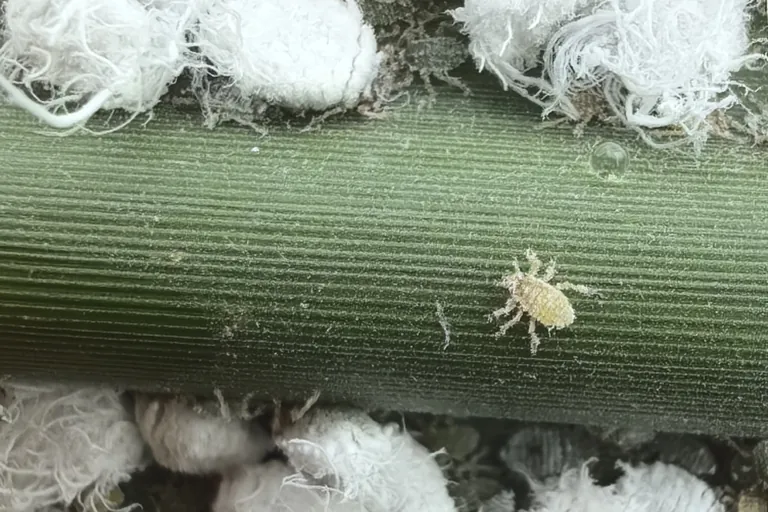
White woolly patches of aphids cover the underside of the leaves, and the leaves below turn black with sooty mold and dry from the tip.
Crops it attacks
Where the damage shows
When to act
In cool, humid months, check the underside of the upper leaves on 20 stools at each of five spots every two weeks. Act on the first colonies by moving predators in or stripping leaves. Field wide sprays rarely reach the colonies and kill the predators that end outbreaks.
What to spray
- Neem (azadirachtin)IRAC UNShopeeLazada
- Horticultural or white oilShopeeLazada
- Metarhizium anisopliaeBIOShopeeLazada
Active ingredients only, never brands. The IRAC group tells how it works: switch to a different group next time, so the pest does not learn to survive it. Spray only when the damage is worth the cost, and only with products registered with the Fertilizer and Pesticide Authority for your crop. Follow the label. The Shopee and Lazada links only show who sells something with that active ingredient, not a recommendation of any seller or product.
How to prevent it
- Plant clean setts with the leaves stripped off, and do not bring planting material from infested farms.
- Feed balanced nitrogen: heavy urea makes soft, lush cane that the aphid favors.
- Strip and burn heavily infested lower leaves early.
- Keep rows wide enough for air to move, and keep the field weed free.
Natural enemies and biological help
- The larva of the moth Dipha aphidivora and the lacewing Micromus igorotus eat whole colonies. Move them from old patches to new ones.
- The tiny wasp Encarsia flavoscutellum parasitizes the aphid. Avoid broad sprays.
- Metarhizium or Beauveria fungus sprays work in humid weather.
Where this comes from
Not sure it is this one?
Many pests look alike. Send a photo to Anee, the smart farm technician in anee.io. She reads it with your crop, its age and the weather, and tells you what it most likely is and what to do first. In Tagalog or English.