

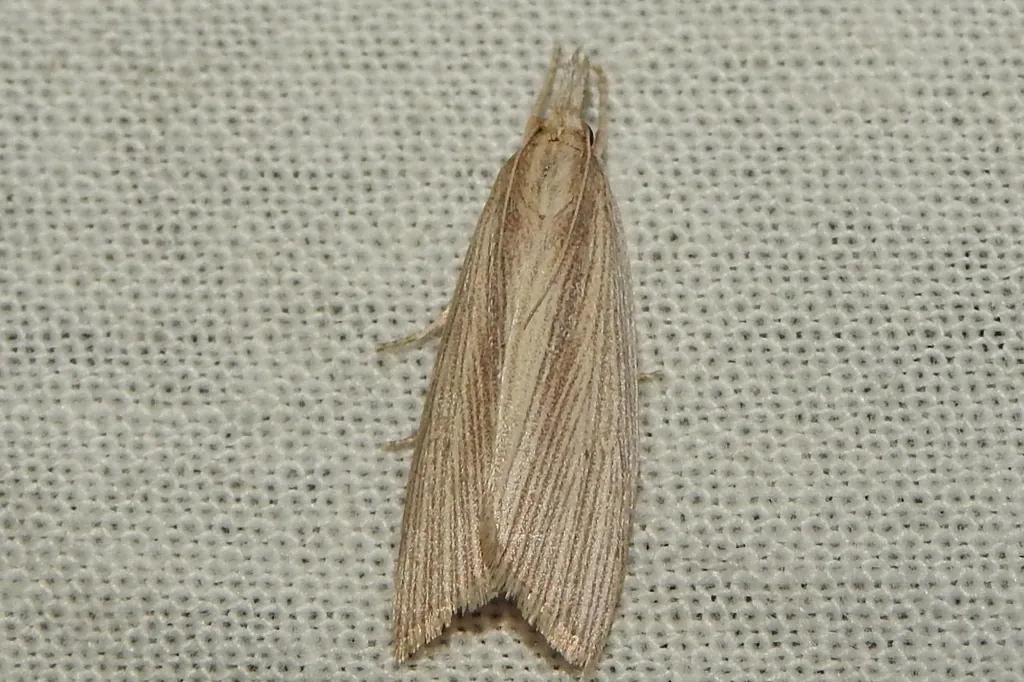
Sugarcane stem borers
Young shoots show dead hearts, and older canes have bore holes, tunnels and frass at the nodes.
Crops it attacks
Where the damage shows
When to act
From one to four months after planting, count dead hearts in 10 meters of row at five spots every two weeks, and at harvest split 20 canes to count bored joints. Act while dead hearts are still appearing in young cane. Once canes are tall, rely on egg wasp releases rather than sprays.
What to spray
- ChlorantraniliproleIRAC 28ShopeeLazada
- TetraniliproleIRAC 28ShopeeLazada
- CarbofuranIRAC 1AShopeeLazada
Active ingredients only, never brands. The IRAC group tells how it works: switch to a different group next time, so the pest does not learn to survive it. Spray only when the damage is worth the cost, and only with products registered with the Fertilizer and Pesticide Authority for your crop. Follow the label. The Shopee and Lazada links only show who sells something with that active ingredient, not a recommendation of any seller or product.
How to prevent it
- Plant healthy setts from fields with few borers, and throw out any sett with a bore hole.
- Hill up young cane and keep the soil moist in the first months: the early shoot borer favors dry, loose soil.
- Cut out dead hearts at ground level, with the larva inside, and destroy them as you find them.
- Strip dry lower leaves, remove late water shoots, and do not overfeed nitrogen.
- Plant tolerant varieties, cut low at harvest, and do not leave mature cane standing late.
Natural enemies and biological help
- Release Trichogramma chilonis egg wasp cards at regular intervals from the first month while the moths are flying.
- A small larval wasp, Cotesia flavipes, plus earwigs and ants kill many larvae and eggs. Avoid broad sprays.
Not sure it is this one?
Many pests look alike. Send a photo to Anee, the smart farm technician in anee.io. She reads it with your crop, its age and the weather, and tells you what it most likely is and what to do first. In Tagalog or English.