

Red striped soft scale (RSSI)
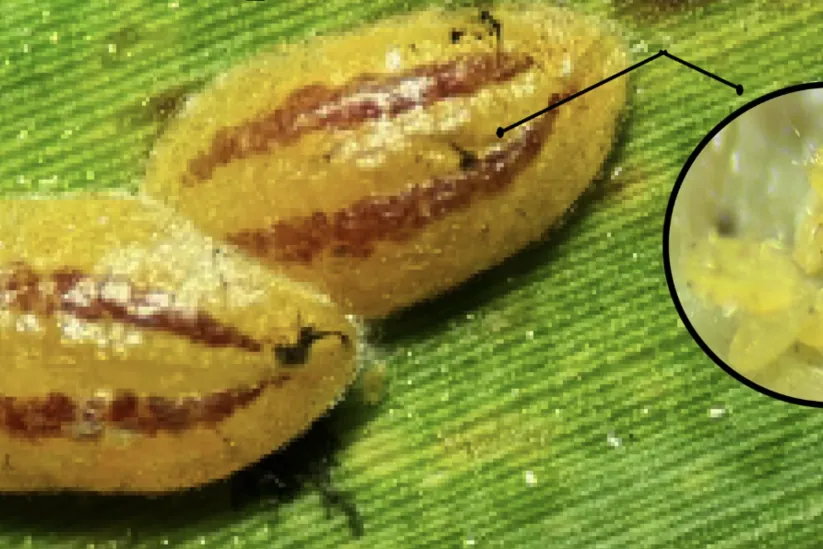
Small flat scales with reddish stripes and white cottony egg sacs crowd the leaves, which turn sticky, black with sooty mold, then dry.
Crops it attacks
Where the damage shows
When to act
Every two weeks, check the lower leaves of 20 stools at each of five spots, starting at the field edges, and look harder in dry months. Strip and burn the first patches at once. A spray pays only where scales crowd many leaves and fresh white egg sacs show that crawlers are coming out.
What to spray
Active ingredients only, never brands. The IRAC group tells how it works: switch to a different group next time, so the pest does not learn to survive it. Spray only when the damage is worth the cost, and only with products registered with the Fertilizer and Pesticide Authority for your crop. Follow the label. The Shopee and Lazada links only show who sells something with that active ingredient, not a recommendation of any seller or product.
How to prevent it
- Take setts only from fields free of the scale, strip their leaves before moving them, and never bring cane points from infested areas.
- Strip and burn infested lower leaves as soon as patches show, then clean knives, carts and boots.
- Do not move trash, cane tops or planting material out of an infested farm.
- Check fields near infested areas every two weeks, above all in dry months.
- Clean old trash out of infested fields before the ratoon regrows.
Natural enemies and biological help
- A small aphelinid wasp already parasitizes this scale in local fields, 30 to 67 percent in surveys. Avoid broad sprays that kill it.
- White, pink and black fungi grow on dying scales in wet weather. Beauveria, Metarhizium or Lecanicillium sprays help in humid months.
- Lady beetles feed on the crawlers.
Not sure it is this one?
Many pests look alike. Send a photo to Anee, the smart farm technician in anee.io. She reads it with your crop, its age and the weather, and tells you what it most likely is and what to do first. In Tagalog or English.