

Pink bollworm
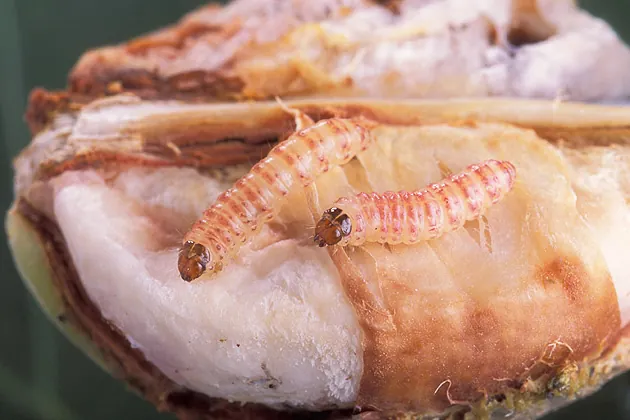
Flowers stay closed like rosettes, and small pink caterpillars inside the green bolls eat the seeds and stain the lint.
Crops it attacks
Where the damage shows
When to act
From flowering, look for rosette flowers and open 20 green bolls a week from several spots. Act when about 1 boll in 10 holds larvae, or when sex pheromone traps catch 8 or more moths a night for three nights in a row.
What to spray
Active ingredients only, never brands. The IRAC group tells how it works: switch to a different group next time, so the pest does not learn to survive it. Spray only when the damage is worth the cost, and only with products registered with the Fertilizer and Pesticide Authority for your crop. Follow the label. The Shopee and Lazada links only show who sells something with that active ingredient, not a recommendation of any seller or product.
How to prevent it
- Keep a cotton free break of a few months between seasons, and pull and destroy all stalks right after the last picking.
- Plant short season varieties at the same time as your neighbors, and never keep a ratoon crop.
- Pick off and destroy rosette flowers and fallen bolls during the season.
- Dry the planting seed well in the sun and store it sealed, since resting larvae hide inside seed.
- Pheromone ropes that confuse the moths cut mating when many farms use them together.
- Clean up okra and wild mallows near the field after harvest. They keep the moth going.
Natural enemies and biological help
- Trichogramma egg wasps, lacewings and small predatory bugs take eggs and young larvae. Spare them by spraying only on counts.
Not sure it is this one?
Many pests look alike. Send a photo to Anee, the smart farm technician in anee.io. She reads it with your crop, its age and the weather, and tells you what it most likely is and what to do first. In Tagalog or English.