

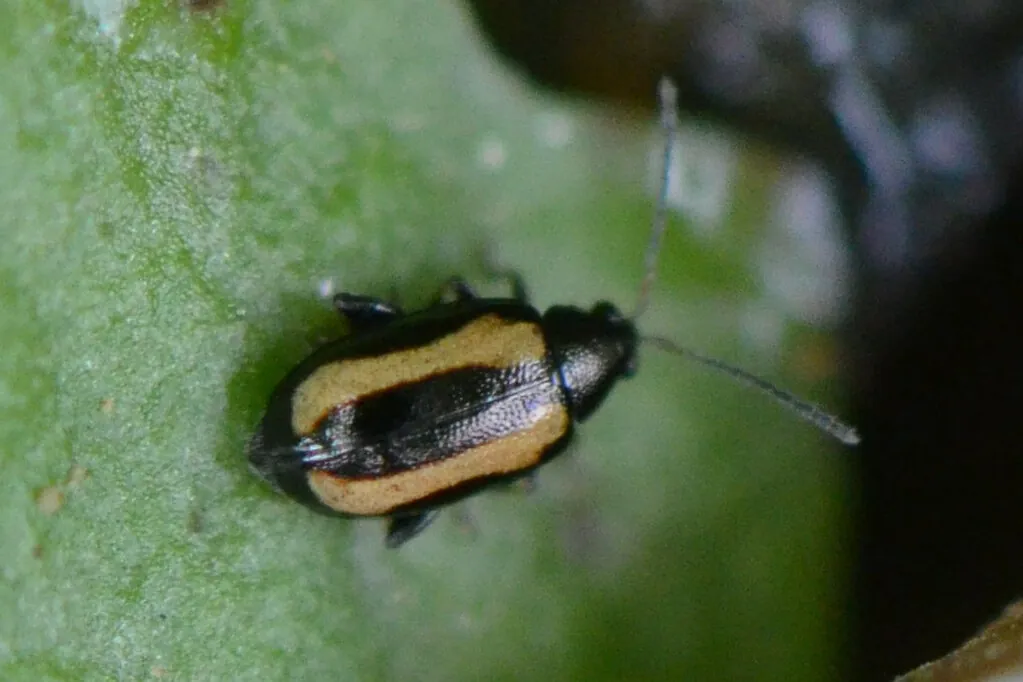
Striped flea beetle
Tiny shiny black beetles with yellow stripes jump away when touched and pepper young leaves with small round holes.
Crops it attacks
Where the damage shows
When to act
Check 20 seedlings at 5 spots twice a week for the first 3 weeks. Act when there is more than 1 beetle per seedling, or when young plants lose about 1 in 10 of their leaf area to shot holes. Bigger plants outgrow the damage.
What to spray
- ImidaclopridIRAC 4AShopeeLazada
- Chlorfenapyr plus spinosadIRAC 13 plus 5ShopeeLazada
- FlometoquinIRAC 34ShopeeLazada
- TolfenpyradIRAC 21AShopeeLazada
Active ingredients only, never brands. The IRAC group tells how it works: switch to a different group next time, so the pest does not learn to survive it. Spray only when the damage is worth the cost, and only with products registered with the Fertilizer and Pesticide Authority for your crop. Follow the label. The Shopee and Lazada links only show who sells something with that active ingredient, not a recommendation of any seller or product.
How to prevent it
- Raise seedlings under fine net. The beetles do most harm to seedlings.
- Rotate with crops outside the cabbage family. The larvae live in the soil and feed on crucifer roots.
- Clear crucifer weeds and old crop remains from the field and its edges.
- Keep the soil moist. Flea beetles thrive in dry spells, and sprinkling from above disturbs them.
- Yellow sticky traps or a border row of mustard or radish draw many adults away from the main crop.
Natural enemies and biological help
- Beauveria bassiana sprays on the plants and soil help against adults and larvae in humid weather.
Where this comes from
Not sure it is this one?
Many pests look alike. Send a photo to Anee, the smart farm technician in anee.io. She reads it with your crop, its age and the weather, and tells you what it most likely is and what to do first. In Tagalog or English.