

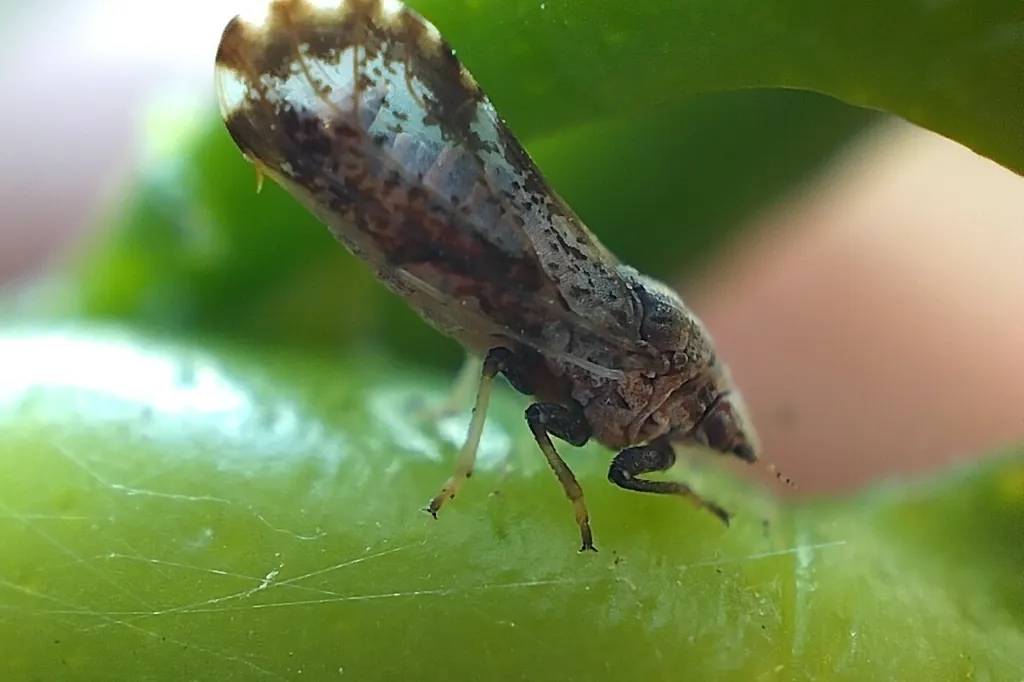
Asian citrus psyllid
Small brown jumping bugs and their nymphs with white waxy threads crowd on new flushes, which curl and twist, and they spread citrus greening.
Crops it attacks
Where the damage shows
When to act
Each week while trees flush, look at 10 new shoots on 10 trees per block for yellow nymphs with white waxy threads, and tap branches over a white board for adults. Near trees with greening, act on any psyllid you find. Elsewhere act when nymphs show on many flushes.
What to spray
Active ingredients only, never brands. The IRAC group tells how it works: switch to a different group next time, so the pest does not learn to survive it. Spray only when the damage is worth the cost, and only with products registered with the Fertilizer and Pesticide Authority for your crop. Follow the label. The Shopee and Lazada links only show who sells something with that active ingredient, not a recommendation of any seller or product.
Resistance: Psyllids in Florida and parts of Asia lost sensitivity to imidacloprid and other neonicotinoids after heavy use. Do not give the same neonicotinoid flush after flush. Alternate with oil.
How to prevent it
- Buy only certified disease free seedlings grown under screen. Greening and psyllids arrive on planting material.
- Kill the psyllids on trees with greening, then cut and destroy those trees, so the insects do not carry it on.
- Take out kamuning (Murraya) hedges near citrus. It is a favorite host of the psyllid.
- Time pruning and fertilizer so the whole orchard flushes at once, and guard that young flush, where the psyllids breed.
- Work as a whole area with the neighbors. Psyllids fly from orchard to orchard.
Natural enemies and biological help
- The tiny wasp Tamarixia radiata parasitizes psyllid nymphs. Avoid broad sprays so it survives.
- Lady beetles, lacewings, hoverfly larvae and spiders eat nymphs on the young flush.
- Beauveria bassiana and Isaria fumosorosea infect psyllids in humid weather.
Not sure it is this one?
Many pests look alike. Send a photo to Anee, the smart farm technician in anee.io. She reads it with your crop, its age and the weather, and tells you what it most likely is and what to do first. In Tagalog or English.