Paano Magtanim ng Pakwan: How to Plant Watermelon the Traditional Way
Paano magtanim ng pakwan? Here is how traditional Filipino farmers usually plant pakwan (watermelon), step by step from getting the field ready to the harvest, with the day of each step and what to change for a higher yield.
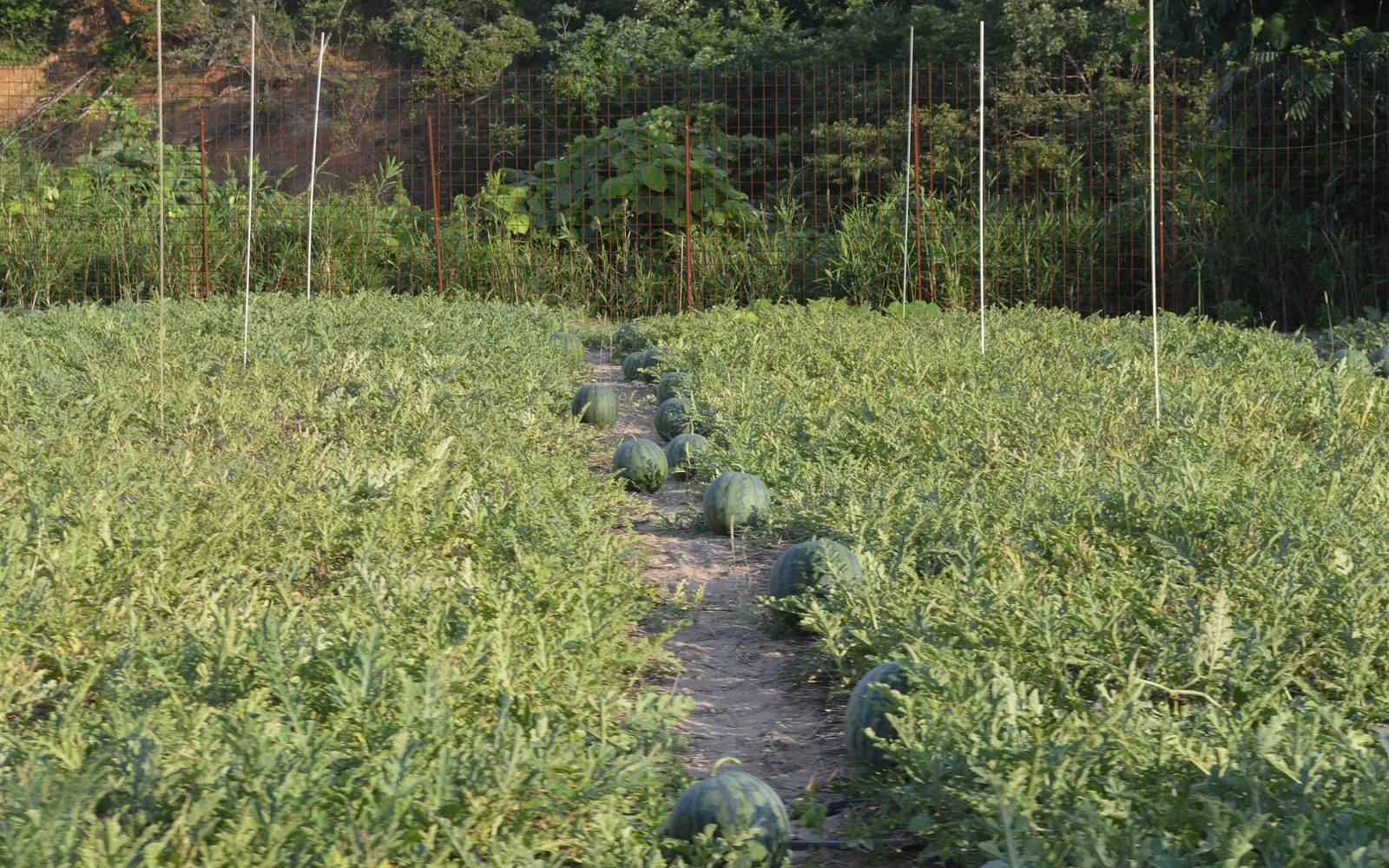
This guide shows how traditional farmers usually plant pakwan. Use it as a starting point. For a higher yield, update it: plant certified seed or clean planting material, test your soil, and follow the right spacing and fertilizer.
How Filipino farmers grow pakwan in the dry months: seed dropped into widely spaced hills in loose, sandy, well drained ground, the vines left to run on the soil, and the fruits cut when they sound dull and their belly turns creamy. It is for small lowland farms, including fields that grow rice in the wet season.
Before you plant, get the field ready with our land preparation guide for cucurbits. Then choose your seed or planting material with the pakwan varieties sold here. If the leaves turn pale later on, the pakwan nutrient deficiency guide helps you find what is missing. For more on the crop, read pagtatanim ng gulay, vegetables in the Philippines.
When to plant pakwan
The main planting is from October to January, when the weather turns warm and dry, often in rice fields after the harvest and in sandy fields near rivers. Some farmers plant as early as August for an off season crop that fetches a better price, and growers with plastic mulch plant in other months too.
What you plant
Seed, sown straight in the field, three or four seeds to a hill. Hybrid and seedless seed is costly, so many growers now sow it in trays and set out the seedlings when they have about three leaves. Farmers choose a field that has not grown watermelon recently.
Paano magtanim ng pakwan, step by step
A fruit ripens about 35 to 40 days after its flower is pollinated, depending on the variety. The crop is ready about 85 days after sowing.
Before planting (Bago magtanim)
21 days before sowing: Plow deep and harrow
Plow at least 20 cm deep and harrow two or three times, a few weeks before planting, so the soil is loose and airy. Watermelon roots need air, so the field must drain well.
7 days before sowing: Work in manure and lay out the hills
Spread well rotted manure, about 10 to 15 tons for a hectare, and mix it into the soil. Mark the hills 1.5 to 2.5 meters apart each way, closer for small fruited kinds and wider for big ones, and dig drainage canals.
Planting day (Pagtatanim)
Sowing day: Fertilize and sow the hills
Place complete fertilizer such as 14 14 14 about 5 to 8 cm deep and a few cm to the side of where the seeds go, about 100 to 150 kg for a hectare. Sow three or four seeds a hill, about 2.5 cm deep, and press loose soil over them.
Care while it grows (Pag aalaga)
Day 5: Guard the seedlings
Young seedlings are easily eaten by beetles and other insects. Walk the field every day or two in the first weeks and deal with pests early.
Day 10: Water lightly
Give light irrigations only. Too much water early keeps the roots shallow. Most farmers water 5 to 6 times in the whole season, more on very sandy soil or in a long dry spell.
Day 14: Thin to the best plant
Once the plants are well rooted, thin to one or two a hill, and when they have 3 to 4 leaves keep only the strongest one.
Day 20: Weed before the vines run
Hoe or hand pull the weeds while the vines are still short, taking care not to cut the shallow roots. Once the vines cover the ground there is little room to weed.
Day 25: Side dress if the leaves pale
If the plants turn yellowish, give a side dressing of nitrogen such as urea in a ring a hand span from the stem, and cover it or water it in.
Day 30: Lay straw where the fruits will sit
Where rice straw or dry grass is at hand, spread it along the vines so the fruits do not lie on bare, wet soil. Turn wandering vine tips back into their lane.
Day 45: Keep only the good fruits
Remove crooked, cracked or stung fruits while they are small so the vine feeds the well shaped ones.
Day 70: Ease off the water
As the fruits near ripeness many farmers cut back on watering, which keeps the fruits from splitting and helps them sweeten.
Harvest (Anihan)
Day 85: Check ripeness and cut
Tap the fruit with a finger: a dull, hollow sound means it is ripe. The best sign is the spot where the fruit touches the ground turning from white to creamy yellow. Many farmers also look for a dried curly tendril beside the fruit stalk. Cut the stalk with a sharp knife.
Day 86: Handle with care
Carry the fruits, do not throw them, and keep them in the shade. Load them on straw or sacks so they do not crack on the way to market.
Watering pakwan, stage by stage
Pakwan is planted in the dry months, often in rice fields after the harvest and in sandy fields by the rivers, so it starts on the moisture left in the soil. Farmers then give only light waterings, about 5 to 6 in the whole season, by furrow or by hand at the hills, and cut back as the fruits ripen. A quick furrow watering from a canal or a shallow well, or water poured at each hill with a can or a hose, is the usual way. Water in the early morning or late afternoon, at the base of the plant rather than over the leaves.
Flowering and fruit set: a long drought now drops flowers and young fruits. Fruit swelling, when the fruits gain most of their size. Never overwater the young plants or let water stand: watermelon roots need more air than most crops.
| Stage | When | How often | How much |
|---|---|---|---|
| Sowing to coming up | Sowing day to day 7 | Sow into moist soil and water the hills right after sowing. If the soil dries before the seedlings are up, sprinkle the hills by can | Moisten each hill lightly, no puddles |
| Young plants | Day 7 to 20 | Water sparingly, only when the soil is dry a few cm down | A light watering at the hill or a quick furrow |
| Vines running | Day 20 to 40 | A light furrow or hill watering when the soil dries, about every two weeks. Water in the side dressing if you give one | Wet the root zone around the hill, then let it drain |
| Flowering and fruit set | Day 40 to 50 | Do not let the field go dry. Water lightly whenever the soil dries | Light waterings at the hills |
| Fruits swelling | Day 50 to 70 | Water when the soil dries, more often on very sandy soil or in a long dry spell | A fuller watering than before, soaking the root zone, never standing water |
| Ripening | Day 70 to 85 | Ease off the water and stop in the last days before cutting | Little or no water |
Without irrigation. Plant from October to January in a field just cleared of rice or in sandy river fields, so the crop starts on the moisture in the soil and grows through the dry months. Plow deep so the roots go down to the moist layer, lay rice straw where the fruits will sit, and plant near a shallow well or creek so you can carry water during fruit set if the soil dries.
In the dry season. Give about 5 to 6 light waterings in the whole season, roughly one every two weeks, more on very sandy soil or in a long dry spell. Water when the leaves stay limp into the late afternoon or the soil a few cm down is dry, and ease off once the fruits near ripeness.
In the rainy season. Watermelon does poorly in heavy rain. For an off season crop, plant only on well drained, sandy ground with drainage canals and plastic mulch. Waterlogged soil rots the roots and the fruits, and heavy rain near ripeness makes fruits split and taste watery.
- Too little water: Leaves wilt and stay limp into the afternoon, turn grayish and curl, flowers and small fruits drop, and the fruits stay small.
- Too much water: Vines yellow and wilt, roots and the stem base rot, fruits rot where they touch the soil, and ripe fruits split or taste bland.
To water better for a higher yield: Plastic or rice straw mulch keeps the soil evenly moist, cuts the watering and keeps the fruits clean and dry. A drip line at each hill gives light, steady water during flowering and fruit swelling, the two stages that set the harvest.
Spacing, water and fertilizer for pakwan
Spacing
Hills 1.5 by 1.5 meters for small fruited kinds up to 2.5 by 2.5 meters for big ones, one plant a hill after thinning. Some sow in a continuous row and thin the plants to 1.5 to 2 meters apart.
Water
Light irrigations, about 5 to 6 in the whole season, given by furrow or by hand at the hills. Too much water early keeps the roots shallow, and a long drought hurts the crop. Many farmers ease off the water as the fruits ripen.
Fertilizer
Well rotted manure, about 10 to 15 tons a hectare, worked in before planting. Complete fertilizer such as 14 14 14, about 100 to 150 kg a hectare, placed beside and below the seed at planting. A side dressing of nitrogen such as urea when the leaves turn pale. To read what a bag really gives, see our guide to fertilizer for this crop.
Care and harvest
Care while it grows
Thinning to one strong plant a hill, early weeding before the vines spread, and care not to cut the shallow roots. Straw is laid under the vines where the fruits will rest, wandering vine tips are turned back, and crooked or damaged young fruits are removed. The field is checked often in the first weeks, when insects attack the seedlings.
When and how to harvest
Fruits ripen about 35 to 40 days after pollination. Farmers thump the fruit with a finger and listen for a dull, hollow sound, check that the ground spot has turned creamy yellow, and look at the tendril near the stalk. The stalk is cut with a sharp knife, and the fruits are carried, kept in the shade and packed on straw for the trip.
Common mistakes when planting pakwan
- Planting watermelon in the same field year after year, so wilt and other soil diseases build up.
- Planting in heavy, poorly drained ground, where the roots lack air and rot.
- Watering heavily in the first weeks, which keeps the roots shallow.
- Cutting fruits too early because of a good price, giving pale, bland fruits that buyers reject.
- Leaving fruits on bare wet soil, so the underside rots or gets eaten by insects.
How to get a higher yield of pakwan
The traditional way gets a crop, but small changes add up. These are the first things to change, one season at a time.
- Have the soil tested and feed by the result. Watermelon grows in a wide pH range, about 5.0 to 6.8.
- Buy good hybrid seed suited to the season and raise it in trays so no costly seed is wasted.
- Use silver or black plastic mulch on raised beds to keep the fruits clean, save water and cut weeding.
- Water by drip or careful furrow irrigation, steady through fruit growth and less near harvest.
- Scout weekly and use integrated pest management for thrips, aphids and fruit fly. Keep bees safe by not spraying open flowers in the morning.
- Rotate with rice, corn or beans, and keep away from fields that just grew melon, squash or other gourds.
anee.io helps with each of these. The NPK Plus calculator checks that your fertilizer plan feeds the yield you want, the pest and disease finders tell you what is on the leaves before you spray, and Anee, the smart farm technician answers your questions in Tagalog or English.
Members open this guide in the How to Plant tool and send every step to the Protocol Builder in one tap, each on its own day. There you can change the seed, the spacing and the fertilizer, then turn it into a cropping calendar for your lots.
Start from the traditional way, make it better, and let anee.io date every task from your own planting day. Free to start.
Start freeQuestions about planting pakwan
Paano magtanim ng pakwan?
When do farmers plant pakwan in the Philippines?
How far apart do you plant pakwan?
How long before pakwan can be harvested?
How often do you water pakwan?
What do you plant to grow pakwan?
See every step of planting it the traditional way
Register for free to read every step with its day, the spacing, water and fertilizer, the common mistakes and what to change for a higher yield. Then send it to your Protocol Builder in one tap.
Free to register. No credit card. Works on any phone.