Paano Magtanim ng Kangkong: How to Plant Water Spinach the Traditional Way
Paano magtanim ng kangkong? Here is how traditional Filipino farmers usually plant kangkong (water spinach), step by step from getting the field ready to the harvest, with the day of each step and what to change for a higher yield.
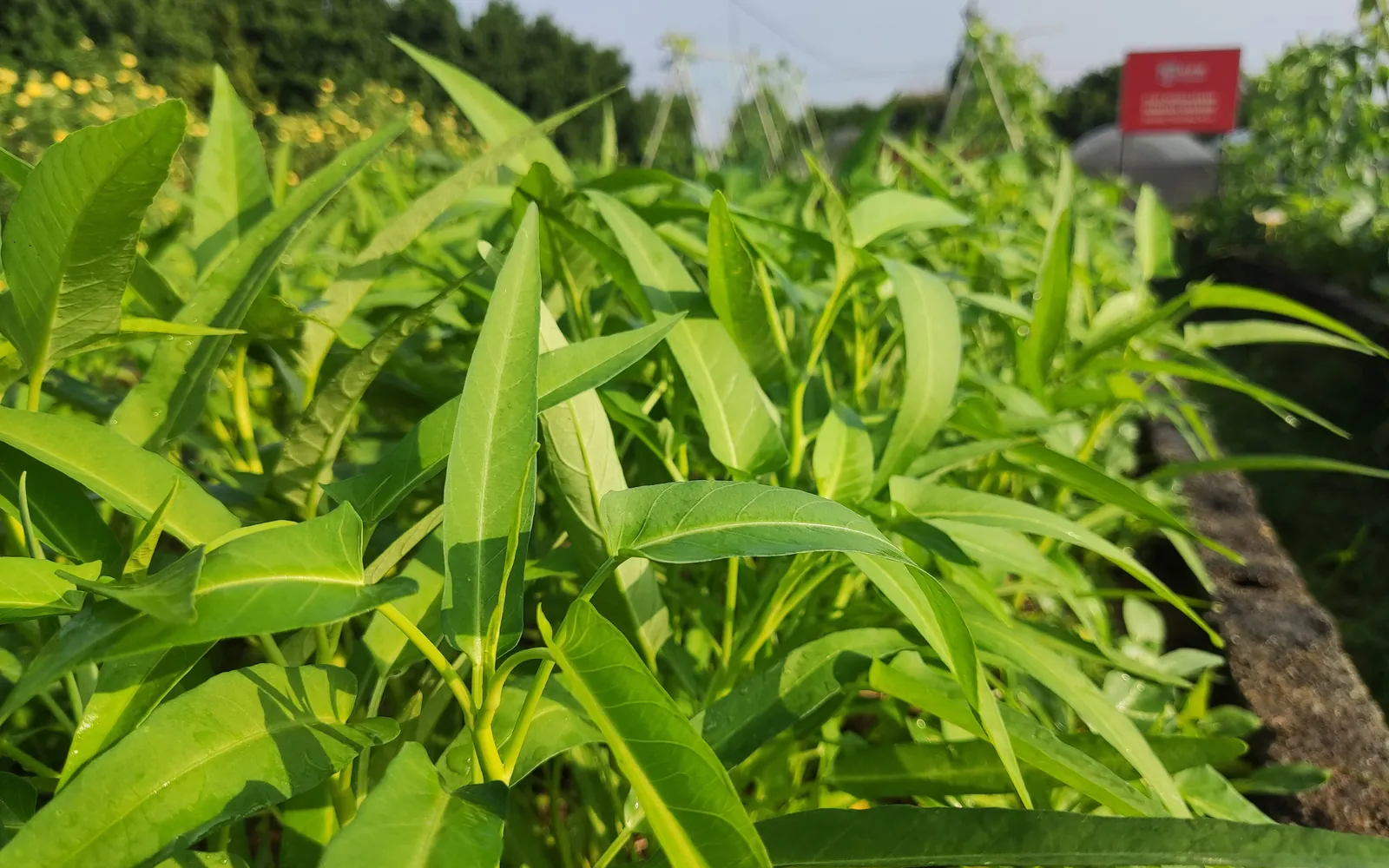
This guide shows how traditional farmers usually plant kangkong. Use it as a starting point. For a higher yield, update it: plant certified seed or clean planting material, test your soil, and follow the right spacing and fertilizer.
How Filipino growers usually raise kangkong, either upland kangkong sown from seed on beds or water kangkong grown from cuttings in wet fields and ditches, and harvested in about a month. For backyard and small market growers who want the usual way and simple steps to harvest more often.
Before you plant, get the field ready with our land preparation guide for vegetables. Then choose your seed or planting material with the kangkong varieties sold here. If the leaves turn pale later on, the kangkong nutrient deficiency guide helps you find what is missing. For more on the crop, read pagtatanim ng gulay, vegetables in the Philippines.
When to plant kangkong
Kangkong grows all year in the lowlands. Upland kangkong from seed is planted in any month with water nearby and does very well in the hot dry months. In the rainy months it needs raised beds. Water kangkong in paddies, pond edges and ditches grows the whole year where the ground stays wet.
What you plant
Upland kangkong is grown from seed, often soaked in water overnight before sowing so it comes up fast and even. Water kangkong is grown from stem cuttings about 20 to 30 cm long taken from healthy plants, sometimes stood in water for a week or so until roots show.
Paano magtanim ng kangkong: upland kangkong from seed
This is the upland kangkong from seed way (Upland kangkong from seed (tanim buto)). The crop is ready about 25 days after sowing.
Upland kangkong from seed: before planting (Bago magtanim)
14 days before sowing: Plow and harrow
Plow and harrow two or three times about a week apart, 15 to 20 cm deep, to get fine, weed free soil.
1 day before sowing: Make beds and put base fertilizer
Form beds about 1 m wide. Mix chicken manure and a little complete fertilizer and urea into the bed and cover with soil. Tip: For a bed 1 m by 20 m a common guide is a sack of chicken manure, 1 kg of 14 14 14 and about 4 kg of urea.
Upland kangkong from seed: the nursery (Punlaan)
1 day before sowing: Soak the seed
Soak the seed in clean water overnight and drain it before sowing.
Upland kangkong from seed: planting day (Pagtatanim)
Sowing day: Sow on the beds
Drop 2 to 3 seeds a hill in four rows on the bed, 20 cm between rows and hills. Growers who sell whole plants often sow thicker in lines and pull them all at harvest.
Upland kangkong from seed: care while it grows (Pag aalaga)
Day 1: Water every day
Water right after sowing and every day after that, in the morning or late afternoon. Kangkong grows fast only when the soil stays moist.
Day 10: Weed and top dress
Pull the weeds while they are small and give a light side dressing of urea or manure tea along the rows.
Day 14: Check the leaves
Look for caterpillars, whiteflies and aphids under the leaves, and for white rust spots. Remove badly hit plants.
Day 25: Bundle and keep wet
Wash or wet the plants, tie them in bundles and keep them shaded and moist so they do not wilt before selling.
Upland kangkong from seed: harvest (Anihan)
Day 25: Pull or cut the shoots
Three to four weeks after sowing, pull whole plants or cut the shoots a few nodes above the soil so they sprout again for a second and third cutting.
Water kangkong from cuttings, step by step
This is the water kangkong from cuttings way (Water kangkong from cuttings (kangkong tubig)). The crop is ready about 30 days after planting.
Water kangkong from cuttings: before planting (Bago magtanim)
7 days before planting: Ready the wet field
Clear weeds from a paddy, a pond edge or a ditch and work the mud soft. Keep only shallow water at first.
Water kangkong from cuttings: the nursery (Punlaan)
1 day before planting: Cut the stems
Cut healthy stems about 20 to 30 cm long, each with several nodes.
- Pick the mother plantsTake cuttings from a clean stand of water kangkong with thick green stems and no yellowing, rot or insect damage.
- Cut pieces with several nodesCut stem pieces about 20 to 30 cm long, each with several nodes, since the roots come out at the nodes. Pull off the leaves on the lower part that will go into the mud.
- Root them in water if you have timeabout a weekSome growers stand the bundles in shallow water in the shade until short white roots show at the nodes, then plant. Rooted cuttings take hold faster in the field.
Water kangkong from cuttings: planting day (Pagtatanim)
Planting day: Push the cuttings into the mud
Press the lower nodes of each cutting into the soft mud, in rows, leaving the tips above the water.
Water kangkong from cuttings: care while it grows (Pag aalaga)
Day 7: Raise the water slowly
Young plants cannot take deep water, so raise the water level little by little as the vines spread.
Day 14: Weed and add manure
Pull floating and creeping weeds and spread manure or a little urea when the water is low.
Day 30: Tie in bundles
Tie the shoots in bundles, keep them wet and shaded and sell them the same day.
Water kangkong from cuttings: harvest (Anihan)
Day 30: First cutting
About a month after planting, cut the young shoots, leaving the base and some nodes to regrow. Cut again each time the new shoots are long and tender. Tip: Feed lightly after each cutting so the regrowth stays thick.
Watering kangkong, stage by stage
Upland kangkong from seed: how to water
Upland kangkong from seed is watered every day, by watering can or hose on small beds and by furrow on bigger farms, from the day it is sown to the day it is pulled. It loves water more than most vegetables, so growers plant it close to a well, a pump or a canal. A watering can or a hose with a sprinkler head on small beds, furrows between the beds on bigger farms. Water in the early morning or late afternoon.
The whole crop: kangkong is cut in three to four weeks and every dry day shows in tougher stems and smaller bundles. The first days after sowing, until the seedlings are up.
| Stage | When | How often | How much |
|---|---|---|---|
| Sowing and coming up | Sowing day to day 5 | Water right after sowing, then every morning or late afternoon | Wet the bed well each time without washing the seed out |
| Fast leafy growth | Day 5 to 22 | Every day in the morning or late afternoon. On hot days on sandy soil water twice if the shoots droop | Enough to keep the whole bed moist. Kangkong takes more water than pechay without harm, as long as the beds drain |
| Harvest | Day 22 to 25 | Keep watering daily. Water the bed the day before pulling | The usual daily watering |
| Regrowth after cutting | Day 25 to 40 | If you cut the shoots instead of pulling, go on watering every day | The usual daily watering, with a light side dressing after each cutting |
Without irrigation. Upland kangkong does well in the rainy months on raised beds with only a little watering on dry days. Without a pump in the dry season, keep a small bed near a well or a rain barrel, or grow water kangkong in a wet corner of the farm instead.
In the dry season. In the hot dry months water every day without fail, in the cool early morning or late afternoon, and twice on very hot days on sandy soil. Kangkong grows very fast in the dry months if water is there.
In the rainy season. Use raised beds in the rainy months so the water drains between rains, and skip watering on wet days. Upland kangkong takes wet soil better than most vegetables, but beds that stay flooded rot the young plants.
- Too little water: Shoots droop and the leaves turn small and pale, the stems grow thin, hard and stringy, and the plants flower early.
- Too much water: Young seedlings rot at the base and yellow, and white rust spots spread faster under the leaves in soggy, crowded beds.
To water better for a higher yield: A drip line or a hose with a fine head gives every hill the same water and saves work in the dry months. Mulch the beds with rice straw or rice hull to keep the soil moist and the leaves clean of splashed mud.
Water kangkong from cuttings: how to water
Water kangkong grows in paddies, pond edges and ditches that stay wet, so it is never watered by hand: the grower controls the water level instead. The cuttings go into soft mud with only shallow water, and the water is raised slowly as the vines spread. The water level in the paddy, pond edge or ditch is raised and lowered with the field's own inlet and outlet or a small pump. No hand watering is needed.
The first week after planting, when the water must stay shallow so the cuttings root and do not drown. Any dry spell that lets the mud dry and crack: the stems turn hard and the stand weakens.
| Stage | When | How often | How much |
|---|---|---|---|
| Readying the wet field | 7 days before planting to planting day | Keep the mud soft and wet while you clear the weeds | Only shallow water or wet mud |
| Planting and rooting | Planting day to day 7 | Keep the mud wet with only shallow water, leaving the tips of the cuttings above the water | Wet mud to a few cm of water |
| Vines spreading | Day 7 to 30 | Raise the water little by little as the vines grow and cover the surface. Lower it for a day or two when you spread manure or urea | Deeper as the plants grow, but always with the shoot tips above the water |
| Cutting again and again | Day 30 to 45 | Keep the field wet the whole time and cut the new shoots each time they are long and tender | The same water level as before the cutting |
Without irrigation. Water kangkong is grown where the ground stays wet on its own, in low paddies, pond edges, ditches and creek sides. Where these dry up in summer, growers move the planting to the wettest spot or switch to upland kangkong on watered beds.
In the dry season. Keep the field flooded with shallow water through the dry months. Let in water from the canal, pond or pump whenever the mud starts to show and crack.
In the rainy season. In the typhoon months keep a way to let water out, because a sudden deep flood can drown young plants or wash the stand away. Older stands handle high water better than new ones.
- Too little water: Mud shows and cracks, stems turn hard and stringy, and the leaves yellow and shrink.
- Too much water: Young cuttings sink under deep water, rot and float loose.
To water better for a higher yield: Keep the water shallow at first and raise it in steps as the vines spread, instead of flooding a new planting. Lower the water for a day or two before feeding, then bring it back, so the manure or urea stays in the field.
Spacing, water and fertilizer for kangkong
Spacing
Upland: four rows on a 1 m bed, 20 cm between rows and hills, 2 to 3 seeds a hill. Some growers use two rows 30 by 30 cm, or sow thick lines for pulling. Water kangkong cuttings are set close together in rows in the mud.
Water
Upland kangkong is watered every day by hand or hose, or by furrow on bigger farms. Water kangkong lives in wet ground with shallow water that is raised slowly as it grows.
Fertilizer
Chicken or pig manure is the usual base, mixed into the beds before sowing, with a little complete fertilizer (14 14 14) and urea. Many growers add a little urea or manure tea after sowing and again after each cutting. To read what a bag really gives, see our guide to fertilizer for this crop.
Care and harvest
Care while it grows
Daily watering, hand weeding in the first two weeks, light feeding after each cutting, and picking off caterpillars. Water kangkong fields are kept free of floating weeds.
When and how to harvest
Ready about three to four weeks after sowing or planting. Upland kangkong is pulled whole or cut so it regrows. Water kangkong is cut again and again for many months. Shoots are bundled, kept wet and shaded, and sold fresh the same day.
Common mistakes when planting kangkong
- Sowing old seed without soaking, so the stand comes up thin and uneven.
- Letting the beds dry out in hot months, which makes the stems tough.
- Cutting too low on plants meant to regrow, leaving no nodes to sprout.
- Flooding young water kangkong too deep before it has rooted.
- Harvesting at midday and leaving bundles in the sun, so they wilt.
How to get a higher yield of kangkong
The traditional way gets a crop, but small changes add up. These are the first things to change, one season at a time.
- Buy fresh seed of a good upland variety, or take cuttings only from healthy, vigorous plants.
- Test the soil and give balanced fertilizer instead of urea alone, which keeps leaves tender and safe to eat.
- Use raised beds and mulch in the rainy months and water every day in the dry months.
- Feed lightly after each cutting and plan cuttings so the bed keeps producing.
- Scout weekly for caterpillars and white rust and remove sick plants early.
- Grow water kangkong only in clean water, away from drains and dirty canals.
anee.io helps with each of these. The NPK Plus calculator checks that your fertilizer plan feeds the yield you want, the pest and disease finders tell you what is on the leaves before you spray, and Anee, the smart farm technician answers your questions in Tagalog or English.
Members open this guide in the How to Plant tool and send every step to the Protocol Builder in one tap, each on its own day. There you can change the seed, the spacing and the fertilizer, then turn it into a cropping calendar for your lots.
Start from the traditional way, make it better, and let anee.io date every task from your own planting day. Free to start.
Start freeQuestions about planting kangkong
Paano magtanim ng kangkong?
When do farmers plant kangkong in the Philippines?
How far apart do you plant kangkong?
How long before kangkong can be harvested?
How often do you water kangkong?
What do you plant to grow kangkong?
See every step of planting it the traditional way
Register for free to read every step with its day, the spacing, water and fertilizer, the common mistakes and what to change for a higher yield. Then send it to your Protocol Builder in one tap.
Free to register. No credit card. Works on any phone.