Paano Magtanim ng Talong: How to Plant Eggplant the Traditional Way
Paano magtanim ng talong? Here is how traditional Filipino farmers usually plant talong (eggplant), step by step from getting the field ready to the harvest, with the day of each step and what to change for a higher yield.
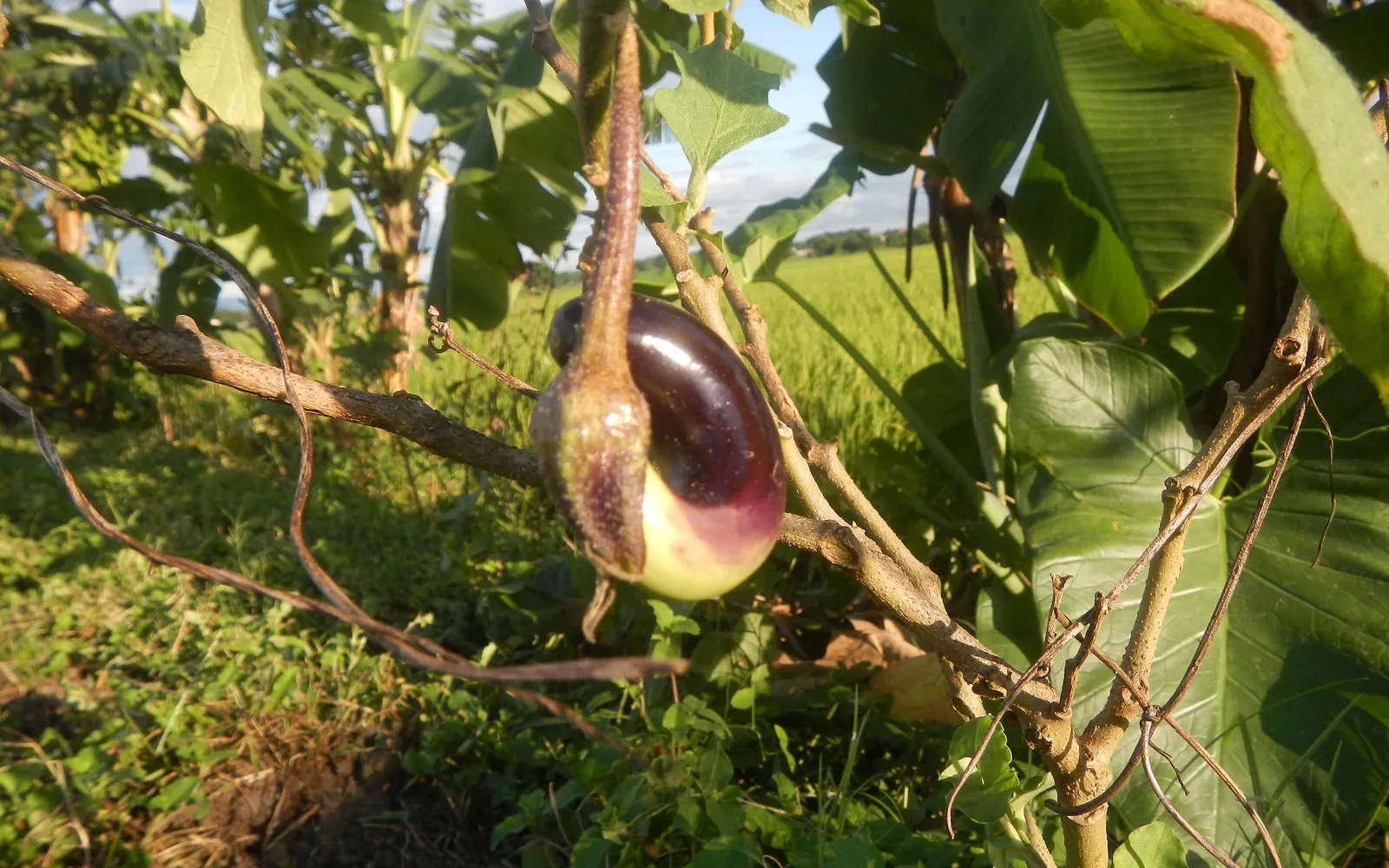
This guide shows how traditional farmers usually plant talong. Use it as a starting point. For a higher yield, update it: plant certified seed or clean planting material, test your soil, and follow the right spacing and fertilizer.
How most Filipino farmers raise talong: seedlings grown in a seedbed for about a month, then set out in furrowed rows and picked twice a week for months. It is written for small farms in the lowlands and uplands that grow talong for the market or for the home.
Before you plant, get the field ready with our land preparation guide for vegetables. Then choose your seed or planting material with the talong varieties sold here. If the leaves turn pale later on, the talong nutrient deficiency guide helps you find what is missing. For more on the crop, read pagtatanim ng gulay, vegetables in the Philippines.
When to plant talong
Talong grows all year in the Philippines wherever there is water for the dry months. In the lowlands the main crop is usually set out after the rice harvest and grown through the dry season, and a wet season crop is planted on raised rows with wider gaps between hills so water drains away.
What you plant
Seed, about 100 to 200 grams for a hectare (one gram holds roughly 250 seeds). Farmers soak the seed in clean water overnight, dry it in the air, and sow it in a seedbed or in trays, then move the seedlings to the field when they are about 30 to 35 days old with 3 to 4 true leaves. Many still make their own seedling cups by rolling strips of banana leaf and pinning them with a broom stick.
Paano magtanim ng talong, step by step
Hybrids give the first fruits about 46 to 50 days after transplanting. Open pollinated kinds take closer to 70 days. Picking then goes on twice a week for about 3 to 5 months. The crop is ready about 50 days after transplanting.
Before planting (Bago magtanim)
21 days before transplanting: Plow and harrow the field
Plow 15 to 20 cm deep two or three times, a week apart, and harrow after each pass to break the clods. This gives old stubble and weeds time to rot.
7 days before transplanting: Harden the seedlings
Take the shade off a little longer each day, starting with the morning sun, and water less often. By the end of the week the seedlings should stand the whole day of sun without wilting badly.
- Start with the morning sunOn the first day of the last week before planting, take the shade off and let the seedlings stand in the sun until about ten in the morning, then cover them again.
- Add more sun each dayabout a weekLeave the cover off a little longer every day, until the seedlings can take the sun the whole day.
- Give less waterAt the same time, water a little less and less often. Seedlings that are not soaked every day grow tougher stems and roots.
- Do not let them wilt hardA little drooping at noon is normal. If the seedlings wilt badly, shade them and water them, then go on more slowly.
3 days before transplanting: Make the rows and work in manure
Open furrows or raised rows 75 to 100 cm apart. Spread dried chicken manure or compost along them, about 5 tons for a hectare, and mix it into the soil.
The nursery (Punlaan)
40 days before transplanting: Clean the seedbed soil
Make beds about 1 meter wide and 15 cm high in a sunny spot near water. Wet the bed, cover it with 3 to 5 cm of rice straw or rice hull and burn it slowly to kill weed seeds and soil diseases. Rake off the ash and wait a few days before sowing.
35 days before transplanting: Soak and sow the seed
Soak the seed overnight and let it dry in the air. Draw shallow lines 5 cm apart with a stick, drop the seed thinly along them and cover with fine soil, or sow one seed a hole about 1 cm deep in a tray filled with equal parts compost, burnt rice hull and garden soil. Water gently. Tip: A slanted roof of cogon, coconut leaves or old sacks over the bed keeps off hard sun and heavy rain.
- Soak overnight, then air dryovernightSoak the seed in clean water overnight so it sprouts sooner. Spread it on a cloth or paper in the shade until it no longer sticks together in the fingers.
- Roast the soil for the traysFor trays or small pots, roast the garden soil over a fire, stirring it, to kill the fungi, insects and weed seed in it. Let it cool, then a day later mix it with equal parts of compost and burnt rice hull.
- Fill the traysFill the cells of a tray with 100 or 104 holes with the mix and press it down lightly. Ready mixed seedling media from farm stores work too.
- Sow one seed a cell, or in linesIn trays, drop one seed in each cell about 1 cm deep, cover with fine soil and sprinkle with water. On a seedbed, water the bed first, mark lines about 5 cm apart with a stick, drop the seed evenly along them and cover with fine soil.
- Water in the morning, not too muchGive water early in the day and only enough that the soil stays damp. Too much water brings damping off and thin, weak seedlings.
- Put up a slanted shadeBuild a simple roof of cogon, talahib, coconut leaves or old plastic sacks over the beds or trays. Make the east posts taller, about 120 cm, and the west posts about half that, around 60 cm, so the morning sun reaches the seedlings but the hot afternoon sun and hard rain do not.
24 days before transplanting: Thin and prick out
A few days after the seedlings come up, or when they show 2 to 3 leaves, pull out the crowded ones. Move the extras into trays, banana leaf cups or another bed, water them and keep them in the shade until they perk up.
- Thin them early3 to 5 days after they come upThree to five days after the seedlings come up, or when they show their first two or three leaves, pull out the crowded ones and keep the strongest. The extras go into cups or trays.
- Make banana leaf cupsCut banana leaves into strips about two inches wide, roll each strip into a small ring and pin the ends with a broom stick (tingting) so it does not open. Stand the cups side by side inside a square wooden frame.
- Fill the cups and move the seedlingsFill the cups with a mix of 2 parts compost, 1 part soil and 1 part burnt rice hull. Poke a hole in each, set one seedling in it, holding it by a leaf, and firm the soil around it.
- Water and shade until they perk upWater the moved seedlings right away and keep them under the shade until they stand up again. At planting time each seedling leaves its cup with a whole ball of soil, so the roots are hardly disturbed.
18 days before transplanting: Give the seedlings a starter drink
Dissolve about 2 tablespoons of 16 20 0 or 14 14 14 in 4 liters of water and pour it over the seedlings. Rinse the leaves with plain water right after so they do not burn. Water only in the morning and only enough to keep the soil damp.
Planting day (Pagtatanim)
Transplanting day: Transplant in the late afternoon
Lift the seedlings with the soil still on their roots and set one in each hill, 50 cm apart in the dry season and up to 75 cm in the wet season. Mix about a tablespoon of 14 14 14 into the bottom of each hole first, then plant and water right away. Tip: Many farmers set two rows on one bed so the leaves shade the hanging fruits from sun scald.
Care while it grows (Pag aalaga)
Day 4: Replant missing hills
Walk the rows 3 to 5 days after planting and replace dead or badly wilted seedlings with spares from the seedbed.
Day 7: First furrow irrigation
In the dry season let water run down the furrows about a week after planting, again near 21 and 30 days, then every 10 days or so. Do not let water stand around the stems.
Day 12: First side dressing
Between 10 and 15 days after planting, give each plant about 15 grams of urea and 15 grams of muriate of potash. Drop it in a shallow groove a hand span from the stem and cover it with soil.
Day 14: Off bar and pull weeds
Plow or hoe the soil away from the rows between 14 and 21 days after planting to kill young weeds. Hand pull the weeds left between the plants.
Day 15: Prune the low shoots
Remove the side shoots that grow below the first fork of the stem, keeping the one branch nearest the fork. Cut off old yellow leaves too, and do it in the morning so the cuts dry fast.
Day 21: Hill up and stake
Plow or hoe the soil back against the rows between 21 and 35 days after planting. Push a bamboo stake beside each plant and tie it loosely so the plant does not fall when it is heavy with fruit.
Day 21: Check for borer and wilt every week
Look for wilted shoot tips and fruits with small holes. Cut them off, gather them in a sack and destroy them away from the field. Pull and burn any plant that wilts suddenly and dies, since that is a soil disease.
Day 30: Second side dressing
About a month after planting, give each plant another 15 grams of urea in a groove beside the row and cover it. Water the furrow afterwards if the soil is dry.
Day 63: Feed again while it bears
While picking goes on, give a small dose of urea or muriate of potash every few weeks, or about a tablespoon of 14 14 14 a plant later in the season. Some farmers dissolve the fertilizer in water and pour a sardine can full at each hill.
Harvest (Anihan)
Day 50: Start picking
Pick the fruits while they are young, glossy and firm, early in the morning, using a knife or shears so the branch is not torn. Pick every ready fruit twice a week to keep the plant bearing.
Day 51: Sort and pack
Set aside damaged and crooked fruits. Pack the good ones in a kaing or crate lined with old paper and dry banana leaves, or in plastic bags with two pin holes for each kilo, and keep them out of the sun.
Day 60: Keep seed from the best plants
Farmers who keep their own seed of an open pollinated variety leave a few fruits on the best plants to ripen fully, then take out the seed, dry it slowly and store it dry and cool.
- Mark the seed fruitsPick out strong, healthy plants that bear well and true to the variety. Tie a string on a few well shaped fruits and leave them on the plant past eating stage.
- Wait for yellow to brownPick the seed fruits only when the skin has turned yellow to brown and the fruit has gone soft. Seed from green fruit is not ripe and sprouts poorly.
- Slice and scrape out the seedPress and roll the fruit to loosen the seed, slice it open lengthwise and scrape the seed out. Wash it in water and throw away the seeds that float with the pulp.
- Air dry, then sun dryat least 3 days in the shade, then up to 5 days in the sunSpread the seed on a screen or put it in a net bag and dry it in the shade, where air moves, for at least three days. Then finish it in the sun for up to five days.
- Store it dry and coolKeep the dry seed in sealed plastic bags or glass jars, labeled with the variety and date, in the coolest, driest corner of the house.
Watering talong, stage by stage
Talong is watered by furrow: water is let into the furrows between the rows, allowed to soak in and never left standing. In the dry season farmers water about a week after transplanting, again near 21 and 30 days, then about every 10 days for as long as they pick. In the wet season only when the soil dries. Furrow irrigation from a canal, a shallow well or a small pump is the usual way. Small growers water each hill with a can or a hose. Plastic mulch with water let into the furrows is common on commercial farms. Water in the morning or late afternoon.
The first week after transplanting, while the seedlings root. Flowering and fruit growth: steady moisture keeps flowers from dropping and fruits from turning small and crooked. All season: water must never stand around the stems, because talong is easily hurt by flooding.
| Stage | When | How often | How much |
|---|---|---|---|
| Seedbed | 35 to 24 days before transplanting | Water the bed before sowing, sprinkle the trays after sowing, then water each morning | Just enough to keep the soil damp, never soggy |
| Growing seedlings | 24 to 7 days before transplanting | Water in the morning only, enough to keep the soil moist. Water and shade the pricked seedlings until they recover | Light sprinkles. Rinse the leaves with plain water right after the starter drink |
| Hardening | 7 days before transplanting to transplanting day | Water less and less often while the shade comes off | Light waterings. Water at once if they wilt hard |
| Field ready for planting | 2 days before transplanting to transplanting day | With plastic mulch, flood the beds two days before transplanting. Without mulch, water the furrows before or at planting | Soak the beds or rows through |
| Transplanting and settling | Transplanting day to day 7 | Water each hill right after transplanting. In hot weather give wilting hills a little water by can until the first furrow irrigation | Soak the soil around each seedling |
| Growth to first flowers | Day 7 to 30 | In the dry season, furrow irrigate at about 7, 21 and 30 days after transplanting | Let water run down the furrows until the rows are wet, then let it soak in with none left standing |
| Flowering and picking | Day 30 to 170 | About every 10 days in the dry season, or whenever the soil dries. Water after each feeding | The plants use about 3.5 to 4 cm of water a week in dry weather, so each watering should soak the rows well |
Without irrigation. Set out the main crop after the rice harvest so it starts on the moisture left in the field, and mulch with rice straw or rice hull to hold it. Without a canal, carry water by can or pail to each hill when the soil dries during flowering, and choose a field near a well or creek.
In the dry season. Furrow irrigate about a week after transplanting, near 21 and 30 days, then about every 10 days until picking ends, more often on sandy soil. Water when the leaves droop by mid morning or the soil a few cm down feels dry.
In the rainy season. Plant on raised rows with wider gaps between hills, about 75 cm, so water drains and air moves. Water only when the soil dries. Soaked soil brings root rot and bacterial wilt, which makes whole plants droop and die.
- Too little water: Leaves droop and roll in the heat, flowers fall before setting, and fruits stay small, crooked or turn dull and bitter.
- Too much water: Lower leaves yellow and drop, plants wilt suddenly while the soil is wet, and the stems turn soft or brown inside at the base.
To water better for a higher yield: Lay a mulch of plastic, rice hull or straw over the beds: the soil stays damp longer, fewer weeds come up and you may water only half as often. A drip line under the mulch gives each plant the steady water talong needs through months of picking with far less water than flooding.
Spacing, water and fertilizer for talong
Spacing
Rows 75 to 100 cm apart and about 50 cm between hills, one seedling a hill. In the wet season many farmers widen the gap between hills to about 75 cm. Two rows are often set on one bed so the leaves shade the fruits.
Water
Furrow irrigation: water is let into the furrows and allowed to soak in, never left standing. In the dry season farmers water about a week after planting, near 21 and 30 days, then every 10 days or so. In the wet season only when the soil dries. In the seedbed, farmers water early in the day and only enough to keep the soil from drying.
Fertilizer
Dried chicken manure or compost before planting, about 5 tons for a hectare, then a tablespoon of 14 14 14 in each hole at planting. Urea and muriate of potash, about 15 grams each a plant, between 10 and 15 days after planting, urea again near 30 days, and small doses of urea, potash or 14 14 14 every few weeks while the plants are bearing. Some pour the fertilizer as a answer, a sardine can full a hill. To read what a bag really gives, see our guide to fertilizer for this crop.
Care and harvest
Care while it grows
Off barring at 14 to 21 days and hilling up at 21 to 35 days, with hand weeding between plants. Low side shoots are pruned off below the first fork, and each plant gets a bamboo stake. Rice straw is spread as mulch where it is at hand. Farmers cut off wilted shoot tips and bored fruits every week, pull and burn plants that wilt and die, and some plant marigold or lemongrass at the edges of the field to keep insects away.
When and how to harvest
The first fruits are ready about 46 to 50 days after transplanting for hybrids and closer to 70 days for open pollinated kinds. Pick young, shiny, firm fruits before the seeds harden, early in the morning, with a knife or shears, twice a week for 3 to 5 months. Sort out damaged fruits and pack the rest in a lined kaing, crate or pin holed plastic bag, out of the sun and rain.
Common mistakes when planting talong
- Watering the seedbed too much, which brings damping off and weak, leggy seedlings.
- Leaving water standing in the furrows, which rots the roots and spreads wilt.
- Planting talong again where talong, tomato or pepper just grew, so wilt builds up in the soil.
- Spraying for fruit and shoot borer on a fixed calendar instead of cutting out the damaged shoots and fruits each week.
- Skipping or delaying the side dressing, which gives weak plants and small fruits.
- Leaving old fruits on the plant, which slows down new flowers and fruits.
How to get a higher yield of talong
The traditional way gets a crop, but small changes add up. These are the first things to change, one season at a time.
- Have the soil tested and feed by the result. Lime acid soil so it sits near pH 5.5 to 6.8.
- Buy good seed of a variety that resists bacterial wilt, or use seedlings grafted onto a wilt resistant rootstock.
- Raise seedlings in trays with a clean mix so every seedling has its own root ball and fewer die after transplanting.
- Use silver plastic mulch or thick rice straw mulch to cut weeding and save water.
- Fight fruit and shoot borer with weekly removal of damaged parts, sex pheromone traps and spraying only when the count is high.
- Rotate with rice, corn or a bean crop, not with tomato, pepper or potato.
anee.io helps with each of these. The NPK Plus calculator checks that your fertilizer plan feeds the yield you want, the pest and disease finders tell you what is on the leaves before you spray, and Anee, the smart farm technician answers your questions in Tagalog or English.
Members open this guide in the How to Plant tool and send every step to the Protocol Builder in one tap, each on its own day. There you can change the seed, the spacing and the fertilizer, then turn it into a cropping calendar for your lots.
Start from the traditional way, make it better, and let anee.io date every task from your own planting day. Free to start.
Start freeQuestions about planting talong
Paano magtanim ng talong?
When do farmers plant talong in the Philippines?
How far apart do you plant talong?
How long before talong can be harvested?
How often do you water talong?
What do you plant to grow talong?
See every step of planting it the traditional way
Register for free to read every step with its day, the spacing, water and fertilizer, the common mistakes and what to change for a higher yield. Then send it to your Protocol Builder in one tap.
Free to register. No credit card. Works on any phone.