Paano Magtanim ng Sayote: How to Plant Chayote the Traditional Way
Paano magtanim ng sayote? Here is how traditional Filipino farmers usually plant sayote (chayote), step by step from getting the field ready to the harvest, with the day of each step and what to change for a higher yield.
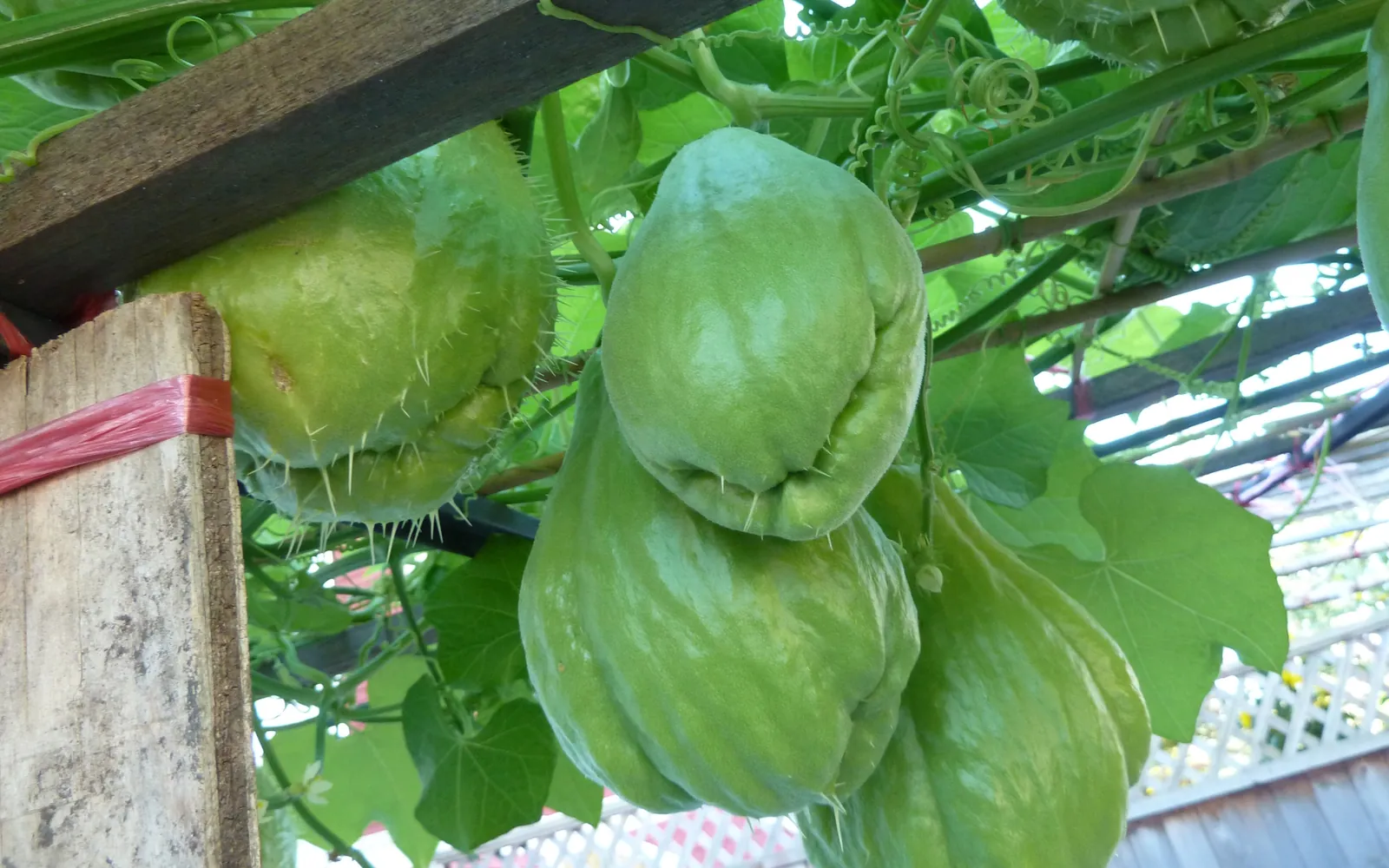
This guide shows how traditional farmers usually plant sayote. Use it as a starting point. For a higher yield, update it: plant certified seed or clean planting material, test your soil, and follow the right spacing and fertilizer.
How upland Filipino farmers grow sayote: a whole mature fruit is sprouted, planted in a wide hill, and the vine is led onto a high overhead trellis that bears every week for over a year. It is for farms in cool mountain areas, where most of the country's sayote comes from, and for growers in other cool spots.
Before you plant, get the field ready with our land preparation guide for cucurbits. Then choose your seed or planting material with the sayote nutrient deficiency guide. For more on the crop, read pagtatanim ng gulay, vegetables in the Philippines.
When to plant sayote
Sayote likes cool weather and grows best in the mountains, about 1,000 to 1,500 meters up, as in Benguet. Farmers there plant mostly from October to January, and an established vine keeps bearing through the year.
What you plant
The planting material is the whole fruit. Farmers choose big, fully mature fruits from a healthy, heavy bearing vine and let them sprout in a shaded nursery or bed until the shoot is about 30 cm tall, then set them in the field. Some plant a fruit that has just sprouted straight into the hill, laid on its side with about a third left above the soil.
Paano magtanim ng sayote, step by step
The first fruits come about 120 days after planting. A fruit is ready about 25 days after its flower is pollinated, and Benguet farmers usually replace a vine after about 15 months. The crop is ready about 120 days after planting.
Before planting (Bago magtanim)
14 days before planting: Clear and dig the hills
Clear the area and dig holes about 30 cm deep and 30 cm wide, 3 to 5 meters apart. Mix compost well with the topsoil and put it back in each hole.
The nursery (Punlaan)
30 days before planting: Sprout the seed fruits
Pick big, fully mature fruits from your best vine. Keep them in a shaded, airy place or set them half buried in a nursery bed until the shoot grows about 30 cm tall.
- Choose the seed fruitsPick big, fully mature fruits from your best, heaviest bearing vine. Leave out fruits from vines with mottled or curled leaves, since that virus passes on through the fruit.
- Keep them shaded and dampSet the fruits in a shaded place that stays cool and a little moist. In time the broad end splits and a shoot pushes out.
- Or half bury them in a nursery bedMany farmers lay the fruits on their side in a shaded nursery bed, the broad end down and about a third of the fruit left above the soil, and water the bed lightly when it dries.
- Grow the shoot to about 30 cmuntil the shoot is about 30 cmLet the shoot grow until it is about 30 cm tall, then carry the whole fruit with its shoot and roots to the field. Do not break the shoot off the fruit, because the young plant lives on the fruit at first.
- Planting a freshly sprouted fruitA fruit that has only just sprouted can go straight into the hill. Set it slanting, broad end down, and leave about a third of it above the soil.
Planting day (Pagtatanim)
Planting day: Plant the sprouted fruit
Set one to three sprouted fruits in each hole, with the shoot up, cover the fruit with soil and water it. On slopes, plant along the contour so the hills hold the soil.
Care while it grows (Pag aalaga)
Day 7: Water until it takes hold
Water the new plants when the soil dries, until the roots take hold and the shoots grow strongly.
Day 14: Keep a clean circle
Keep a circle about 2 meters wide around each hill free of weeds. Once the vines spread over the trellis, weeds give less trouble.
Day 20: Stake and build the overhead trellis
When the shoot is about 30 cm tall, give it a stake to climb. Build a flat trellis of bamboo or wooden posts with galvanized wire stretched across about 6 feet above the ground, strong enough for heavy fruits.
Day 50: First side dressing
Seven to eight weeks after planting, put compost or dried chicken manure and complete fertilizer such as 14 14 14 around the base of each hill and cover it lightly.
Day 150: Feed before and after the rains
Side dress each hill again with manure and complete fertilizer before the rainy season starts and once more after it ends.
Day 450: Renew old vines
When a vine has borne for about 15 months and the fruits get small, pull it out and plant a new sprouted fruit in a freshly manured hill.
Harvest (Anihan)
Day 120: Start picking every week
Pick the fruits while still young and tender, about 25 days after the flower opens, before they turn hard and fibrous. Most farmers pick once a week, or twice a week on big plantings.
Day 121: Keep the harvest in the shade
Gather the fruits in baskets or sacks and keep them in the shade until they go to market.
Watering sayote, stage by stage
Sayote in the mountains lives mostly on rain and the morning mist. Growers water the new plants at planting and during dry spells until they take hold, and after that the vines are rarely watered except by hose from a spring in a long dry season. Mostly rain and mist. Growers with a spring run hoses to the hills, and small growers water each hill with a can. Water in the morning.
The first weeks after planting, until the roots take hold. Long dry spells while the vine flowers and bears, when the fruits get fewer and smaller.
| Stage | When | How often | How much |
|---|---|---|---|
| Sprouting the seed fruits | 30 days before planting to planting day | No watering. Keep the fruits in a cool, shaded, airy place until the shoots come | No water |
| Planting and taking hold | Planting day to day 30 | Water the hill right after planting, then whenever the soil dries until the shoots grow strongly | Moisten the hill around the fruit, never leave it soaked |
| Vines climbing the trellis | Day 30 to 120 | Rain and mist are usually enough. Water by hose or can in a long dry spell | A deep watering at the base of each hill |
| Bearing vines | Day 120 to 450 | Mostly rain. In the dry months, water the hills from a spring or tank where you can | A deep watering at each hill, then let it drain |
Without irrigation. Plant from October to January in the mountains so the young vines root on the last rains and the cool mist. On slopes plant along the contour so each hill catches water, keep a clean, mulched circle around each hill, and feed before and after the rainy season.
In the dry season. Water the young plants whenever the soil dries until they grow strongly. Bearing vines in a long dry season do better with a deep watering at the hill every so often from a spring, a hose or a tank. Water when the leaves hang limp in the morning.
In the rainy season. Plant on high, sloping or mounded ground that drains, never in low spots. Soaked hills rot the planted fruit and the roots, and long wet spells bring fruit rot and leaf disease under a crowded trellis.
- Too little water: Leaves wilt and stay limp in the morning, the vine tips stop running, flowers drop and the fruits stay small.
- Too much water: The planted fruit or the base of the vine rots, the leaves yellow, and the fruits rot on the trellis.
To water better for a higher yield: Mulch the circle around each hill with grass or straw to hold moisture through the dry months. Where a spring or tank is near, a deep watering every so often in the dry months keeps the vines bearing.
Spacing, water and fertilizer for sayote
Spacing
Hills about 3 to 5 meters apart each way, with one to three sprouted fruits a hill. The vines are trained onto a continuous overhead trellis that covers the whole area.
Water
Sayote is mostly grown on rain in the mountains. The new plants are watered at planting and during dry spells until they take hold. After that the vines live on rain and morning dew.
Fertilizer
Compost mixed into each hole at planting. Complete fertilizer such as 14 14 14 with compost or dried chicken manure seven to eight weeks after planting, then again before and after each rainy season. To read what a bag really gives, see our guide to fertilizer for this crop.
Care and harvest
Care while it grows
A strong overhead trellis of posts and galvanized wire about 6 feet high, with a stake to lead each young vine up. A weed free circle about 2 meters wide around each hill. Vines grown for fruit are not pruned, so they spread and catch sun and dew. Vines grown for tops are cut back often to give young shoots. Farmers see few serious pests.
When and how to harvest
The first fruits come about 120 days after planting. Fruits are picked young and tender, about 25 days after the flower opens, once or twice a week all year, and kept in the shade in baskets or sacks. A vine is replaced after about 15 months.
Common mistakes when planting sayote
- Planting sayote in the hot lowlands, where it grows poorly and sets few fruits.
- Using small or half ripe fruits as planting material, which give weak vines.
- Building a low or weak trellis that sags or breaks under the weight of the fruits.
- Picking late, when the fruits have turned hard and fibrous.
- Letting weeds crowd the hills before the vines cover the trellis.
How to get a higher yield of sayote
The traditional way gets a crop, but small changes add up. These are the first things to change, one season at a time.
- Have the soil tested. Sayote does best in loose, fertile soil near pH 5.5 to 6.5.
- Keep seed fruits only from your heaviest bearing, healthiest vines.
- Feed by the soil test in small doses through the year, since the vine bears without a break.
- On slopes, plant along the contour and mulch the hills to stop soil from washing away.
- Plan your plantings and buyers ahead, since prices crash when every farm harvests at once.
- Renew vines on a schedule so the fruits stay big and the yield stays high.
anee.io helps with each of these. The NPK Plus calculator checks that your fertilizer plan feeds the yield you want, the pest and disease finders tell you what is on the leaves before you spray, and Anee, the smart farm technician answers your questions in Tagalog or English.
Members open this guide in the How to Plant tool and send every step to the Protocol Builder in one tap, each on its own day. There you can change the seed, the spacing and the fertilizer, then turn it into a cropping calendar for your lots.
Start from the traditional way, make it better, and let anee.io date every task from your own planting day. Free to start.
Start freeQuestions about planting sayote
Paano magtanim ng sayote?
When do farmers plant sayote in the Philippines?
How far apart do you plant sayote?
How long before sayote can be harvested?
How often do you water sayote?
What do you plant to grow sayote?
See every step of planting it the traditional way
Register for free to read every step with its day, the spacing, water and fertilizer, the common mistakes and what to change for a higher yield. Then send it to your Protocol Builder in one tap.
Free to register. No credit card. Works on any phone.