How Do I Plan a Staggered Planting Schedule for Lots Planted on Different Days?
To plan a season for lots planted on different days, give each lot its own day zero and count every task from it. A staggered planting schedule then spreads labor, water, cash and harvest across the season. For rice, keep the spread tight: plant within 14 days of your area's schedule, because a long spread feeds pests. In anee.io, a farm app built for Filipino farmers, each lot counts from its own day zero on one board.
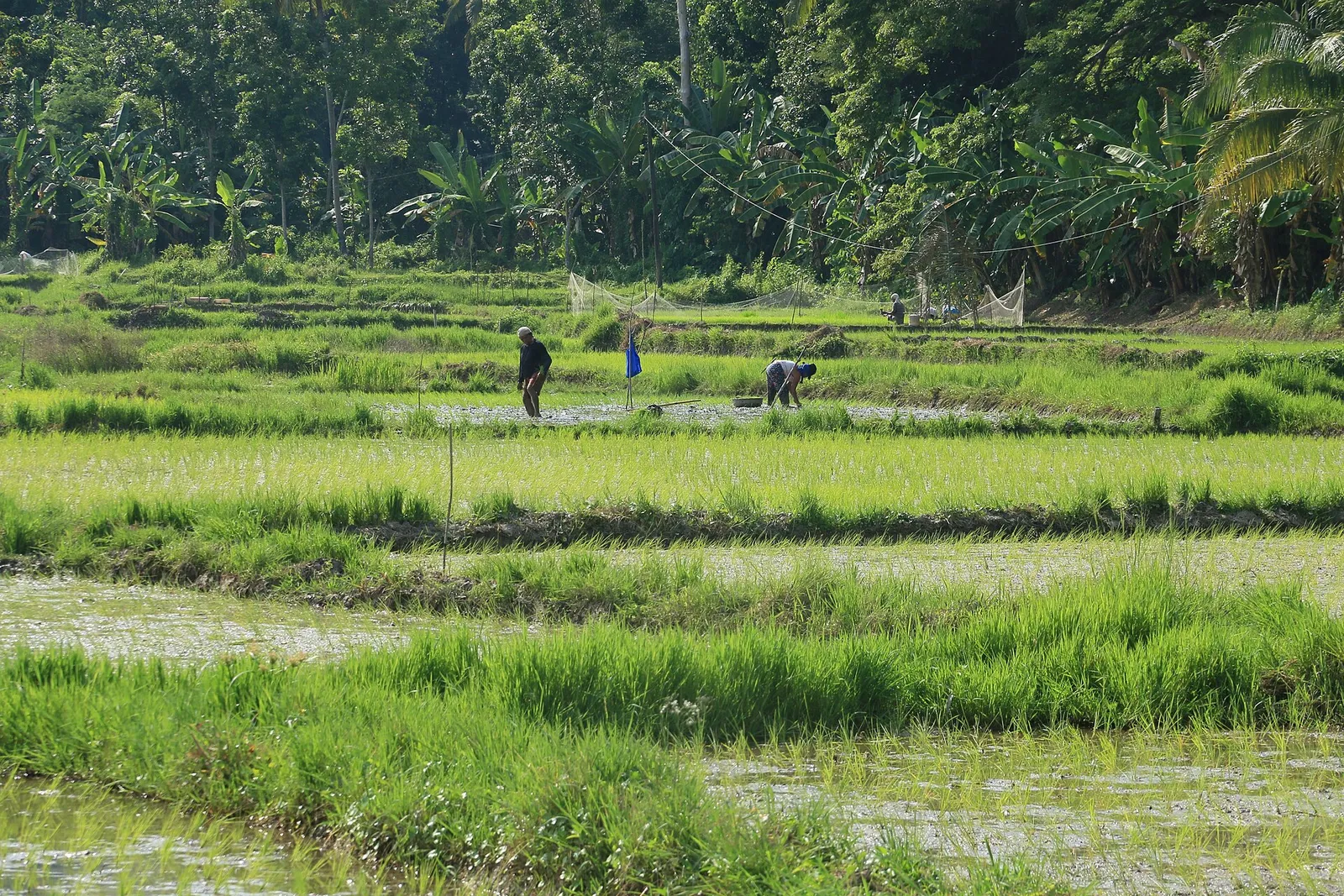
Few farms plant every field on the same day. You may have one hand tractor, a short crew, water that reaches the lower paddies first, or cash that comes in waves. Vegetable growers also stagger on purpose, so the buyer gets produce every week instead of all at once.
Staggering helps the work, but it can hurt the crop if the spread is too wide. So the plan has two jobs: keep each lot on its own clock, and keep the clocks close enough together.
Key points
- Give each lot its own day zero, then count every task from it: DAT, DAS or DAP.
- For rice, plant within 14 days before or after your area's schedule, after a 30 day rest of the field.
- For vegetables, stagger so a new planting starts bearing as the old one slows.
- Merge all lots into one calendar to spot the days when two lots need workers, cash or water at once.
When does a staggered planting schedule make sense?
| Situation | What to do | Why |
|---|---|---|
| Rice lots under one irrigation turnout | Stagger only within 14 days | So pests do not carry over |
| Rice in a rainfed community | Plant together with neighbors | Synchronous planting cuts pests and diseases |
| Short crew or one hand tractor | Small gaps of a few days | Land preparation and transplanting get done on time |
| Vegetables sold every week | Stagger plantings on purpose | The buyer gets a steady supply |
| Vine crops like ampalaya | Start the next planting before picking slows | Picking runs 2 to 3 months |
When planting in one area stretches over many weeks, insects and diseases move from early fields to late ones. In most regions, planting spans more than 100 days, and that can raise pest and disease problems. So plant within a month of your community's planting calendar.
How do you plan a staggered planting schedule, step by step?
List your lots
Write each lot's size, crop and variety. Then decide the order of planting, for example the lot nearest the canal first.
Set the gaps
For rice, keep every lot inside your area's 14 day window. For vegetables, set the gap from the crop's harvest window and your buyer's needs.
Give each lot its own day zero
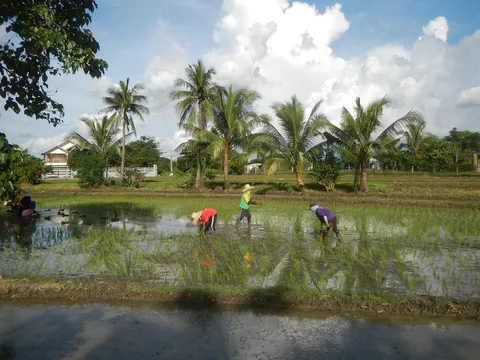
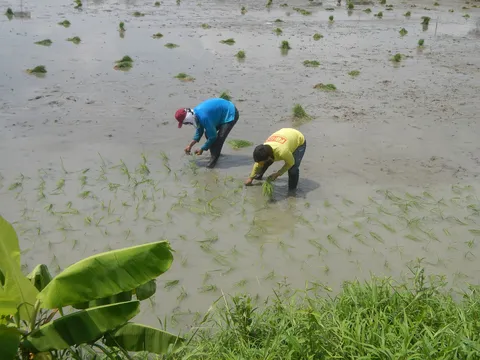
Use the transplanting or sowing date of that lot. For hand transplanted rice, sow each lot's seedbed 18 to 21 days before its day zero.
Copy the same task list to every lot
Use one protocol, with each task on its day count. Each lot then gets the same tasks on its own dates.
Merge and look for clashes
Put all lots on one calendar. Mark the days when two lots need the same workers, the same water or a lot of cash.
Track each lot separately
Watch each lot's growth stage on its own. A lot that falls behind needs its own adjustment, not the whole farm's.
Sample staggered planting schedule for three rice lots
Here are three lots of a 111 to 120 day variety, hand transplanted 11 days apart for the dry season. That keeps them inside the 14 day window. The timings follow the usual rice calendar and the Abonong Swak fertilizer plan.
| Task | Lot A | Lot B | Lot C |
|---|---|---|---|
| Sow seedbed, 21 days before | Nov 10 | Nov 17 | Nov 21 |
| Transplant, DAT 0 | Dec 1 | Dec 8 | Dec 12 |
| Replant missing hills, by DAT 7 | Dec 8 | Dec 15 | Dec 19 |
| Basal fertilizer, by DAT 14 | Dec 15 | Dec 22 | Dec 26 |
| First urea, DAT 22 to 26 | Dec 23 to 27 | Dec 30 to Jan 3 | Jan 3 to 7 |
| Urea and potash, DAT 32 to 36 | Jan 2 to 6 | Jan 9 to 13 | Jan 13 to 17 |
| Weed control window ends, DAT 45 | Jan 15 | Jan 22 | Jan 26 |
Now look across the rows. In the first week of January, Lot A needs its second top dressing while Lot C needs its first. That week needs more urea, more cash and more hands than any other.
Spot weeks like this early, and buy the bags before the price moves. Our guide to fertilizer for rice explains each dose, and how to make a cropping calendar walks through one lot in full.
Staggering vegetables for a steady harvest
For gulay, the goal is the opposite of rice: a harvest that never stops. Ampalaya gives its first fruits 45 to 75 days from planting. Then picking runs 2 to 3 times a week for 2 to 3 months. So start the next planting early enough that it bears as the first one slows. For more crops, see pagtatanim ng gulay. Our guide to multiple cropping covers raising two or more crops on one piece of land.
Add each lot with its own planting date, and anee.io dates every task for it on one board.
See farm lotsHow does anee.io handle lots planted on different days?
Each lot in anee.io keeps its own crop, variety and day zero. Write the plan once in the Protocol Builder, then port it into a new season and give each lot its start date. Every task lands on that lot's own count, so DAT 21 is right for all three lots. The builder can also slide extra work to the next free day, so no worker gets two tasks on one day.
During the season, the board shows each lot's growth stage on any date. Count the days measures the gap between two dates with each lot's DAT at both ends. Cash to prepare adds up wages and materials for one day or a whole stretch, so the money is ready before the busy week. One honest limit: Libre and Libre plus Anee allow one lot per season, Solo Farmer up to five, and Farm Owner has no limit.