What Is a Cropping Calendar? How to Make a Cropping Calendar for Your Farm
A cropping calendar is your season written as dated tasks, from land preparation to harvest, counted from each lot's planting day. Here is how to make a cropping calendar: start with your variety's days to maturity and your transplanting or sowing date. Then place every task on its day after transplanting (DAT) or sowing (DAS), using trusted timings for palay. With anee.io, a farm app built for Filipino farmers, you build this calendar once and it dates each lot on its own.
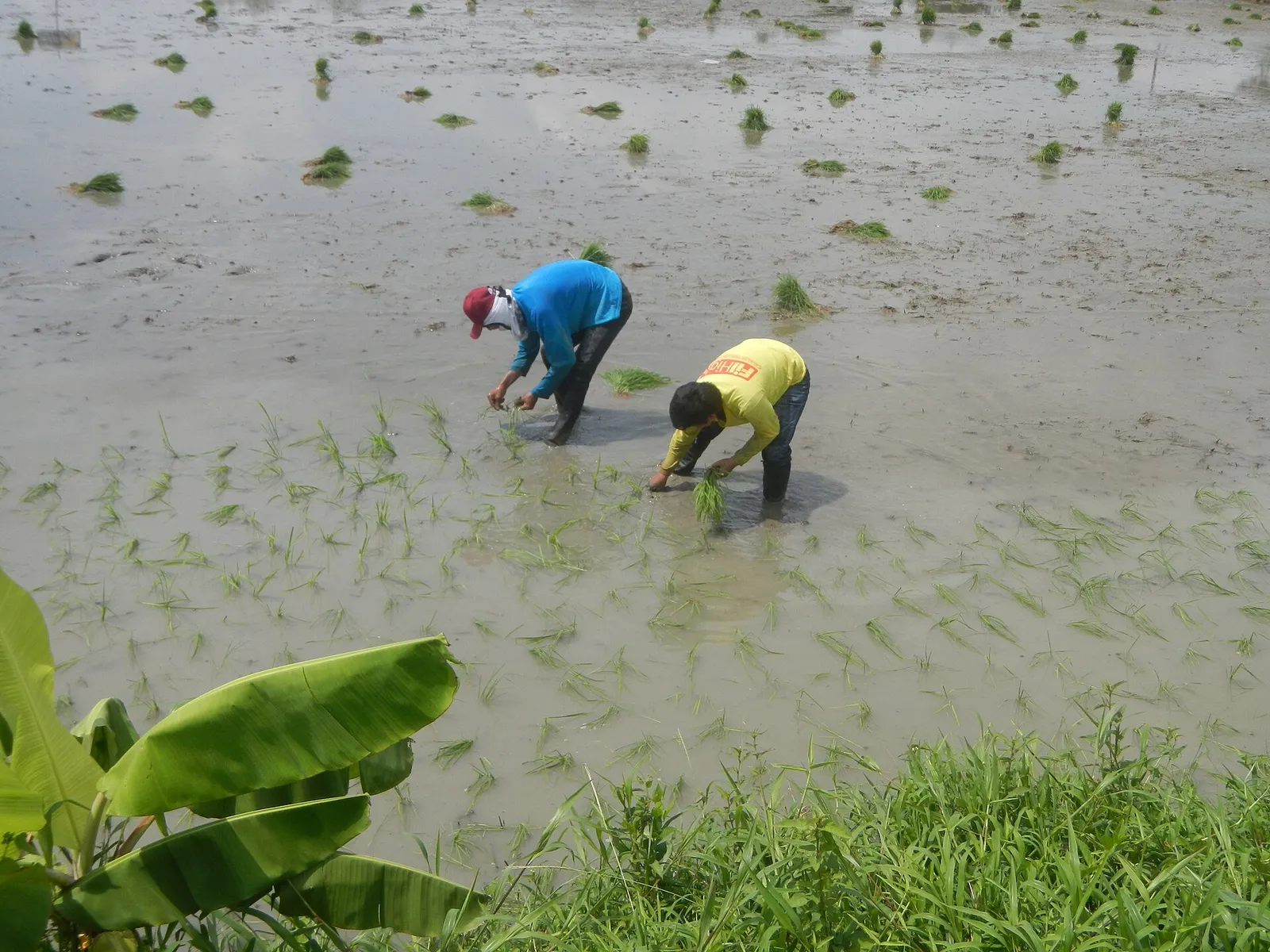
A calendar shows trouble before it arrives. You see the week when three tasks pile up, the day you need cash for urea, and whether harvest lands in a typhoon month. It also helps you plant with your neighbors and your irrigation release, a key check for a good crop.
Key points
- Count every task from day zero, the transplanting or sowing date, not from the month.
- Use trusted timings for each crop, from palay to vegetables.
- Mark the danger months and the irrigation schedule first, then fit the crop between them.
- Add the inputs, workers and cash to each task, so the calendar is also a budget.
What goes into a cropping calendar?
- Crop, variety and days to maturity, from the seed bag or the variety list.
- Day zero for each lot: the transplanting or sowing date.
- Tasks by stage: land preparation, crop establishment, fertilizer, water, pest checks, harvest and drying.
- Inputs and rates for each task, so you know what to buy and when.
- Labor: who does each task and how many days it takes.
- Weather marks: your typhoon, flood or dry months.
- Money: what each week of work will cost.
How to make a cropping calendar, step by step
Pick the crop and variety
Write down its days to maturity. For rice, this decides when each top dressing goes on, because each maturity group has its own dates.
Set day zero for each lot
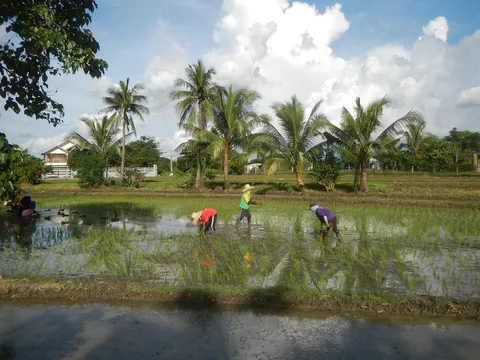
Choose the transplanting or sowing date. For hand transplanted rice, sow the seedbed 18 to 21 days earlier, since seedlings should be that age at transplanting.
List the tasks by stage
For palay, follow these stages: land preparation, crop establishment, nutrients, water, pests, harvest and postharvest.
Place each task on its day
Turn each rule into a day count, like basal fertilizer at 0 to 14 DAT. Then convert the count into a real date for each lot.
Check the dates against the weather
The rainy season runs from June to November. If harvest falls in your worst typhoon weeks, move day zero or choose an earlier variety.
Add inputs, labor and cash
Write the bags, liters and workers beside each task. Add them up by week to see when you need money.
Keep it alive
Rain and late tractors move things. Update the calendar as you go, and keep notes for next season.
Sample cropping calendar for transplanted palay
This sample follows the usual palay timings and the Abonong Swak fertilizer plan for a 5 to 6 ton target. It assumes an inbred variety of 111 to 120 days, transplanted by hand.
| When | Task |
|---|---|
| After the last harvest | Let the field rest at least 30 days |
| 18 to 21 days before DAT 0 | Sow the seedbed: 400 square meters and 20 to 40 kg of seed per hectare |
| Before DAT 0 | Final leveling, with no spot under more than 5 cm of water |
| DAT 0 | Transplant 2 to 3 seedlings per hill, 20 by 20 cm in the wet season or 20 by 15 cm in the dry season |
| 0 to 14 DAT | Basal: 2 bags of 14 14 14 or 16 20 0 per hectare |
| Up to 7 DAT | Replant missing hills with seedlings from the same seedbed |
| Up to 15 DAT | Keep the field saturated, a step against golden apple snails |
| From 14 DAT, every 7 days | Read the leaf color chart until early flowering |
| 22 to 26 DAT | First top dressing: 1 bag of urea |
| 32 to 36 DAT | Second top dressing: 1 bag of urea and half a bag of 0 0 60 |
| 0 to 45 DAT | Keep weeds under control |
| 1 to 2 weeks before harvest | Drain the field |
| Harvest | Cut when 85 to 90 percent of grains are golden yellow, thresh within 1 day in the wet season or 2 in the dry |
| Within 12 to 24 hours | Dry the grain to 12 to 14 percent moisture |
Varieties that mature sooner or later shift the top dressings. Our guide to fertilizer for rice gives the days for each maturity group. For the weeks before DAT 0, see rice land preparation.
For vegetables, count from planting too
The same method works for gulay. Ampalaya seedlings, for example, go to the field 7 to 10 days after germination. Flowering starts 45 to 55 days from sowing, and harvest begins 45 to 75 days from planting. After that, picking goes on 2 to 3 times a week for 2 to 3 months, so those weeks need workers and buyers lined up. See pagtatanim ng gulay for more crops.
Before any task, mark your typhoon weeks and your irrigation release. Then slide day zero until flowering and harvest fall outside the bad weeks. Moving a date on paper costs nothing, but moving a harvest in a storm costs the crop.
Add your lots and their day zero. Every task lands on its own day for each lot, and you drag it when the weather changes.
See the cropping calendarHow does a farm app keep the cropping calendar up to date?
Paper calendars break when one lot runs late. In anee.io, each lot keeps its own day zero, so DAT 21 falls on the right date for every lot. Write the plan once in the Protocol Builder, then import it as a new season. Every task lands on its day count, and the builder can even spread work so no worker gets two tasks on one day.
During the season, drag a task to move it, save versions to try another timing, and undo even after you log out. The board also shows each lot's growth stage and the forecast. Count the days tells you how far apart two dates are, and Cash to prepare adds up the money each day needs.