What Fertilizer Is Best for Orchids, Bougainvillea, Roses and Other Ornamental Plants?
The best fertilizer for orchids is a balanced, water soluble feed mixed weak and given weekly. Once a month, water with plain water to flush out salts. Other ornamentals differ: bougainvillea blooms with less feed, roses want regular feeding, hydrangea color follows soil pH, and snake plants need very little. anee.io is a farm app, but its NPK Plus calculator and Anee, its smart farm technician, can still help a flower grower.
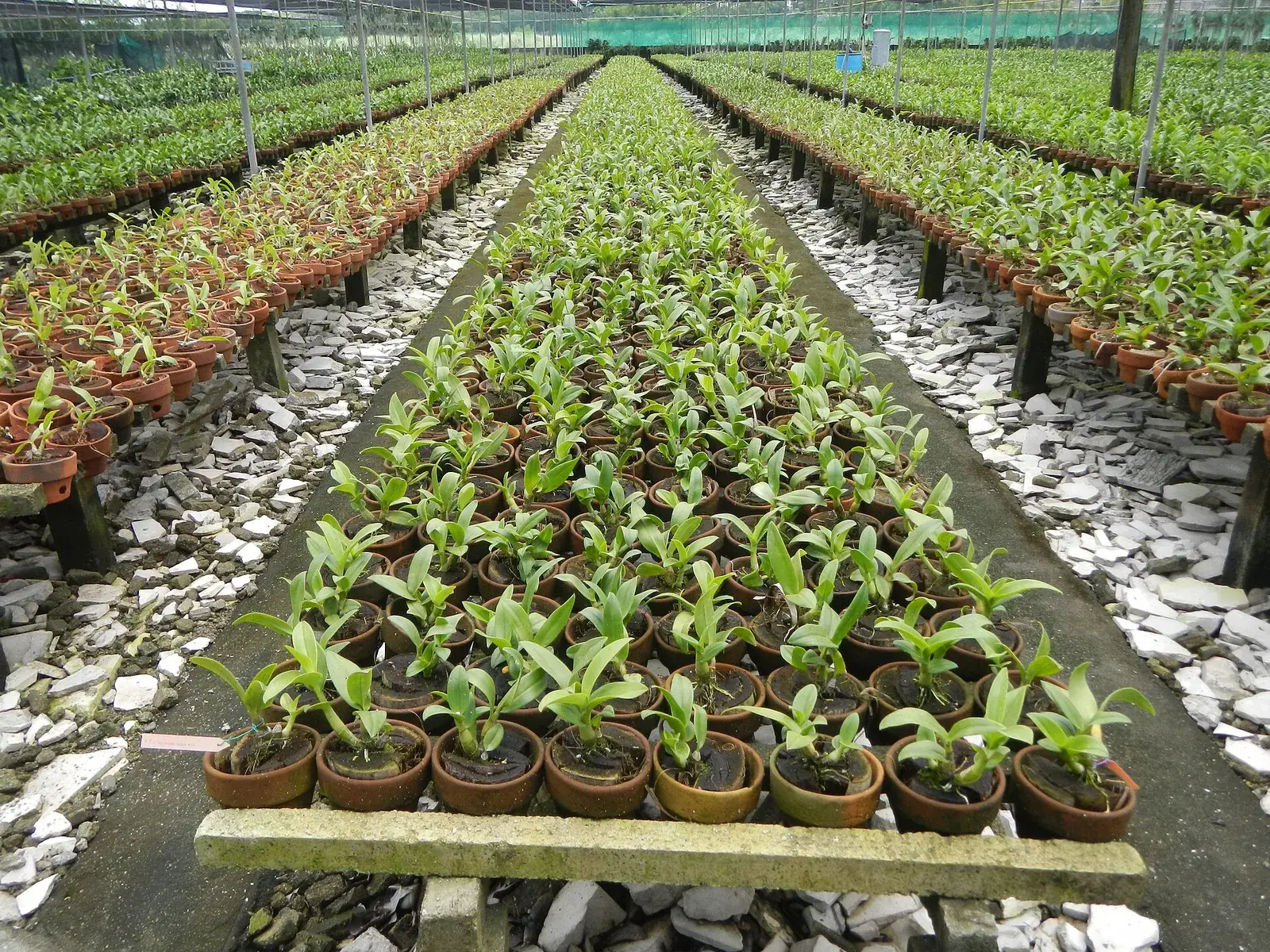
Ornamentals are grown for flowers and leaves, not for a harvest, so most need less fertilizer than farm crops. In fact, the usual trouble is too much: burnt roots, a white crust on the pot, and lush leaves with few flowers.
Below is what university extension services advise, plant by plant. Our guide to fertilizer for plants explains what each nutrient does.
- Orchids: weak and weekly, with a plain water flush once a month.
- Bougainvillea: little fertilizer, full sun, and soil kept on the dry side.
- Roses: regular feeding, plenty of sun and steady water.
- Hydrangeas: blue in acid soil, pink in alkaline soil.
- Snake plant and indoor plants: light feeding, only while they grow.
- Bonsai and other pots: weak and often, because watering washes nutrients out.
- Bermuda grass: nitrogen, in measured doses.
Which fertilizer suits each ornamental plant?
| Plant | What to feed | How often | Watch out for |
|---|---|---|---|
| Orchids | Balanced water soluble fertilizer, mixed weak | With each watering, at most once a week | Salt buildup, so flush monthly |
| Bougainvillea | High phosphate at planting, then a balanced feed | Lightly | Too much feed gives leaves, not flowers |
| Roses | Rose fertilizer with micronutrients, manure or controlled release | Monthly, or smaller doses every two weeks in hot months | Less than 6 hours of sun |
| Hydrangeas | Balanced 10 10 10 | Three times in the growing season | Soil pH sets the flower color |
| Snake plant | All purpose fertilizer at half strength | Monthly while growing | Root rot from overwatering |
| Indoor plants | Label rate or weaker, such as 10 10 10 | Every 1 to 3 months while growing | Dim light, so leach every 4 to 6 months |
| Bonsai | Liquid fertilizer, weak | Every two weeks, or each watering at half strength | Tiny soil volume |
| Bermuda grass | Nitrogen | About 2.5 to 5 g of nitrogen per square meter per feeding | Shade needs less |
What is the best fertilizer for orchids?
Feed orchids weakly, weekly. For home orchids, feed each time you water, but not more than once a week. It also showers the pots once a month to flush salts from the mix. Most orchids sold, like Dendrobium, Phalaenopsis and Vanda, grow on trees in the wild. So their roots sit in bark, charcoal or coconut husk that holds little food.
How weak is weak? The class gives no number. For pots in general, use half strength at every watering. So start no stronger than that.
Balanced 20 20 20 or a bloom booster?
Use a balanced grade most of the time and a bloom booster only now and then. A trial on Vanda shows why. Plants sprayed weekly with a balanced 21 21 21 all year grew tallest, but only 70 percent flowered. Others got 21 21 21 four times, then a high phosphorus 13 27 27 once, in a cycle. All of them flowered, with the most flowers per spike. Each spray was 3 grams per liter, 100 ml per plant.
Still, more phosphorus is not always better. Excess phosphate weakens the root fungi that help plants feed.
Orchids tied to wood or a tree have no pot to drench, so growers spray them instead. The Vanda trial fed that way too. Spray in the cool part of the day, and rinse with plain water once a month.
What is the best fertilizer for bougainvillea?
Less than you think. Bougainvillea blooms only on new growth. Too much fertilizer adds growth but holds back blooms. So start plants with a high phosphate fertilizer, then a light, balanced liquid feed.
Dryness helps too. To make them flower, growers hold back water until the plants are close to wilting, then water at the first sign of droop. The advice for home growers: keep it dry, use a high bloom fertilizer, and give it full sun. It also likes well drained soil with a pH of 5.5 to 6.0.
What is the best fertilizer for roses?
Roses feed more than most ornamentals. Use a rose fertilizer with micronutrients, or manure or a controlled release fertilizer. Where roses grow all year, feed every month. In summer, give smaller amounts every two weeks. Follow the label for the amount.
Give roses at least six hours of sun, steady water and a bed rich in organic matter. Skip extra bone meal or phosphate unless a soil test asks for it. There is no scientific evidence that roses need high phosphate.
Can fertilizer for hydrangeas change their color?
Not by itself, because soil pH sets the color. Hydrangeas turn blue at a soil pH of 5.0 to 5.5, where aluminum is easy to take up. At pH 6.0 or higher they turn pink. To go blue, lower the pH with sulfur or aluminum sulfate. To go pink, raise it with lime. Test your soil first so you do not overcorrect. The change can take two or three bloom cycles.
For feeding, use a balanced 10 10 10 at 2 cups per 100 square feet, three times in the growing season. Water it in right away.
How much fertilizer do snake plants and indoor plants need?
Very little. The right fertilizer for snake plant is an all purpose one at half strength. Feed it monthly in the growing season and water only when the soil is dry. Overwatering is the bigger danger, since root rot is common in snake plants.
Most other indoor plants need fertilizer only once every 1 to 3 months, while they grow. Plants in dim light are easily hurt by too much. It also leaches each pot every 4 to 6 months with plenty of plain water.
What fertilizer does a bonsai need?
Weak and often. We found no university extension guide written just for bonsai, so here is the rule for pots. Frequent watering leaches nutrients out of containers. So it feeds liquid fertilizer about every two weeks, or half strength with every watering. Then it uses plain water now and then to leach the pot. A bonsai holds very little soil and needs frequent watering, so that rule fits it well.
What is the best fertilizer for bermuda grass?
Nitrogen, in measured doses. Give 0.5 to 1 pound of nitrogen per 1,000 square feet per feeding. That is about 2.5 to 5 grams of nitrogen per square meter, or 5 to 11 grams of urea. In South Florida, where the grass grows all year, the yearly total can reach 5 to 7 pounds. Even so, that is likely more than a home lawn needs.
In a rice field, the same grass is a weed. See our bermuda grass profile for that side of it.
Can anee.io help a flower grower?
anee.io is built for farm crops and cropping seasons. Still, two parts help any grower. The NPK Plus calculator adds up the N, P and K in the fertilizers you mix. And Anee, the smart farm technician, can read a photo of a yellowing leaf and answer in Tagalog or English, using credits. For homemade feeds, see our organic fertilizer examples.
Tap the fertilizers you use and NPK Plus shows the nitrogen, phosphorus and potassium they add up to.
Open NPK Plus